Day 26: MACD—the classic line separating bulls from bears in forex
Here’s a hard truth: many beginners treat MACD like a holy grail, buying on every golden cross and selling on every death cross, only to get burned again and again.
MACD isn’t a prediction tool—it’s a “thermometer” for the trend.
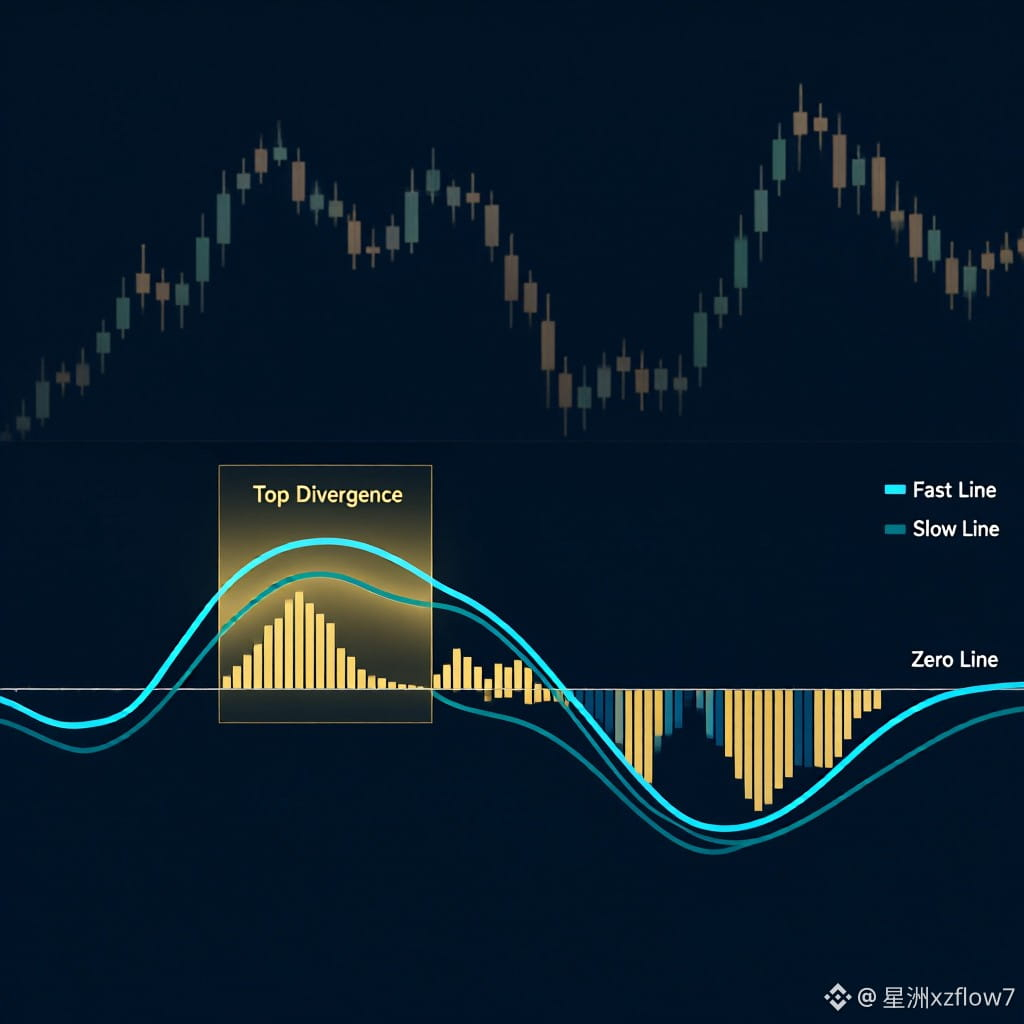
It consists of three components:
Fast line (DIF) = 12-day average minus 26-day average
Slow line (DEA) = a smoothed version of DIF
Histogram = fast line minus slow line
Three of the most practical ways to read it:
1. The zero line separates bullish from bearish territory. The fast line above zero leans bullish; below zero leans bearish. Its position matters more than the crossover.
2. Crossovers are a heads-up, not a command. In strong trends, golden and death crosses often lag, so watching where the lines are is better than chasing them.
3. Divergence is the most valuable signal. If price makes a new high but MACD doesn’t (bearish divergence), the trend may be losing steam. This is MACD’s most underrated signal.
A reminder: MACD crossovers can give repeated false signals in ranging markets. Use it alongside the moving averages and support and resistance we covered earlier—don’t rely on a single indicator on its own.
MACD is also a staple in crypto futures, and the same logic applies. What do you think? Let’s discuss in the comments.