
After the sharp corrections of the past few days, the crypto market has finally stopped seeing further extreme volatility.
On November 7, Bitcoin traded mostly around $75,800–$76,000, while Ethereum also moved within a narrow range near $2,240. Trading activity across the market has eased, and prices appear to have stabilized somewhat for now.
But one indicator is less encouraging: the Fear & Greed Index has fallen to 25, and the market remains in the extreme fear zone.
This has led to a rather interesting phenomenon: prices aren't moving much, but investors haven't truly regained confidence.
I. Why did the market suddenly go quiet after the crash?
I don’t think this period of sideways trading should simply be taken to mean that the market has stabilized.
Looking back at the market over the past few days, Bitcoin had climbed back above $80,000 before quickly falling to around $75,000, pressured by a pullback in U.S. tech stocks, stronger-than-expected U.S. employment data, and ETF outflows.
After consecutive declines, some leveraged traders were forced to exit, while other investors chose to stop trading temporarily.
When neither buyers nor sellers are willing to actively increase their positions, trading volume and price volatility naturally contract.
This is especially true on weekends, when traditional financial markets are closed and some institutional trading activity declines, making it easier for digital asset markets to enter a relatively quiet phase.
However, low volatility doesn’t mean the risk has disappeared. Sometimes the market is simply short on new catalysts, and the real direction will depend on future fund flows and macroeconomic data.
II. ETF fund flows deserve more attention than a brief rebound
In this pullback, I think U.S. spot Bitcoin ETFs are the most important thing to keep watching.
On November 5, spot BTC ETFs saw net outflows of about $430 million, followed by another roughly $410 million in net outflows on November 6. Two consecutive days of large redemptions show that institutional funds have indeed been quite cautious lately.
However, the outflows on November 6 had narrowed considerably compared with the previous day. Fund flows are starting to diverge to some extent, but that isn’t enough to conclude that institutions have started buying again.
It’s important to distinguish between two things: a price rebound and a return of fund flows are not the same.
Bitcoin may rise due to short-term short covering, but if ETFs continue to see net outflows and spot demand doesn’t improve significantly, the rebound’s staying power remains to be seen.
What’s really worth watching next is whether ETFs can post net inflows for consecutive days and whether Bitcoin can remain relatively stable above $75,000.
III. The easiest mistake to make right now is treating sideways trading as a sure opportunity
When the market rises quickly, many people worry about missing out. When it falls for several consecutive days, fear can lead them to adjust their positions too often.
But sideways markets are actually a greater test of trading discipline.
This is especially true for futures traders: a price that isn’t moving doesn’t mean there’s no risk. Frequent entries in a choppy market can result in repeated stop-losses, and you also need to account for funding rates and trading costs.
If you don’t already have a clear trading plan, temporarily reducing your trading frequency and reviewing your portfolio structure may be more useful than constantly looking for entry opportunities.
If you hold U, a relatively calm market can also be a good time to reconsider how to allocate your funds. For example, which funds you plan to keep in digital asset spot markets, which you might use to trade U.S. or Hong Kong stocks, and which you need to keep liquid.
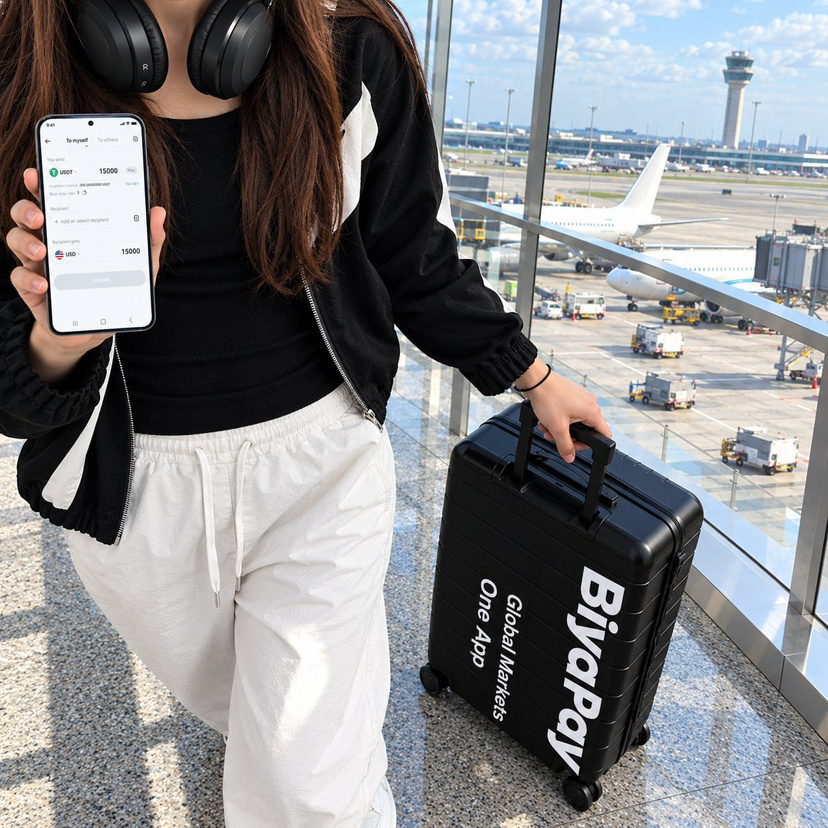
BiyaPay offers an option for connecting different financial scenarios. The platform supports using U to trade actual U.S. and Hong Kong stocks and offers U-to-USD conversion. U.S. stock trading is advertised as commission-free, and applicable dividend benefits are also supported.
If you’re still following the crypto market, the platform also offers spot and futures trading, advertising zero fees and related Maker zero-fee services. In addition, it offers commodity futures and flexible savings products. The highest advertised annualized yield for flexible savings is 10.22%. Actual returns, redemption terms, and risks are subject to the rules of each product.
BiyaPay also supports cross-border transfers to 108 countries worldwide and exchanges between more than 30 fiat currencies and over 200 cryptocurrencies. Where eligible, local remittance channels can reduce intermediary processing and speed up delivery. If you need to transfer funds internationally, you can check the supported receiving options, exchange rates, and estimated delivery times for the relevant region in advance.
I think these features are better suited to helping you understand how to manage funds across different markets ahead of time, rather than scrambling to find tools when markets are highly volatile.
IV. The key variable in the coming trading week may be U.S. CPI
A quiet weekend market doesn’t mean the coming week will be quiet too.
On November 10, the U.S. will release its latest Consumer Price Index (CPI). Following the much stronger-than-expected nonfarm payrolls report, this inflation report will be an important reference point as markets reassess the Federal Reserve’s interest-rate path.
If inflation remains strong, markets may further adjust their expectations for rate cuts, and the U.S. dollar and Treasury yields may also see further changes.
Conversely, if inflationary pressures ease, risk assets may receive some support from improved sentiment.
So I wouldn’t conclude that the market has reversed just because Bitcoin has stayed near $76,000 for several consecutive hours.
One lesson I’ve taken from this market is that a quieter market doesn’t mean investors can stop thinking.
A few days ago, everyone was focused on liquidations, ETF outflows, and falling tech stocks. Now that prices are moving in a narrow range, it’s even more important to watch whether funds are actually returning.
For those involved in crypto, U.S. stocks, and Hong Kong stocks, understanding the trading rules, funding costs, and liquidity arrangements in each market is more important than simply watching one price range.
BiyaPay’s services, including U conversions, U.S. and Hong Kong stock trading, spot and futures trading, and cross-border transfers, can be tools for exploring different financial scenarios. How to allocate your funds still depends on your actual needs and risk tolerance.
What I’d rather watch next isn’t how much Bitcoin rises in a given hour, but whether institutional funds return and whether the market can truly regain confidence after the fear.
This article is for informational purposes only. Do your own analysis and make your own decisions. It is not investment advice. Avoid unnecessary losses!