
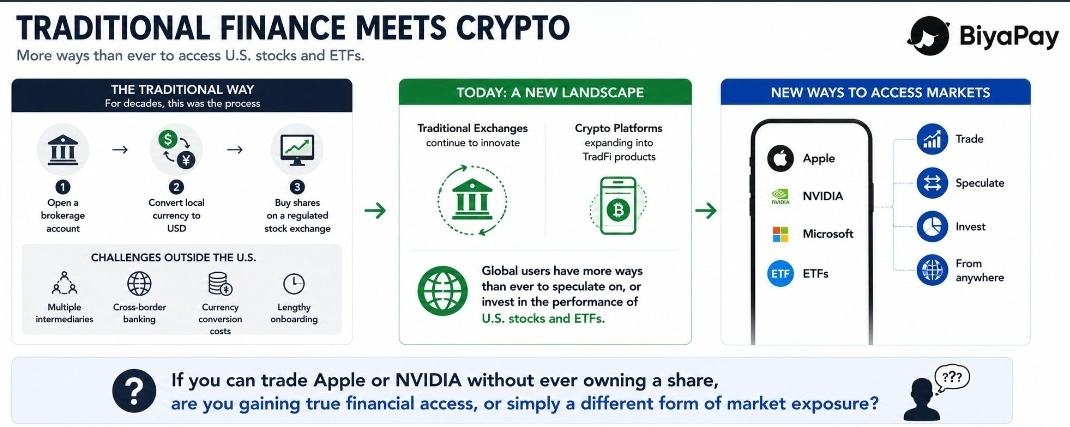

For decades, gaining exposure to companies like 𝗔𝗽𝗽𝗹𝗲, 𝗡𝗩𝗜𝗗𝗜𝗔, 𝗠𝗶𝗰𝗿𝗼𝘀𝗼𝗳𝘁, 𝗼𝗿 𝗽𝗼𝗽𝘂𝗹𝗮𝗿 𝗘𝗧𝗙𝘀 usually meant:
☞ Opening a brokerage account
☞ Converting your local currency into U.S. dollars
☞ Purchasing shares through a regulated stock exchange.
For many people outside the United States, that process could involve:
☞ multiple intermediaries
☞ cross-border banking requirements
☞ currency conversion costs
☞ lengthy onboarding.
Today, the landscape looks very different.
Traditional exchanges continue to innovate, while crypto platforms are expanding beyond digital assets into products linked to traditional financial markets. As a result, global users now have more ways than ever to speculate 𝗼𝗻, 𝗼𝗿 𝗶𝗻𝘃𝗲𝘀𝘁 𝗶𝗻 𝘁𝗵𝗲 𝗽𝗲𝗿𝗳𝗼𝗿𝗺𝗮𝗻𝗰𝗲 𝗼𝗳 𝗨.𝗦. 𝘀𝘁𝗼𝗰𝗸𝘀 𝗮𝗻𝗱 𝗲𝘅𝗰𝗵𝗮𝗻𝗴𝗲-𝘁𝗿𝗮𝗱𝗲𝗱 𝗳𝘂𝗻𝗱𝘀.
But this shift raises an important question:
𝗜𝗳 𝘆𝗼𝘂 𝗰𝗮𝗻 𝘁𝗿𝗮𝗱𝗲 𝗔𝗽𝗽𝗹𝗲 𝗼𝗿 𝗡𝗩𝗜𝗗𝗜𝗔 𝘄𝗶𝘁𝗵𝗼𝘂𝘁 𝗲𝘃𝗲𝗿 𝗼𝘄𝗻𝗶𝗻𝗴 𝗮 𝘀𝗵𝗮𝗿𝗲, 𝗮𝗿𝗲 𝘆𝗼𝘂 𝗴𝗮𝗶𝗻𝗶𝗻𝗴 𝘁𝗿𝘂𝗲 𝗳𝗶𝗻𝗮𝗻𝗰𝗶𝗮𝗹 𝗮𝗰𝗰𝗲𝘀𝘀, 𝗼𝗿 𝘀𝗶𝗺𝗽𝗹𝘆 𝗮 𝗱𝗶𝗳𝗳𝗲𝗿𝗲𝗻𝘁 𝗳𝗼𝗿𝗺 𝗼𝗳 𝗺𝗮𝗿𝗸𝗲𝘁 𝗲𝘅𝗽𝗼𝘀𝘂𝗿𝗲?
📍The answer depends entirely on which financial instrument you're using.
Although several products may appear to track the same company, they can represent very different legal rights, risks, and trading experiences.
For example, buying one share of Apple stock is fundamentally different from trading a stock future, a perpetual contract, or another derivative whose value is linked to Apple's price. At first glance, all four may move in a similar direction, but they are not economically or legally equivalent.
Understanding this distinction has become increasingly important as financial markets continue to evolve.
🗣️𝗪𝗵𝘆 𝗧𝗵𝗶𝘀 𝗠𝗮𝘁𝘁𝗲𝗿𝘀 𝗳𝗼𝗿 𝗚𝗹𝗼𝗯𝗮𝗹 𝗜𝗻𝘃𝗲𝘀𝘁𝗼𝗿𝘀
Outside the United States, millions of investors face practical barriers when trying to access U.S. financial markets.
𝗦𝗼𝗺𝗲 𝗲𝗻𝗰𝗼𝘂𝗻𝘁𝗲𝗿:
◽ Limited brokerage availability.
◽Others deal with expensive ◽International bank transfers
◽Foreign exchange fees
◽ Local regulations that make investing abroad more complicated than buying domestic assets.
Meanwhile, many crypto users already hold digital assets such as USDT and are looking for ways to diversify beyond cryptocurrencies without moving funds across multiple platforms.
This convergence has created a growing ecosystem where users can move between digital assets and traditional market exposure more seamlessly than before.
𝗛𝗼𝘄𝗲𝘃𝗲𝗿, 𝗲𝗮𝘀𝗶𝗲𝗿 𝗮𝗰𝗰𝗲𝘀𝘀 𝗮𝗹𝘀𝗼 𝗰𝗿𝗲𝗮𝘁𝗲𝘀 𝗮 𝗻𝗲𝘄 𝗰𝗵𝗮𝗹𝗹𝗲𝗻𝗴𝗲:
Many people mistakenly assume 🤔 that every product tracking a stock offers the same rights and protections.
That assumption can lead to misunderstandings about ownership, leverage, settlement, voting rights, dividends, and risk.
𝗕𝗲𝗳𝗼𝗿𝗲 𝗰𝗵𝗼𝗼𝘀𝗶𝗻𝗴 𝗮𝗻𝘆 𝗽𝗿𝗼𝗱𝘂𝗰𝘁, 𝗶𝗻𝘃𝗲𝘀𝘁𝗼𝗿𝘀 𝘀𝗵𝗼𝘂𝗹𝗱 𝘂𝗻𝗱𝗲𝗿𝘀𝘁𝗮𝗻𝗱 𝗲𝘅𝗮𝗰𝘁𝗹𝘆 𝘄𝗵𝗮𝘁 𝘁𝗵𝗲𝘆 𝗮𝗿𝗲 𝗯𝘂𝘆𝗶𝗻𝗴 𝗼𝗿 𝗻𝗼𝘁 𝗯𝘂𝘆𝗶𝗻𝗴.
🗣️ 𝗢𝘄𝗻𝗲𝗿𝘀𝗵𝗶𝗽 𝘃𝘀. 𝗘𝘅𝗽𝗼𝘀𝘂𝗿𝗲
One of the biggest misconceptions in modern markets is believing that following a stock's price is the same as owning the stock itself.
It isn't.
Think of it this way:
𝗢𝘄𝗻𝗶𝗻𝗴 𝗮 𝗵𝗼𝘂𝘀𝗲 𝗴𝗶𝘃𝗲𝘀 𝘆𝗼𝘂 𝗹𝗲𝗴𝗮𝗹 𝗼𝘄𝗻𝗲𝗿𝘀𝗵𝗶𝗽 𝗼𝗳 𝘁𝗵𝗲 𝗽𝗿𝗼𝗽𝗲𝗿𝘁𝘆.
𝗕𝘂𝘆𝗶𝗻𝗴 𝗶𝗻𝘀𝘂𝗿𝗮𝗻𝗰𝗲 𝗼𝗻 𝘁𝗵𝗮𝘁 𝗵𝗼𝘂𝘀𝗲 𝗴𝗶𝘃𝗲𝘀 𝘆𝗼𝘂 𝗲𝘅𝗽𝗼𝘀𝘂𝗿𝗲 𝘁𝗼 𝗰𝗲𝗿𝘁𝗮𝗶𝗻 𝗳𝗶𝗻𝗮𝗻𝗰𝗶𝗮𝗹 𝗼𝘂𝘁𝗰𝗼𝗺𝗲𝘀, 𝗯𝘂𝘁 𝘆𝗼𝘂 𝘀𝘁𝗶𝗹𝗹 𝗱𝗼𝗻'𝘁 𝗼𝘄𝗻 𝘁𝗵𝗲 𝗵𝗼𝘂𝘀𝗲.
▫️Financial markets operate similarly.
▫️Some products give you ownership.
▫️Others simply provide exposure to price movements.
Recognizing that difference is essential before comparing:
✅ Convenience
✅ Leverage
✅ Costs
✅ Accessibility.
At first glance, many financial products appear to do the same thing, they rise when a stock rises and fall when it falls. But beneath the surface, they are built on very different structures.
Some products make you an investor. Others make you a trader. Some give you ownership, while others only mirror price movements.
Knowing the difference can help you choose an instrument that aligns with your objective rather than simply following what's most popular.
𝟭. 𝗥𝗲𝗮𝗹 𝗦𝘁𝗼𝗰𝗸𝘀: 𝗔𝗰𝘁𝘂𝗮𝗹 𝗢𝘄𝗻𝗲𝗿𝘀𝗵𝗶𝗽
Buying a real stock means purchasing an ownership interest in a publicly listed company.
If you buy shares of 𝗔𝗽𝗽𝗹𝗲 𝗼𝗿 𝗡𝗩𝗜𝗗𝗜𝗔 through a supported brokerage, you become a shareholder. Depending on the company's policies and the number of shares you hold, you may be entitled to benefits such as dividends, voting rights, and participation in certain corporate actions.
The value of your investment will still fluctuate with the market, but your position represents actual ownership rather than a contract tied to price movement.
For investors building long-term wealth, real stocks are often viewed as the foundation of a diversified portfolio because they provide direct exposure to a company's long-term performance.
That doesn't eliminate risk. Share prices can decline, companies can underperform, and investors can lose money. However, the investment is tied to an underlying asset rather than a leveraged trading contract.
𝟮. 𝗘𝗧𝗙𝘀: 𝗗𝗶𝘃𝗲𝗿𝘀𝗶𝗳𝗶𝗰𝗮𝘁𝗶𝗼𝗻 𝗶𝗻 𝗮 𝗦𝗶𝗻𝗴𝗹𝗲 𝗜𝗻𝘃𝗲𝘀𝘁𝗺𝗲𝗻𝘁
Exchange-Traded Funds (𝗘𝗧𝗙𝘀) bundle multiple assets into one investment.
Instead of purchasing shares in a single company, an 𝗘𝗧𝗙 may track an index, sector, industry, or investment theme.
For example, one 𝗘𝗧𝗙 might track the S&P 500, while another focuses on semiconductor companies or technology firms.
This allows investors to spread risk across many holdings instead of relying on the performance of a single stock.
Like individual stocks, 𝗘𝗧𝗙𝘀 are traded on exchanges during market hours, and investors own shares of the ETF itself.
𝟯. 𝗦𝘁𝗼𝗰𝗸 𝗙𝘂𝘁𝘂𝗿𝗲𝘀: 𝗧𝗿𝗮𝗱𝗶𝗻𝗴 𝗮 𝗙𝘂𝘁𝘂𝗿𝗲 𝗣𝗿𝗶𝗰𝗲
Stock futures are derivative contracts.
Rather than purchasing the underlying stock, traders agree to exchange the value of a stock at a specified future date according to the contract's terms.
The key distinction is that the contract, not the company share, is being traded.
These products are commonly used for hedging, institutional portfolio management, and short-term speculation.
Because futures often involve leverage, relatively small price movements can produce larger gains or losses compared to investing directly in stocks.
𝟰. 𝗣𝗲𝗿𝗽𝗲𝘁𝘂𝗮𝗹 𝗖𝗼𝗻𝘁𝗿𝗮𝗰𝘁𝘀: 𝗣𝗿𝗶𝗰𝗲 𝗘𝘅𝗽𝗼𝘀𝘂𝗿𝗲 𝗪𝗶𝘁𝗵𝗼𝘂𝘁 𝗘𝘅𝗽𝗶𝗿𝗮𝘁𝗶𝗼𝗻
Perpetual contracts, commonly called perpetuals, have become one of crypto's most popular trading instruments.
Unlike traditional futures, perpetual contracts generally do not have a fixed expiration date. Instead, they use mechanisms such as funding payments to help keep contract prices close to the underlying market.
When trading a USDT-margined perpetual linked to a stock or ETF, you're not purchasing shares in that company.
You're entering a derivative contract designed to reflect its price movement.
This means you may benefit if the price moves in your favor, or incur losses if it moves against you.
Because perpetuals frequently allow leverage, they are generally considered higher-risk instruments than buying stocks outright.
𝟱. 𝗧𝗼𝗸𝗲𝗻𝗶𝘇𝗲𝗱 𝗦𝘁𝗼𝗰𝗸𝘀
Tokenized stocks are digital tokens designed to represent exposure to a stock or, depending on the issuer's structure, an interest linked to underlying shares.
However, not every tokenized stock operates the same way.
☞ Some are backed by real shares held by a custodian.
☞ Others use entirely different legal or financial structures.
The rights attached to these products, including redemption, dividends, voting rights, or ownership claims, depend on how each issuer has designed the token.
For that reason, investors should always read the issuer's documentation rather than assuming all tokenized stocks function identically.
🗣️ 𝗪𝗵𝘆 𝘁𝗵𝗲 𝗗𝗶𝘀𝘁𝗶𝗻𝗰𝘁𝗶𝗼𝗻 𝗠𝗮𝘁𝘁𝗲𝗿𝘀
A common mistake is comparing these products solely by how closely they follow a stock's price.
Price movement tells only part of the story.
Before choosing any instrument, it's worth asking a few questions:
◽𝗔𝗺 𝗜 𝘁𝗿𝘆𝗶𝗻𝗴 𝘁𝗼 𝗼𝘄𝗻 𝗮𝗻 𝗮𝘀𝘀𝗲𝘁 𝗼𝗿 𝘀𝗶𝗺𝗽𝗹𝘆 𝘁𝗿𝗮𝗱𝗲 𝗶𝘁𝘀 𝗽𝗿𝗶𝗰𝗲?
◽ 𝗔𝗺 𝗜 𝗶𝗻𝘃𝗲𝘀𝘁𝗶𝗻𝗴 𝗳𝗼𝗿 𝘆𝗲𝗮𝗿𝘀 𝗼𝗿 𝘁𝗿𝗮𝗱𝗶𝗻𝗴 𝗼𝘃𝗲𝗿 𝗵𝗼𝘂𝗿𝘀 𝗼𝗿 𝗱𝗮𝘆𝘀?
◽𝗗𝗼 𝗜 𝗻𝗲𝗲𝗱 𝗹𝗲𝘃𝗲𝗿𝗮𝗴𝗲, 𝗼𝗿 𝗮𝗺 𝗜 𝗰𝗼𝗺𝗳𝗼𝗿𝘁𝗮𝗯𝗹𝗲 𝗶𝗻𝘃𝗲𝘀𝘁𝗶𝗻𝗴 𝘄𝗶𝘁𝗵𝗼𝘂𝘁 𝗶𝘁?
◽ 𝗗𝗼 𝗜 𝘂𝗻𝗱𝗲𝗿𝘀𝘁𝗮𝗻𝗱 𝘁𝗵𝗲 𝗿𝗶𝘀𝗸𝘀 𝗮𝘀𝘀𝗼𝗰𝗶𝗮𝘁𝗲𝗱 𝘄𝗶𝘁𝗵 𝗱𝗲𝗿𝗶𝘃𝗮𝘁𝗶𝘃𝗲𝘀, 𝗶𝗻𝗰𝗹𝘂𝗱𝗶𝗻𝗴 𝗹𝗶𝗾𝘂𝗶𝗱𝗮𝘁𝗶𝗼𝗻 𝗮𝗻𝗱 𝗳𝘂𝗻𝗱𝗶𝗻𝗴 𝗰𝗼𝘀𝘁𝘀?
◽𝗜𝗳 𝗜'𝗺 𝗯𝘂𝘆𝗶𝗻𝗴 𝗮 𝘁𝗼𝗸𝗲𝗻𝗶𝘇𝗲𝗱 𝗽𝗿𝗼𝗱𝘂𝗰𝘁, 𝘄𝗵𝗮𝘁 𝗹𝗲𝗴𝗮𝗹 𝗿𝗶𝗴𝗵𝘁𝘀 𝗱𝗼𝗲𝘀 𝘁𝗵𝗮𝘁 𝘁𝗼𝗸𝗲𝗻 𝗮𝗰𝘁𝘂𝗮𝗹𝗹𝘆 𝗽𝗿𝗼𝘃𝗶𝗱𝗲?
The answers will vary from one investor to another.
There is no universally "best" instrument. Each serves a different purpose, and understanding those differences is far more valuable than assuming they are interchangeable.
That distinction becomes especially relevant as some platforms now allow users to access multiple types of financial instruments from a single ecosystem. Instead of forcing users to choose between crypto and traditional finance, these platforms bring both worlds together, while still requiring users to understand which product they are actually trading.
𝗔 𝗖𝗮𝘀𝗲 𝗦𝘁𝘂𝗱𝘆 𝗶𝗻 𝗖𝗿𝘆𝗽𝘁𝗼–𝗧𝗿𝗮𝗱𝗙𝗶 𝗖𝗼𝗻𝘃𝗲𝗿𝗴𝗲𝗻𝗰𝗲: 𝗨𝗻𝗱𝗲𝗿𝘀𝘁𝗮𝗻𝗱𝗶𝗻𝗴 𝗕𝗶𝘆𝗮𝗣𝗮𝘆'𝘀 𝗠𝘂𝗹𝘁𝗶-𝗔𝘀𝘀𝗲𝘁 𝗔𝗽𝗽𝗿𝗼𝗮𝗰𝗵
The convergence of crypto and traditional finance is no longer just a concept, it's increasingly reflected in how financial platforms are designed.
Rather than limiting users to either cryptocurrencies or traditional investments, some platforms now provide access to multiple asset classes within a single ecosystem. This approach aims to simplify the user experience, particularly for individuals who already hold digital assets but also want exposure to traditional financial markets.
🗣️ @BiyaPay is one example of this evolving model.
Instead of treating crypto and traditional finance as separate worlds, the platform allows eligible users to begin with digital assets such as USDT and then choose different paths depending on their financial objective.
That distinction is important because starting with the same funding asset does not mean every investment product works the same way.
🤔 Imagine a user already holds USDT and wants exposure to U.S. markets.
Within the same ecosystem, there are two fundamentally different routes.
𝗥𝗼𝘂𝘁𝗲 𝟭: 𝗨𝗦𝗗𝗧 → 𝗨𝗦𝗗 → 𝗥𝗲𝗮𝗹 𝗨.𝗦. 𝗦𝘁𝗼𝗰𝗸𝘀 𝗼𝗿 𝗘𝗧𝗙𝘀
One option is to convert supported digital assets into U.S. dollars and purchase supported U.S. stocks or ETFs through the platform's stock trading account.
In this scenario, the objective is investment rather than leveraged speculation.
Depending on the specific security purchased, the investor gains exposure through actual listed securities rather than a derivative contract.
According to @BiyaPay's published product information, the platform supports trading in U.S. stocks and ETFs, offers fractional shares on eligible securities, and routes orders to traditional market liquidity. It also advertises zero commission on U.S. stock trades, although investors should review the latest fee schedule for any applicable platform, regulatory, or third-party charges before trading.
For someone building a long-term portfolio, this route may align more closely with the goal of participating in the performance of listed companies over time.
𝗥𝗼𝘂𝘁𝗲 𝟮: 𝗨𝗦𝗗𝗧 → 𝗧𝗿𝗮𝗱𝗙𝗶 𝗣𝗲𝗿𝗽𝗲𝘁𝘂𝗮𝗹 𝗖𝗼𝗻𝘁𝗿𝗮𝗰𝘁𝘀
The second route is entirely different.
Instead of purchasing shares, users can trade selected USDT-margined TradFi perpetual contracts whose prices are linked to traditional financial assets.
Here, the objective shifts from ownership to trading price movements.
Perpetual contracts are derivative instruments. They are designed for market exposure rather than acquiring ownership of the underlying asset.
Depending on market conditions and platform features, traders may use leverage, open both long and short positions, and respond to short-term price movements.
However, leverage increases both potential gains and potential losses.
Unlike buying shares for a long-term portfolio, perpetual contracts often require more active risk management and a clear understanding of concepts such as liquidation, margin requirements, and funding payments.
The key takeaway is simple:
𝗧𝗵𝗲 𝗳𝘂𝗻𝗱𝗶𝗻𝗴 𝗮𝘀𝘀𝗲𝘁 𝗺𝗮𝘆 𝗯𝗲 𝗨𝗦𝗗𝗧 𝗶𝗻 𝗯𝗼𝘁𝗵 𝗰𝗮𝘀𝗲𝘀, 𝗯𝘂𝘁 𝘁𝗵𝗲 𝗳𝗶𝗻𝗮𝗻𝗰𝗶𝗮𝗹 𝗶𝗻𝘀𝘁𝗿𝘂𝗺𝗲𝗻𝘁, 𝗮𝗻𝗱 𝘁𝗵𝗲 𝗿𝗶𝘀𝗸𝘀 𝗶𝗻𝘃𝗼𝗹𝘃𝗲𝗱, 𝗮𝗿𝗲 𝗰𝗼𝗺𝗽𝗹𝗲𝘁𝗲𝗹𝘆 𝗱𝗶𝗳𝗳𝗲𝗿𝗲𝗻𝘁.
As financial ecosystems become more integrated, it's easy to assume that everything offered on one platform serves the same purpose.
That's rarely the case.
Using @BiyaPay as an example illustrates an important principle:
A single platform can provide access to multiple asset classes while each product retains its own characteristics, risks, and intended use.
🔺𝗥𝗲𝗮𝗹 𝘀𝘁𝗼𝗰𝗸𝘀 𝗿𝗲𝗺𝗮𝗶𝗻 𝗼𝘄𝗻𝗲𝗿𝘀𝗵𝗶𝗽 𝗶𝗻𝘀𝘁𝗿𝘂𝗺𝗲𝗻𝘁𝘀.
🔺𝗘𝗧𝗙𝘀 𝗽𝗿𝗼𝘃𝗶𝗱𝗲 𝗱𝗶𝘃𝗲𝗿𝘀𝗶𝗳𝗶𝗲𝗱 𝗶𝗻𝘃𝗲𝘀𝘁𝗺𝗲𝗻𝘁 𝗲𝘅𝗽𝗼𝘀𝘂𝗿𝗲.
🔺𝗣𝗲𝗿𝗽𝗲𝘁𝘂𝗮𝗹 𝗰𝗼𝗻𝘁𝗿𝗮𝗰𝘁𝘀 𝗮𝗿𝗲 𝗱𝗲𝗿𝗶𝘃𝗮𝘁𝗶𝘃𝗲 𝗽𝗿𝗼𝗱𝘂𝗰𝘁𝘀 𝗱𝗲𝘀𝗶𝗴𝗻𝗲𝗱 𝗽𝗿𝗶𝗺𝗮𝗿𝗶𝗹𝘆 𝗳𝗼𝗿 𝘁𝗿𝗮𝗱𝗶𝗻𝗴.
Understanding these distinctions is more valuable than simply focusing on convenience.
@BiyaPay combines several features within a single ecosystem, including:
▫️Support for eligible U.S. stocks and ETFs alongside other listed products.
▫️Funding through supported fiat currencies and digital assets.
▫️Fractional share investing on eligible securities.
▫️Order routing to traditional market liquidity.
▫️Zero commission on U.S. stock trading, subject to the platform's current fee schedule and applicable charges.
▫️Extended-hours trading settings where available.
▫️Multi-asset access from one account ecosystem.
▫️USDT-margined TradFi perpetual contracts for eligible markets.
Taken together, these features demonstrate how crypto infrastructure is increasingly being used as a gateway to broader financial markets.
However, convenience should never replace understanding.
𝗪𝗵𝗲𝘁𝗵𝗲𝗿 𝘀𝗼𝗺𝗲𝗼𝗻𝗲 𝗰𝗵𝗼𝗼𝘀𝗲𝘀 𝘁𝗼 𝗼𝘄𝗻 𝘀𝗵𝗮𝗿𝗲𝘀, 𝗶𝗻𝘃𝗲𝘀𝘁 𝗶𝗻 𝗘𝗧𝗙𝘀, 𝗼𝗿 𝘁𝗿𝗮𝗱𝗲 𝗱𝗲𝗿𝗶𝘃𝗮𝘁𝗶𝘃𝗲 𝗰𝗼𝗻𝘁𝗿𝗮𝗰𝘁𝘀, 𝘁𝗵𝗲 𝗱𝗲𝗰𝗶𝘀𝗶𝗼𝗻 𝘀𝗵𝗼𝘂𝗹𝗱 𝗯𝗲 𝗯𝗮𝘀𝗲𝗱 𝗼𝗻 𝗵𝗼𝘄 𝗲𝗮𝗰𝗵 𝗶𝗻𝘀𝘁𝗿𝘂𝗺𝗲𝗻𝘁 𝘄𝗼𝗿𝗸𝘀, 𝗻𝗼𝘁 𝘀𝗶𝗺𝗽𝗹𝘆 𝗼𝗻 𝘁𝗵𝗲 𝗳𝗮𝗰𝘁 𝘁𝗵𝗮𝘁 𝘁𝗵𝗲𝘆 𝗮𝗿𝗲 𝗮𝗰𝗰𝗲𝘀𝘀𝗶𝗯𝗹𝗲 𝘁𝗵𝗿𝗼𝘂𝗴𝗵 𝘁𝗵𝗲 𝘀𝗮𝗺𝗲 𝗽𝗹𝗮𝘁𝗳𝗼𝗿𝗺.
As access to global markets continues to improve, financial literacy becomes just as important as financial technology.
🗣️ 𝗨𝗻𝗱𝗲𝗿𝘀𝘁𝗮𝗻𝗱𝗶𝗻𝗴 𝘁𝗵𝗲 𝗥𝗶𝘀𝗸𝘀 𝗕𝗲𝗳𝗼𝗿𝗲 𝗖𝗵𝗼𝗼𝘀𝗶𝗻𝗴 𝗔𝗻𝘆 𝗜𝗻𝘀𝘁𝗿𝘂𝗺𝗲𝗻𝘁
Greater access to financial markets is a positive development for many investors. However, easier access should not be mistaken for lower risk.
Whether you're buying a real stock, investing in an ETF, trading a futures contract, or opening a perpetual position, every financial instrument comes with its own set of trade-offs. Understanding those differences is one of the most important steps before committing capital.
🗣️ 𝗠𝗮𝗿𝗸𝗲𝘁 𝗥𝗶𝘀𝗸
Every instrument discussed in this article is exposed to market risk.
A company's earnings, changes in interest rates, geopolitical events, economic data, or shifts in investor sentiment can all influence prices. Even high-quality companies can experience significant price declines during periods of market volatility.
No financial product is immune to market fluctuations.
🗣️ 𝗟𝗲𝘃𝗲𝗿𝗮𝗴𝗲 𝗥𝗶𝘀𝗸
Leverage is one of the defining features of many derivative products, including perpetual contracts and certain futures.
While leverage can amplify gains, it can also magnify losses. A relatively small market movement may have a much larger impact on a leveraged position than it would on an investment in the underlying stock.
For traders, effective risk management—including appropriate position sizing and an understanding of margin requirements, is essential.
🗣️ 𝗟𝗶𝗾𝘂𝗶𝗱𝗶𝘁𝘆 𝗥𝗶𝘀𝗸
Not all markets have the same level of liquidity.
During periods of heightened volatility or reduced trading activity, it may become more difficult to enter or exit positions at expected prices. Wider bid-ask spreads and increased slippage can affect trading outcomes, particularly for less liquid products.
🗣️ 𝗣𝗿𝗶𝗰𝗲 𝗗𝗲𝘃𝗶𝗮𝘁𝗶𝗼𝗻
Derivative products are designed to track an underlying asset, but they may not always match its price perfectly.
Factors such as funding mechanisms, market demand, and trading activity can cause temporary differences between a derivative's price and the price of the underlying asset.
Understanding how a specific product tracks its reference market can help set realistic expectations.
🗣️ 𝗜𝗻𝘁𝗲𝗿𝗺𝗲𝗱𝗶𝗮𝗿𝘆 𝗮𝗻𝗱 𝗢𝗽𝗲𝗿𝗮𝘁𝗶𝗼𝗻𝗮𝗹 𝗥𝗶𝘀𝗸
Different products rely on different intermediaries, custodians, exchanges, and settlement mechanisms.
For example, holding a real stock, trading a derivative contract, or using a tokenized representation of an asset may involve different operational processes and legal structures.
Before using any platform, investors should review the applicable terms, fee schedules, supported jurisdictions, and product documentation to understand how each service operates.
🗣️ 𝗙𝗶𝗻𝗮𝗹 𝗧𝗵𝗼𝘂𝗴𝗵𝘁𝘀
The question isn't whether one financial product is universally better than another.
The better question is:
📍𝗪𝗵𝗮𝘁 𝗮𝗿𝗲 𝘆𝗼𝘂 𝘁𝗿𝘆𝗶𝗻𝗴 𝘁𝗼 𝗮𝗰𝗵𝗶𝗲𝘃𝗲?
If your goal is long-term investment and ownership, real stocks or ETFs may align with that objective.
If your goal is short-term price exposure, derivatives such as futures or perpetual contracts may offer different tools, but they also introduce additional risks that should be fully understood before trading.
Platforms such as @BiyaPay illustrate how these different worlds are increasingly being brought together. By allowing eligible users to fund accounts with supported digital assets while offering access to both traditional securities and selected TradFi-linked perpetual contracts, the platform serves as an example of how crypto and traditional finance continue to converge.
However, the platform itself does not eliminate the differences between these instruments.
The responsibility remains with each investor or trader to understand exactly what they are buying, how it works, and whether it matches their financial objectives and risk tolerance.
As global financial markets continue to evolve, one principle remains unchanged:
U𝗻𝗱𝗲𝗿𝘀𝘁𝗮𝗻𝗱𝗶𝗻𝗴 𝘁𝗵𝗲 𝗶𝗻𝘀𝘁𝗿𝘂𝗺𝗲𝗻𝘁 𝗶𝘀 𝗷𝘂𝘀𝘁 𝗮𝘀 𝗶𝗺𝗽𝗼𝗿𝘁𝗮𝗻𝘁 𝗮𝘀 𝗮𝗰𝗰𝗲𝘀𝘀𝗶𝗻𝗴 𝘁𝗵𝗲 𝗺𝗮𝗿𝗸𝗲𝘁.
📍𝗟𝗲𝗮𝗿𝗻 𝗠𝗼𝗿𝗲
If you'd like to explore how platforms are combining digital assets with access to traditional financial markets, review the available products, fee schedules, supported jurisdiction.
Disclaimer: This article is for educational and informational purposes only and does not constitute financial or investment advice. Stock investments and perpetual contracts involve risk. Zero trading commission does not mean all transaction costs are eliminated. Always review platform fees, funding charges, leverage and liquidation conditions before trading.
#BiyaPay #Crypto #TradFi #DeFi #StockMarket #ETFs #TokenizedStocks #PerpetualTrading #FinancialMarkets #CryptoTrading