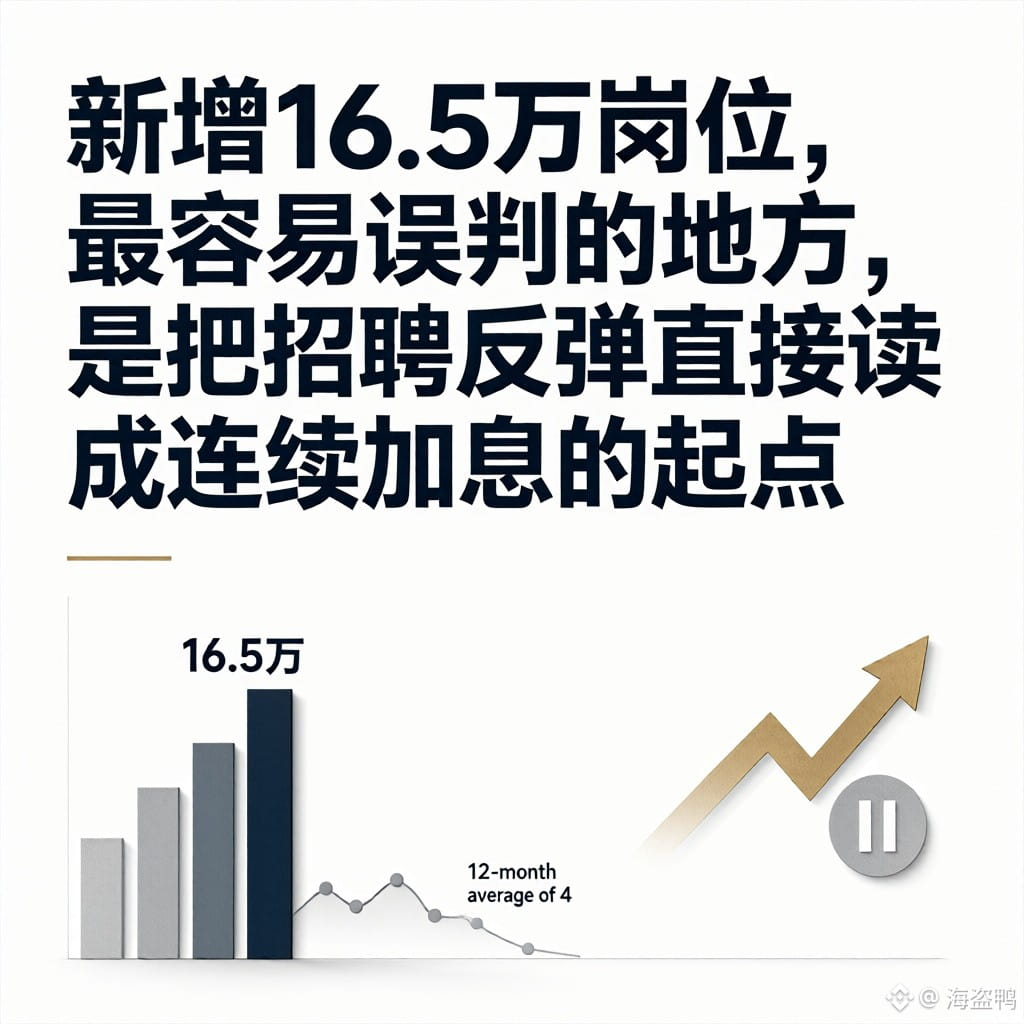
The addition of 165,000 jobs is easy to misread: the biggest mistake is treating a hiring rebound as the starting point for a series of rate hikes.
The U.S. Bureau of Labor Statistics reported on November 6 that nonfarm payrolls rose by 165,000 in October, well above the average monthly gain of 48,000 over the previous 12 months. August and September were revised up by a combined 84,000. Average hourly earnings rose 0.4% month over month and 3.1% year over year, while the unemployment rate was 4.1%. The hawkish case is supported by both this month’s job growth and stronger historical data.
The transmission mechanism is straightforward: steadier employment and wages provide more support for household income, reducing the central bank’s urgency to rescue growth. If markets respond by raising their expectations for future interest rates, borrowing costs and the appeal of holding cash will both increase, putting assets like $BTC up against a higher cost of capital.
But another set of figures should not be overlooked: the number of people working part time for economic reasons rose by 339,000 to 4.8 million, while the average workweek remained at 34.4 hours. Job growth and some workers not getting enough hours can happen at the same time. More jobs do not automatically mean demand is overheating across the board; there is still a gap between businesses hiring and residents being fully employed.
My view is to be cautious on $BTC in the short term, since this report weakens the case for monetary easing. But one month of wage growth is not enough on its own to bet on sustained rate hikes. The bears have the upper hand only if resilient employment turns into persistent inflation—not simply because strong data appeared and the market mechanically sells.
Next, I’ll look at core inflation, part-time employment, and short-term Treasury yields together. If wage growth cools and yields retreat after spiking, the bad news may already have been priced in. If inflation remains elevated, financing conditions for a rebound will stay tight.
Wage and part-time employment data tell different sides of the story. Will you keep betting against $BTC , or turn bullish once short-term rates fall?
#NonfarmPayrollsBoostRateHikeExpectations