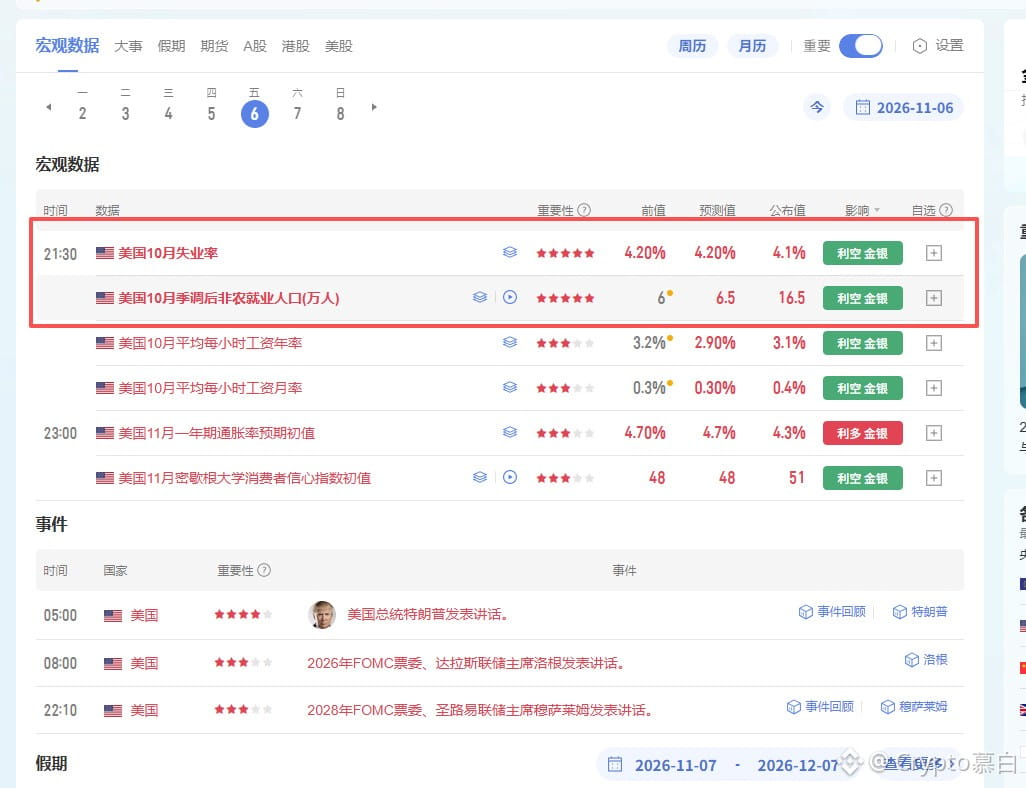
Last night, October’s nonfarm payrolls blew past expectations
Employment rose by 165,000, versus expectations of 65,000; the previous two months were revised up by 84,000. The unemployment rate fell to 4.1%.
As soon as the data came out, the market changed its tune: the probability of a December rate hike jumped from around 75% to about 80%.
FedWatch showed just a 22.3% chance of rates remaining unchanged in December, and a 77.7% chance of a 25-basis-point hike. Short-term interest rate futures fell as traders doubled down on bets that rates would rise again in December.
Job growth was broad-based, led by professional and business services and health care.
But one detail is worth noting: the preliminary reading for one-year inflation expectations in November was 4.3%, below expectations of 4.7%. With inflation expectations falling while employment remains so strong, the Fed has more room to shift its policy focus back to inflationary pressures.
Also, the U.S. economy now needs to create only about 40,000 jobs per month to keep pace with growth in the working-age population—down from around 150,000 in 2024. A shrinking labor supply, driven by tighter immigration and more retirements, is the main reason the unemployment rate is low. Economists and Fed officials have consistently maintained that the labor market itself does not pose an inflation risk.
Employment is strong enough to revive rate-hike bets, while low unemployment means the Fed isn’t panicking. Whether rates rise in December or not, this report has tipped the scales a little further toward a hike.
#非农就业数据推升加息预期 #CPI前瞻,12月利率走向迎关键考验
Employment rose by 165,000, versus expectations of 65,000; the previous two months were revised up by 84,000. The unemployment rate fell to 4.1%.
As soon as the data came out, the market changed its tune: the probability of a December rate hike jumped from around 75% to about 80%.
FedWatch showed just a 22.3% chance of rates remaining unchanged in December, and a 77.7% chance of a 25-basis-point hike. Short-term interest rate futures fell as traders doubled down on bets that rates would rise again in December.
Job growth was broad-based, led by professional and business services and health care.
But one detail is worth noting: the preliminary reading for one-year inflation expectations in November was 4.3%, below expectations of 4.7%. With inflation expectations falling while employment remains so strong, the Fed has more room to shift its policy focus back to inflationary pressures.
Also, the U.S. economy now needs to create only about 40,000 jobs per month to keep pace with growth in the working-age population—down from around 150,000 in 2024. A shrinking labor supply, driven by tighter immigration and more retirements, is the main reason the unemployment rate is low. Economists and Fed officials have consistently maintained that the labor market itself does not pose an inflation risk.
Employment is strong enough to revive rate-hike bets, while low unemployment means the Fed isn’t panicking. Whether rates rise in December or not, this report has tipped the scales a little further toward a hike.
#非农就业数据推升加息预期 #CPI前瞻,12月利率走向迎关键考验