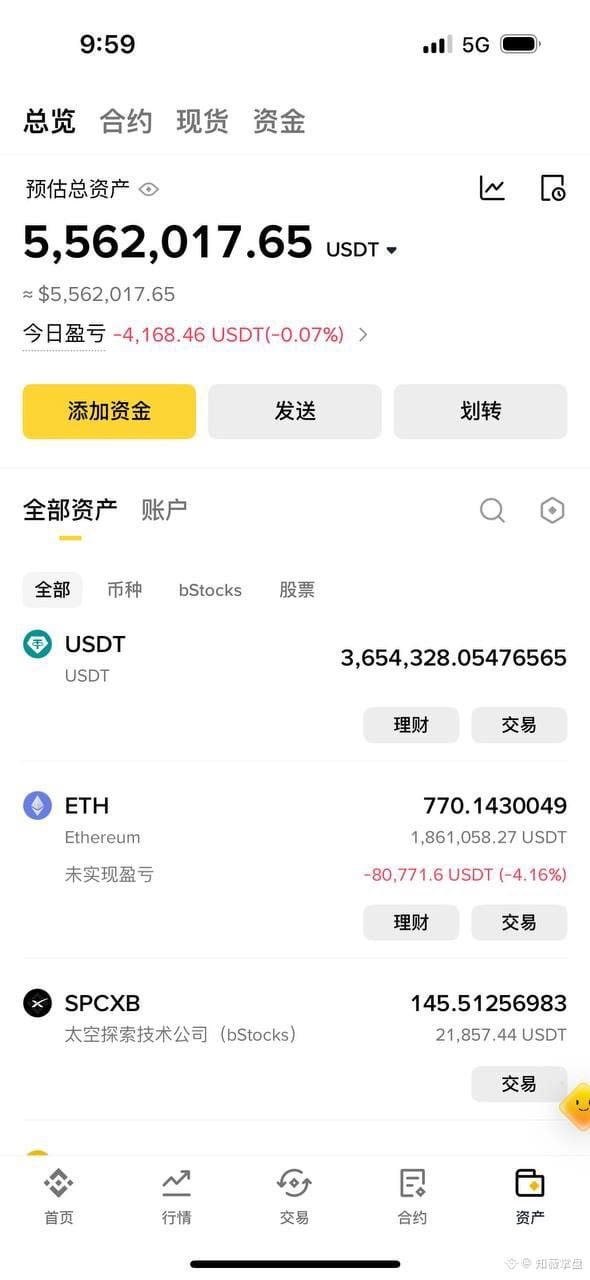
I lost 50,000 U and was down to just 1,846 U. In that situation, most people would pretty much close their accounts, stop looking, and accept their fate.
Last year, one of my followers who worked in insurance really did reach that point. A little after 2 a.m., he sent me a message: “I’ve got 1,846 U left. Is there still a chance?”
I didn’t give him any motivational fluff or tell him to gamble. I just said: “Stay calm. First, stay in the game and wait for the right moment.”
Soon after, a market structure emerged. When coins like $RIVER saw a surge in volume and held firm at a key level, I told him to test the waters with a small position—not go all-in, just see how the market reacted.
It did make a move, and in that first round he got close to 10,000 U.
Later, the pullback held above the structure, so he took another trade in the direction of the trend, and his account gradually climbed back to tens of thousands of U.
The truly pivotal trade came later, toward the end of the trend. Trading volume visibly surged and the order book showed signs of disagreement. Many people were still calling for higher prices, but I told him not to chase. Instead, after waiting for confirmation, he made a trade based on the opposite scenario and captured part of the pullback.
Over that stretch, he gradually grew his account from 1,846 U to more than 200,000 U. It took time, and it wasn’t the result of one or two trades—it came from getting several key decisions right.
Later, he said something that felt very real: “It’s not that I suddenly learned how to trade. I finally started to understand when to wait and when to stop.”
The hardest thing in crypto has never been catching one big trade. It’s being able to stick to your rules when you’re close to giving up.
The market will always be there. Whether you can survive and slowly build back up depends on execution, not emotion.
#非农就业数据推升加息预期