
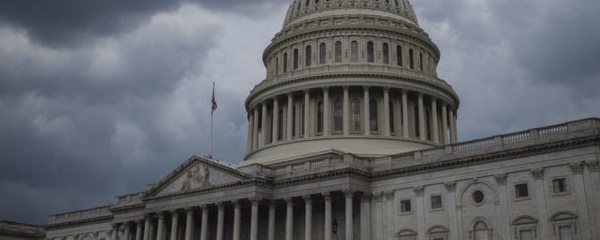

A Reuters analysis took stock of the long list of Trump measures that the new Democratic majority could try to block, especially in the energy sector.
Major Democratic victories in legislative races and other contests during the midterm elections dealt a blow to President Donald Trump and are expected to influence U.S. energy and environmental policy in various ways.
Congressional Democrats, if they act in unison, could take various steps to halt the U.S. war against Iran, a conflict that has caused diesel and gasoline prices to rise sharply.
These measures could include placing conditions on public spending to encourage the United States to reach an agreement guaranteeing the opening of the Strait of Hormuz, as well as blocking the confirmation of government officials’ appointments.
“Given that both chambers now have the ability to pass resolutions, block funding for the war, and delay confirmations, the administration has less political room to maneuver and faces greater institutional pressure to reach an agreement on the Strait of Hormuz,” said Claudio Galimberti, chief economist at Rystad Energy, according to Reuters.
Congressional investigations
Democratic lawmakers, who will now lead congressional committees, could launch investigations into the Trump administration’s policies and affairs, ranging from U.S. oil deals with Venezuela to an agreement to acquire diesel from Russia.
Democrats could also investigate whether oil and gas companies were rewarded with tax breaks, subsidies, and the removal of environmental regulations after then-candidate Donald Trump asked them for $1 billion in donations during the 2024 presidential campaign.
Last month, Democratic and Republican senators urged Trump to change course on the diesel issue, arguing that the administration had not consulted Congress.
Although President Donald Trump’s administration could refuse to respond to subpoenas or delay its responses, these investigations could slow the government’s energy policy.
Uncertainty over other energy deals
The Democratic victory could lead Japan and South Korea to postpone their investment commitments in the United States, which total hundreds of billions of dollars.
Among the projects the Trump administration has promised to support is a liquefied natural gas (LNG) initiative in Alaska, valued at up to $54.4 billion, intended to transport natural gas from the north of the state to customers in the United States and Asia.
The administration has also supported nuclear energy projects. “Democrats appear to believe these investment commitments were imposed on allies,” said Heo Yoon, an economics professor at Sogang University in Seoul.
Last month, South Korea confirmed it would invest $22.3 billion in a gas project in Texas to supply data centers for artificial intelligence, and $120 billion to build eight nuclear reactors in the United States. However, these agreements are not binding.
More oversight of artificial intelligence
Democrats have capitalized on bipartisan opposition to the rapid expansion of artificial intelligence data centers, as well as voters’ discontent with big tech companies, according to the Reuters report.
Across the country, 33 of the 34 ballot measures seeking to restrict the construction of data centers were approved by voters. Some of the Democrats elected have voiced support for moratoriums or regulations on the construction of these facilities.
There is now a greater likelihood of increased oversight and scrutiny of artificial intelligence risks, stronger protections for utility customers, and stricter reporting requirements regarding energy consumption and pollution.
\u003ct-81/\u003e\u003ct-82/\u003e\u003ct-83/\u003e\u003ct-84/\u003e\u003ct-85/\u003e\u003cc-86/\u003e\u003cc-87/\u003e