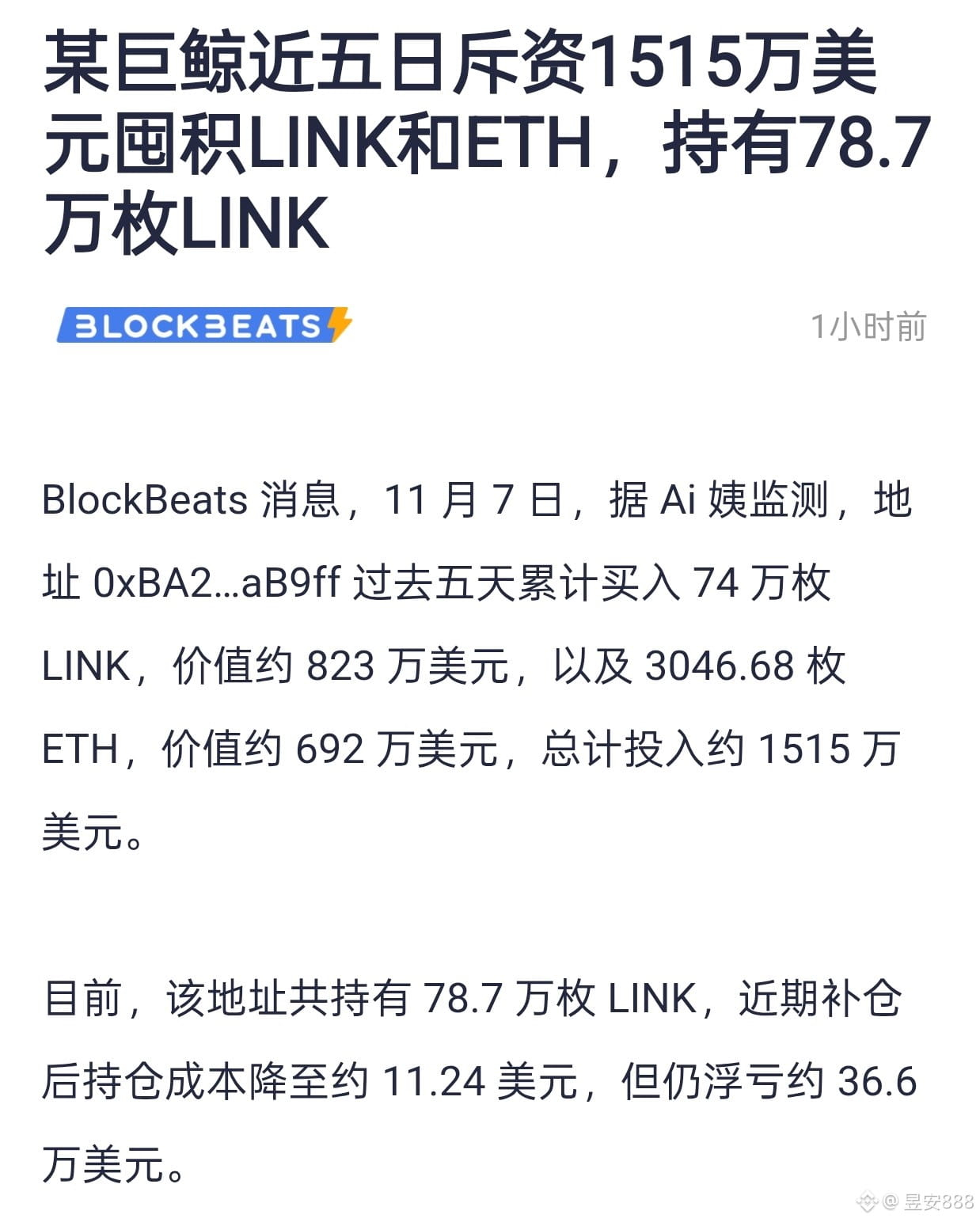
Spent $15 million going all-in on the dip—then checked his account and was still in the red!
Don’t assume the bottom is in just because you see a whale buying like crazy, and rush in after them.
On November 7, an on-chain tracker spotted a big player. Over the past five days, this guy had splashed out more than $15 million: buying 740,000 LINK and over 3,000 ETH.
Doesn’t that look like a major market player aggressively defending the price?
But guess what? The moves looked impressive, but a closer look showed he was going nowhere—he’d gotten badly stuck buying at the top, and now he could only keep adding to his position to lower his average cost. Even after bringing his average down to $11.24, his LINK holdings were still sitting on an unrealized loss of $366,000.
See the absurdity here?
This is crypto’s most realistic version of the “infinite-ammo defense strategy.” Price drops? Buy! Drops again? Buy again! This whale used $15 million in cold, hard cash to turn himself from a bagholder who bought near the top into a heavily invested whale with an average cost of $11.
Big players can afford to do this because they’ve still got tens of millions in the bank. They can wait it out and hold on until the next bull run.
But what about you?
You might only have a few tens of thousands of U. The price drops 10%, and you add a little. It drops 20%, and you go all in. By the time it’s down 30%, all you can do is watch other people scoop up coins at the bottom while you can barely afford to eat.
So don’t blindly follow whales and try to buy the dip. You think they’re buying the bottom, but really, they’re just trying to keep their underwater positions alive.$ETH $LINK