What is sharding, and why can it improve a public blockchain’s performance? Don’t panic, your class rep is here:
NEAR Protocol uses a sharding design called Nightshade, splitting the network into multiple shards that process transactions in parallel.
A common approach is to randomly rotate the validators across shards regularly, making it difficult for attackers to concentrate their forces on a particular shard in advance.
My notes are full of useful insights; my positions are full of lessons.
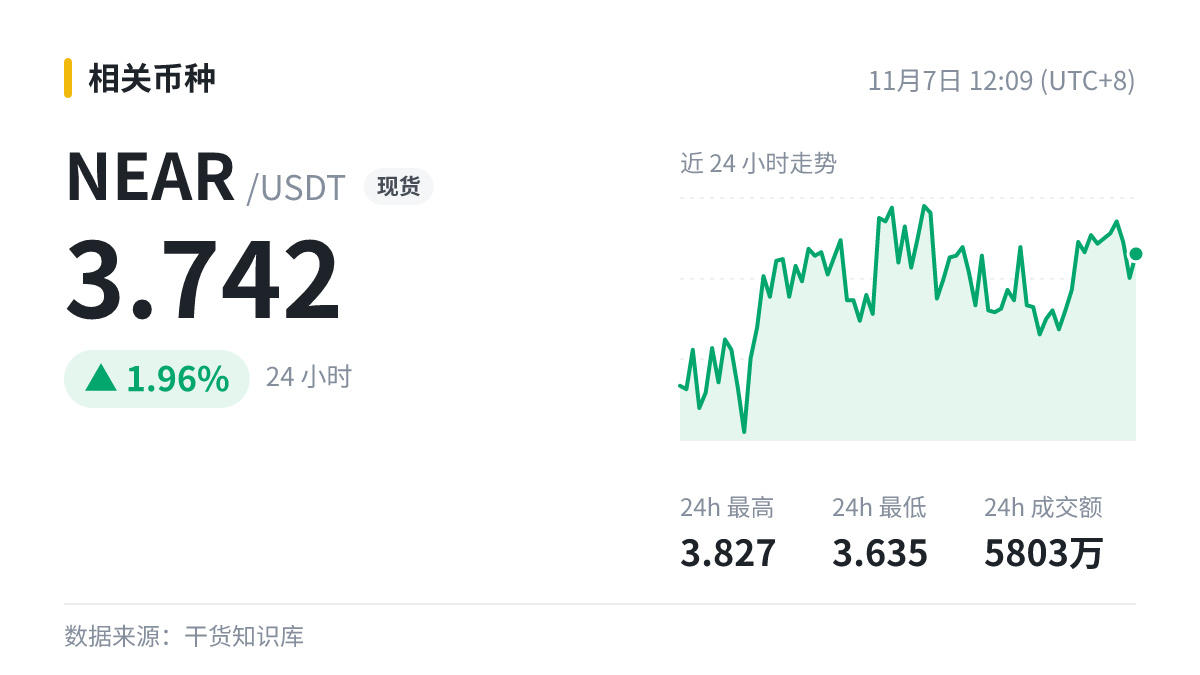
$NEAR 3.742(+1.96%)
These are just my personal opinions. Don’t use them as a basis for trading.