AMD recouped a week’s losses in one day. It’s never earnings that are being priced in
This week, AMD fell 11.04%, then climbed 11.04% in a single day on Friday. The same earnings report was read in two opposite ways over 48 hours. The readers changed their tune; the company didn’t change a word.
The S&P 500 closed at 7376.86, up 0.31%; the Nasdaq closed at 26989.99, up 1.35%; the Dow went the other way, falling 0.46%.
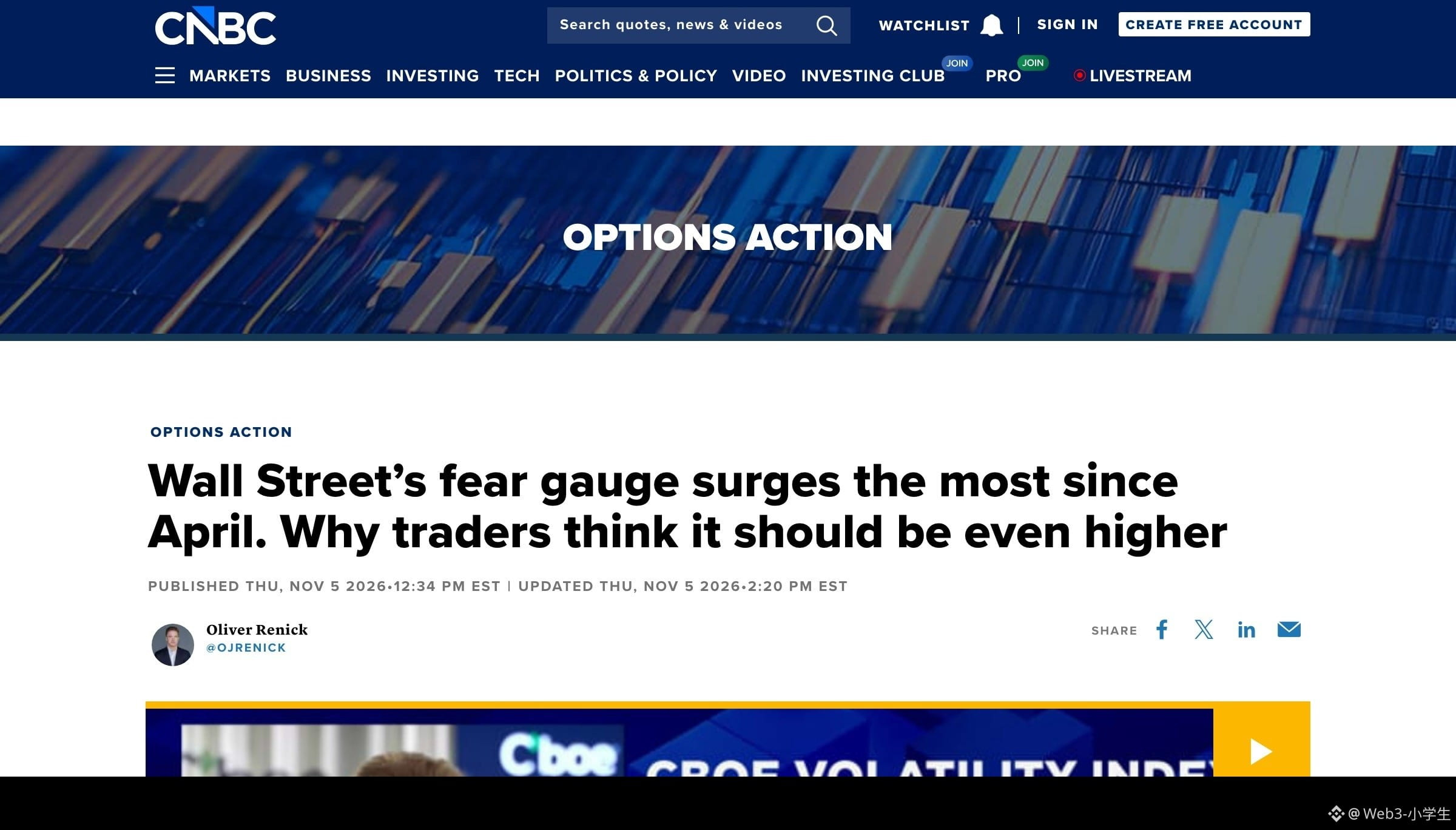
The fear index closed at 25.64, up 39.12% for the week.
Three media outlets wrote about the same thing. The WSJ said hedge funds were cutting positions and laying off staff. CNBC quoted traders saying oil prices and interest rates had barely moved, and that the market action looked like a liquidation. The FT called it a “tepid recovery.”
AMD reported earnings on November 3: earnings of $2.09 per share and record revenue. The stock rose 3.66% that day. Two days later, the whole market crashed, and AMD fell 17.26% in a single day.
On November 6, it rose 11.04%, closing at 449.04, still 8.13% below where it was before the crash.
The math of losses is asymmetric. After a 17.26% drop, it takes a 20.86% gain to get back to where you started. Friday’s 11.04% gain made up only a little over half the loss. It looks dramatic, but it’s really just paying back what was lost.
I’m watching something else. This week, the only hard information behind the market’s pricing of whether AI is still doing well was one report: the one behind $AMDB . And from November 4 to 6, not a single company released new numbers.
There are more than a dozen companies in this chain. Buyers can’t tell who’s really making money and who’s footing the bill, so the market picks the cheapest signal and uses it to price the whole group. That’s what did the work this week.
Over two days with no new numbers, the same document was marked down 17.26%, then lifted back up 11.04%.
The document didn’t change. What changed was who still had shares to sell.
Some people are comparing this to 2000. It’s different. Back then, Cisco’s customers used venture capital money to buy equipment. Once that money dried up, the orders disappeared. Does that still hold true today?
AMD earned $2.09 per share in a quarter—that’s real money paid by customers. The evidence on the other side is just as solid.
Even profitable companies can fall 17.26% in a day. What fell was the multiple assigned to those earnings; the earnings themselves didn’t change. This week, Nvidia, represented by $NVDAB , fell 10.67%, and Broadcom fell 11.20%. The leaders didn’t fare much better than the smaller players.
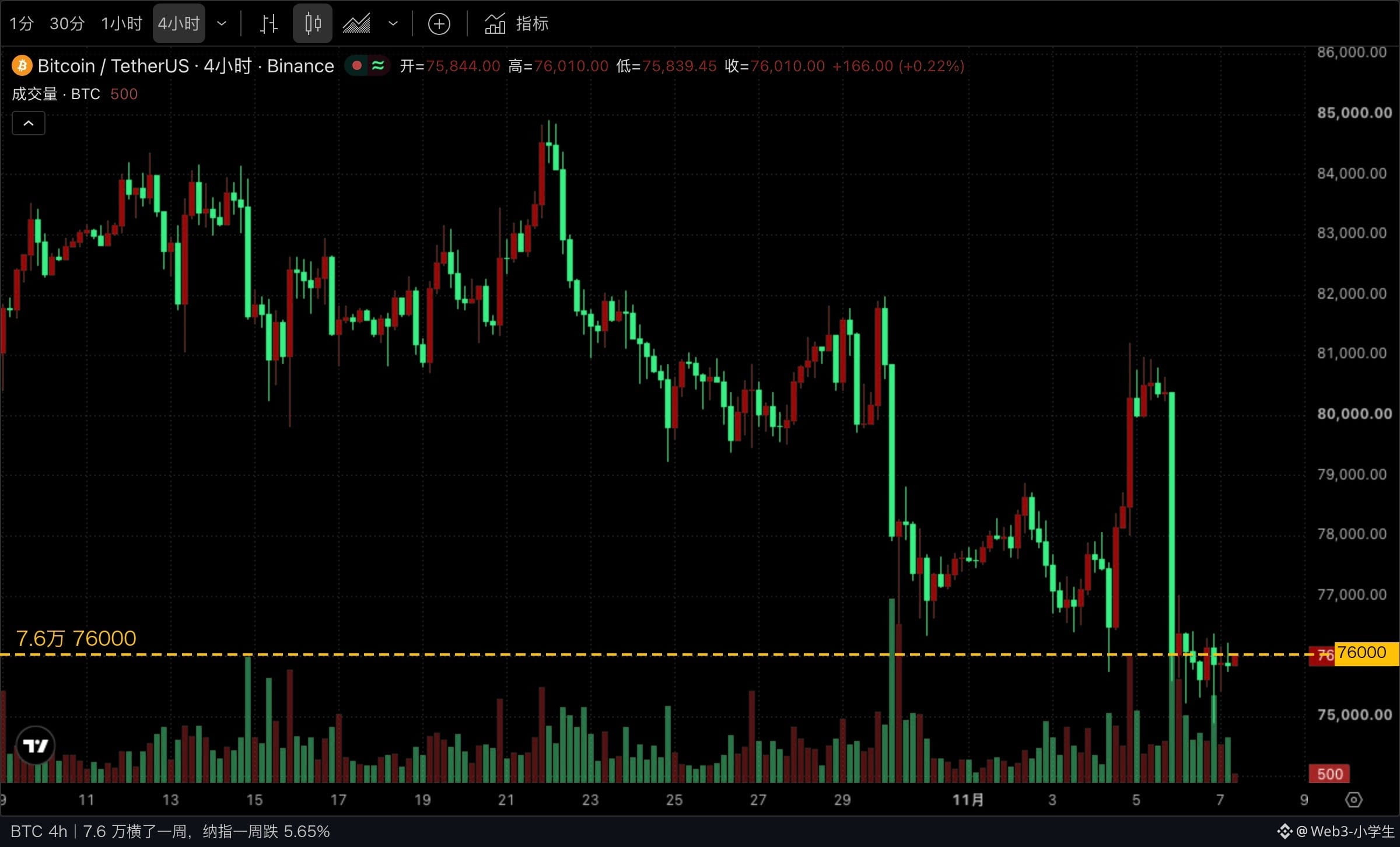
Crypto barely followed along this week. $BTC was at 75958, moving just 0.26% in 24 hours. Ether was at 2245, SOL at 90.44. The same discount-rate shock hit both markets, but the moves differed by an order of magnitude.
Crypto’s multiples were already crushed six months ago. What’s left is less sensitive to interest rates, and its effective duration is shorter. It’s that simple.
Keep an eye on Tuesday’s CPI. After that, Nvidia reports on November 25. That’s the next point when this chain can be priced based on real numbers; the 18 days in between are all proxies.
No one knows exactly what this chain is worth right now. Any market that prices an entire chain based on one earnings report will eventually have to settle the score all at once when the next real numbers arrive.
Because a cheap signal can never beat real accounts.
$BTC 75958 moved sideways for a week, while the Nasdaq was still down 5.65% for the week. The rebound only counts if it holds 26900; if it can’t, it’s just paying back what it owes.
This is not investment advice.
#美股 #英伟达 #Bitcoin
This week, AMD fell 11.04%, then climbed 11.04% in a single day on Friday. The same earnings report was read in two opposite ways over 48 hours. The readers changed their tune; the company didn’t change a word.
The S&P 500 closed at 7376.86, up 0.31%; the Nasdaq closed at 26989.99, up 1.35%; the Dow went the other way, falling 0.46%.
The fear index closed at 25.64, up 39.12% for the week.
Three media outlets wrote about the same thing. The WSJ said hedge funds were cutting positions and laying off staff. CNBC quoted traders saying oil prices and interest rates had barely moved, and that the market action looked like a liquidation. The FT called it a “tepid recovery.”
AMD reported earnings on November 3: earnings of $2.09 per share and record revenue. The stock rose 3.66% that day. Two days later, the whole market crashed, and AMD fell 17.26% in a single day.
On November 6, it rose 11.04%, closing at 449.04, still 8.13% below where it was before the crash.
The math of losses is asymmetric. After a 17.26% drop, it takes a 20.86% gain to get back to where you started. Friday’s 11.04% gain made up only a little over half the loss. It looks dramatic, but it’s really just paying back what was lost.
I’m watching something else. This week, the only hard information behind the market’s pricing of whether AI is still doing well was one report: the one behind $AMDB . And from November 4 to 6, not a single company released new numbers.
There are more than a dozen companies in this chain. Buyers can’t tell who’s really making money and who’s footing the bill, so the market picks the cheapest signal and uses it to price the whole group. That’s what did the work this week.
Over two days with no new numbers, the same document was marked down 17.26%, then lifted back up 11.04%.
The document didn’t change. What changed was who still had shares to sell.
Some people are comparing this to 2000. It’s different. Back then, Cisco’s customers used venture capital money to buy equipment. Once that money dried up, the orders disappeared. Does that still hold true today?
AMD earned $2.09 per share in a quarter—that’s real money paid by customers. The evidence on the other side is just as solid.
Even profitable companies can fall 17.26% in a day. What fell was the multiple assigned to those earnings; the earnings themselves didn’t change. This week, Nvidia, represented by $NVDAB , fell 10.67%, and Broadcom fell 11.20%. The leaders didn’t fare much better than the smaller players.
Crypto barely followed along this week. $BTC was at 75958, moving just 0.26% in 24 hours. Ether was at 2245, SOL at 90.44. The same discount-rate shock hit both markets, but the moves differed by an order of magnitude.
Crypto’s multiples were already crushed six months ago. What’s left is less sensitive to interest rates, and its effective duration is shorter. It’s that simple.
Keep an eye on Tuesday’s CPI. After that, Nvidia reports on November 25. That’s the next point when this chain can be priced based on real numbers; the 18 days in between are all proxies.
No one knows exactly what this chain is worth right now. Any market that prices an entire chain based on one earnings report will eventually have to settle the score all at once when the next real numbers arrive.
Because a cheap signal can never beat real accounts.
$BTC 75958 moved sideways for a week, while the Nasdaq was still down 5.65% for the week. The rebound only counts if it holds 26900; if it can’t, it’s just paying back what it owes.
This is not investment advice.
#美股 #英伟达 #Bitcoin