In the past, all you needed to remember was one line: “Election shake-up = oil prices head one way: down.”
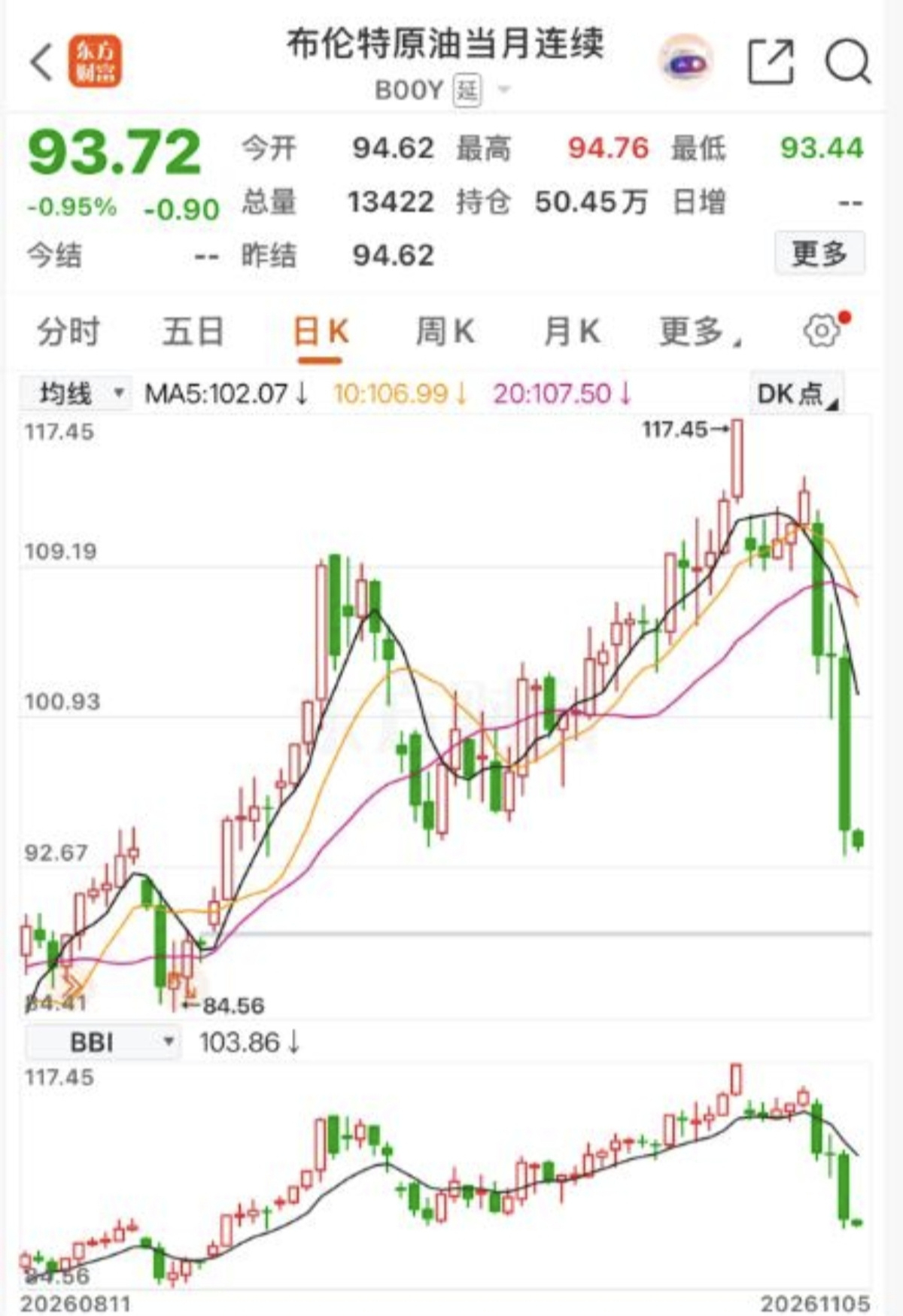
It got ripped up twice in a week: Brent plunged 8.67% on Thursday, falling below $100 for the first time in two months. It was down 13.2% for the week, its biggest weekly drop since 2022—yet closed flat on Friday at $98.32. Is the slide running out of steam?
Don’t rush to call for “$80 oil” just yet.
Look at the numbers behind it:
① What’s falling is the risk premium—around $20 a barrel in geopolitical premium has rapidly unwound as the market priced in the “war continues” scenario all at once.
② The physical market hasn’t eased at all: distillate inventories have fallen to their lowest level since May 2003, and Saudi Arabia has been forced to sell oil to Asia at a $7 discount. The paper market has broken through support; the physical market hasn’t.
③ Analysts are divided: JPMorgan sees a surplus of 1.4 million barrels a day in October, while Goldman Sachs says the market is balanced. This is a swing in sentiment, not confirmation of a trend.
The best summary from the market: “The premium can unwind quickly, but what’s coming out is the fear—not the full weight of supply and demand.”
In plain English: the war-risk premium is being squeezed out, but the diesel bill remains. In the short term, this is a bottoming zone after a shakeout, not the start of a new trend. But don’t expect a smooth rebound either—“peace” is still just talk.
What does this mean for your gas tank and your wallet? Three things to do:
1. Don’t chase the short: CTA net longs have already been cut from 73% to 55%—crowded short positions can fuel a rebound. Brent is just a step away from its 200-day moving average at $93.59; wait for a break below $90 before talking about a new trend.
2. Watch the physical market, not the charts: next week’s monthly reports from the IEA, EIA and OPEC; whether Saudi discounts deepen; and whether traffic through the Strait of Hormuz can hold at 80% of prewar levels.
3. Household budget: China’s domestic fuel-price adjustment window is on November 12. The price increase this round may be sharply reduced or even put on hold—fill up if you need to.
Risk warning: FGE says outright that “the risk of escalation is greatest over the next two months.” Overnight gaps can happen at any time—traders should use options, not naked positions. There’s only one line that invalidates this view: a decisive break below $90 for Brent. That would invalidate the shakeout thesis and shift the outlook to a downtrend.
What to watch: next week’s three major monthly reports, and whether the US and Iran can reach an “interim agreement with teeth.”
What’s come out is the fear premium—not the diesel bill.
The direction is set: the sell-off is bottoming, and any rebound will be limited. Don’t chase the short; $90 is the dividing line between bulls and bears.
#原油价格跌破100美元