Crypto: Solana seeks to address a hidden risk to its blockchain
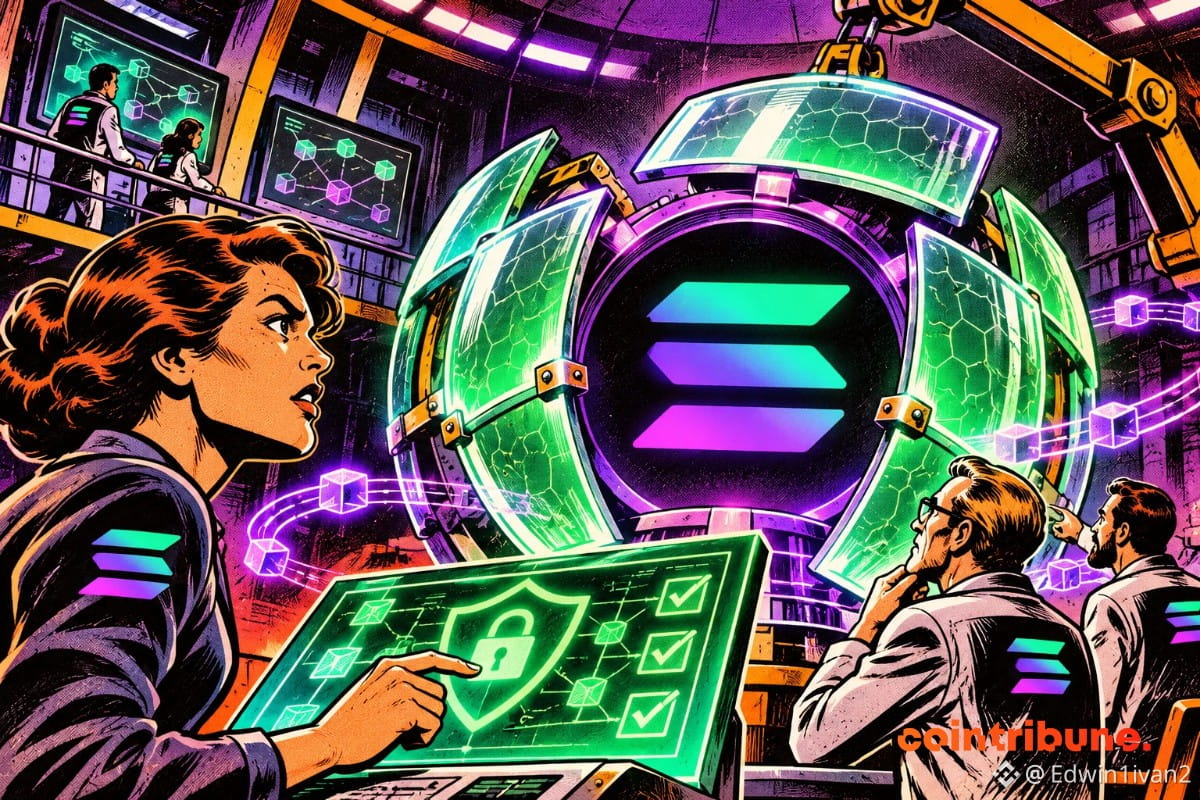
Solana is considering a technical overhaul to prevent its validators from interpreting the rules of its crypto network differently. On October 30, 2026, Brennan Watt, CEO of Anza, proposed bringing the blockchain’s operating rules together in a single specification. The draft already covers 18 technical areas, including transactions, consensus, and rewards. The goal is to prevent discrepancies that could disrupt Solana’s operations.
Solana proposes a shared document to define its validators’ rules.
The project covers 18 technical areas, from transactions to consensus.
The overhaul is still under discussion and does not yet have an implementation date.
Solana wants to prevent disagreements among its validators
Solana developers have identified a risk related to the software used to keep the blockchain running. Although Fidelity recently highlighted Solana’s greater stability and its decentralization issues, technical matters still require attention.
Validators are the computers responsible for checking transactions and participating in block creation. For the network to function properly, they must all apply the same rules.
Solana has several validator clients. Agave, developed by Anza, remains one of the main ones. Firedancer, created by Jump Crypto, uses an independent architecture.
This diversity offers security benefits for crypto. If a bug appears in one client, the others can continue to operate correctly, provided they do not share the same vulnerability.
$SOL
$BLOX.ETF
$CRI.US
#solana