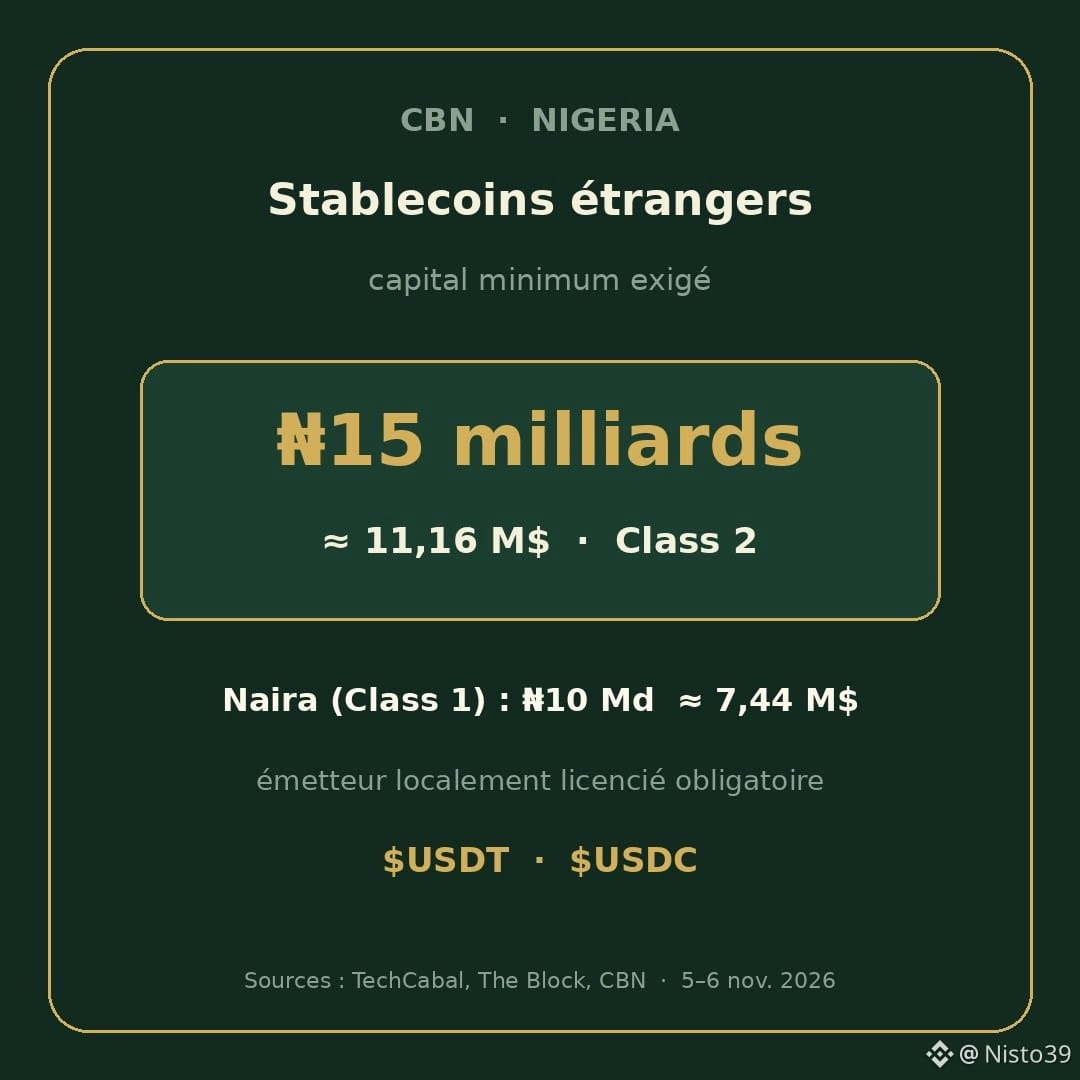
₦15 billion. That is the minimum capital the Central Bank of Nigeria now requires from a foreign-currency stablecoin issuer — about $11.16 million, according to TechCabal.
Taking effect around November 5, 2026. For a naira-pegged stablecoin: ₦10 billion (~$7.44 million). And this is more than just an accounting figure.
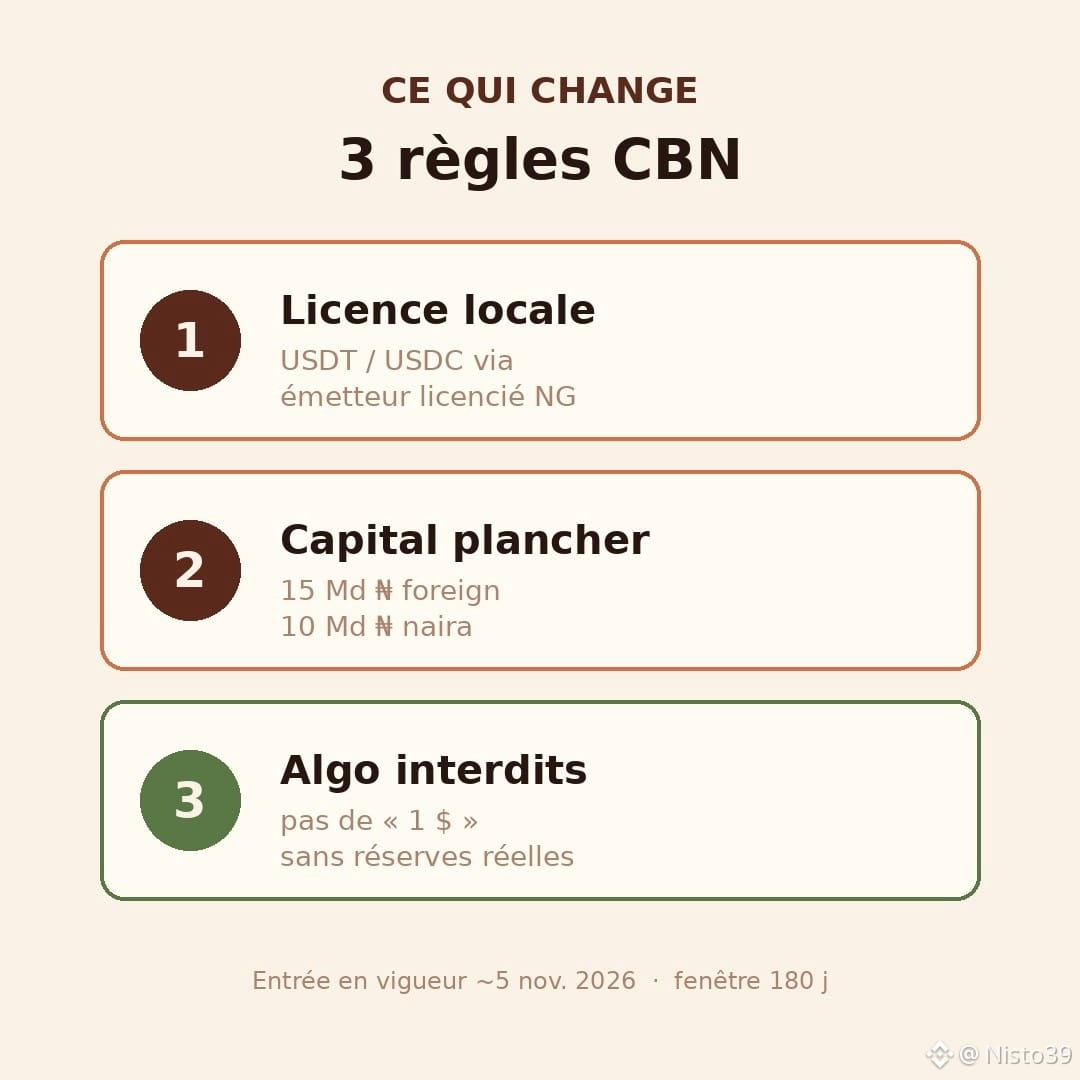
Three concrete rules:
• $USDT / $USDC (and any foreign-currency stablecoin) may only be offered to Nigerians through a locally incorporated and licensed issuer. A foreign license is no longer enough.
• Algorithmic stablecoins are banned — those that maintain their “$1” value mainly by manipulating supply, without commensurate reserves.
• Existing operators: registration within 30 days, license application within 180 days.
Nigeria remains Africa’s largest crypto market. Circle just appointed an Africa VP there. The CBN, meanwhile, wants attested reserves and a genuine option to redeem at par.
My take: this isn’t a “crypto ban.” It’s an expensive entry ticket to keep the right to distribute digital dollars to 200+ million people. Whoever pays that ticket will decide what you can actually use tomorrow.
Sources: TechCabal, The Block, CBN (Nov. 5–6, 2026). Not financial advice.
Does this ₦15 billion threshold make the market safer — or reserve it for the biggest players?
#Stablecoin #Nigeria #CryptoNews #USDT #Regulation