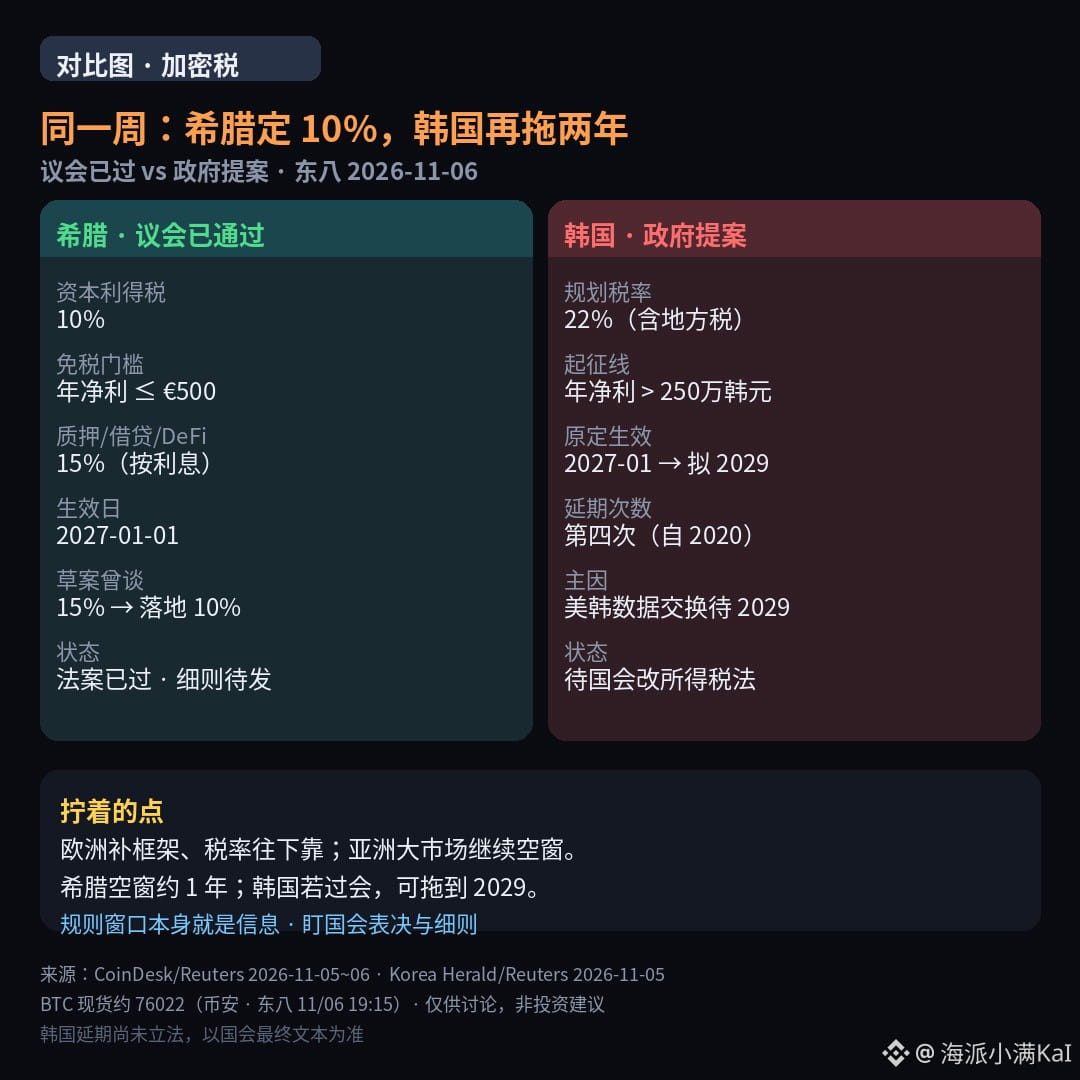
Two crypto tax headlines in the same week, pulling in opposite directions.
On Thursday, Greece’s parliament passed a bill setting a 10% tax on individuals’ crypto capital gains, with annual net profits of up to €500 tax-free; income from staking, lending, and DeFi liquidity is taxed separately at 15%. The effective date is January 1, 2027. An earlier draft had proposed 15%, but the final rate was cut to 10%—on the lower end of the EU’s 8% to 30% range.
South Korea’s Finance Ministry said the same day that the crypto income tax originally slated to take effect in 2027 would be delayed again, to 2029. This is the fourth delay since the legislation was passed in 2020. The planned rate remains 22% (including local tax) on annual net profits above 2.5 million won (about $1,869). The stated reason is straightforward: exchanging transaction data with the US won’t be possible until 2029, making it difficult to verify overseas purchase prices. This is only a government proposal; it will take an amendment to the Income Tax Act by the National Assembly to make it official.
One side of Europe is filling in a comprehensive framework and lowering tax rates; meanwhile, a major Asian trading market remains in limbo. The regulatory timeline itself is a signal—Greece has another year to go, while South Korea’s tax-free window could last until 2029 if the proposal passes.
#希腊加密税 #韩国加密税 $BTC