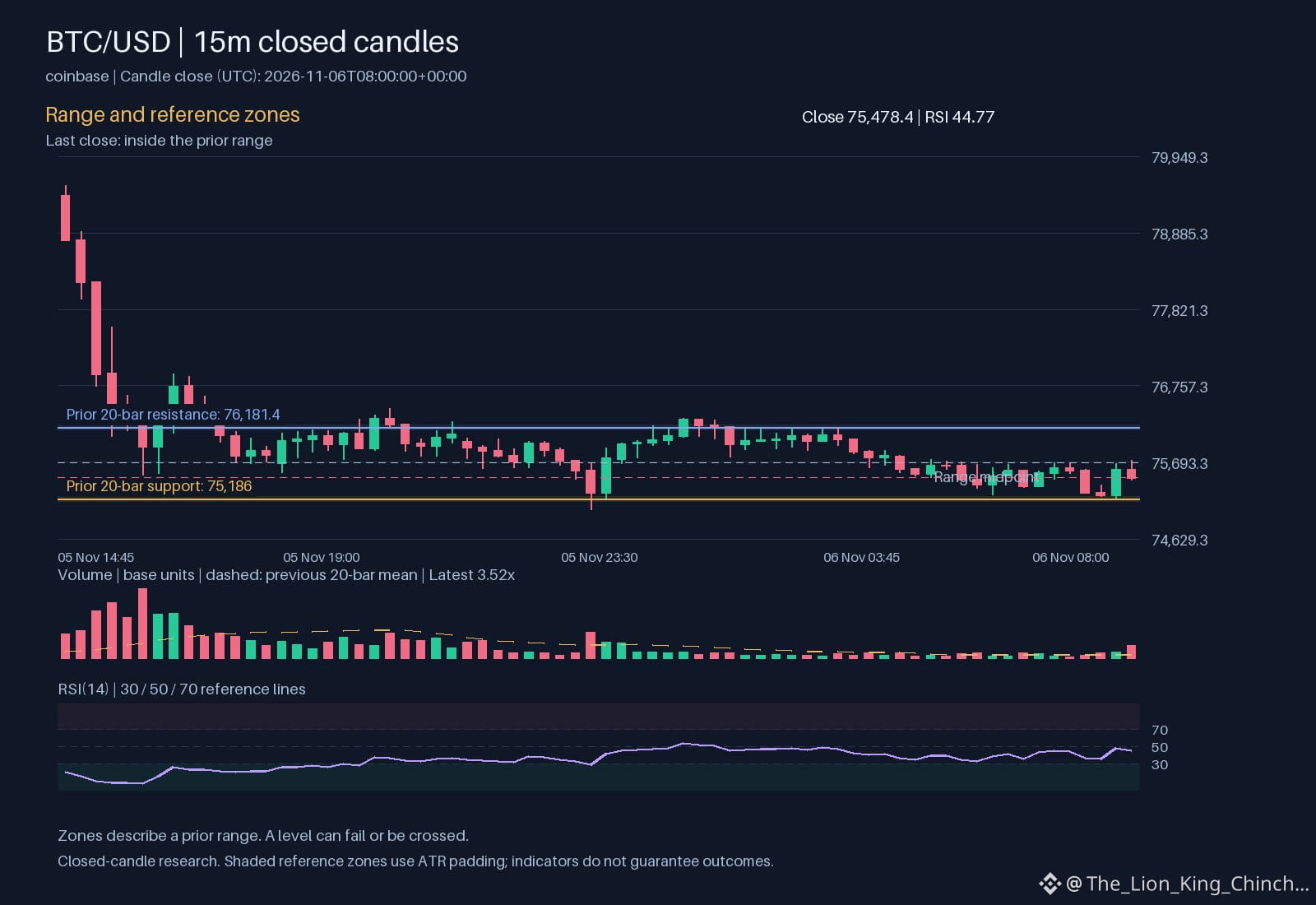
$BTC: When Volume Peaks, How Fear of Missing Out Skews the Next Move
The current observation shows $BTC trading hourly direction down while volume sits above baseline inside the recorded range. This pattern often triggers the fear of missing out (FOMO) bias.
**The bias**
FOMO makes traders focus on the recent price swing and imagine that a rapid reversal is imminent, even when the data only shows a modest downtrend and higher volume. The brain gives extra weight to the loudest recent move, anchoring expectations to a possible bounce that may never materialize.
**How it changes a research decision**
An analyst influenced by FOMO might upgrade the outlook, add a bullish target, or ignore the downtrend because the volume spike feels like a sign of hidden buying power. The bias can lead to an early entry that contradicts the steady hourly decline, increasing exposure to a continuation move.
**A practical self‑check**
Before adjusting any forecast, pause and ask: *Am I reacting to the recent volume surge or to the underlying price trend?* Write down the observed direction (down) and the volume condition (above baseline) on a separate line. Then, compare any new hypothesis against these facts. If the hypothesis requires ignoring the downtrend, note it as a potential FOMO influence.
By separating the factual signal from the emotional reaction, you reduce the risk of anchoring on a fleeting spike and keep the analysis grounded. 😊
Probabilistic market research, not a recommendation or guaranteed return.
Would you keep the same rule after missing a move?
#BTC #TradingPsychology #CryptoLearning