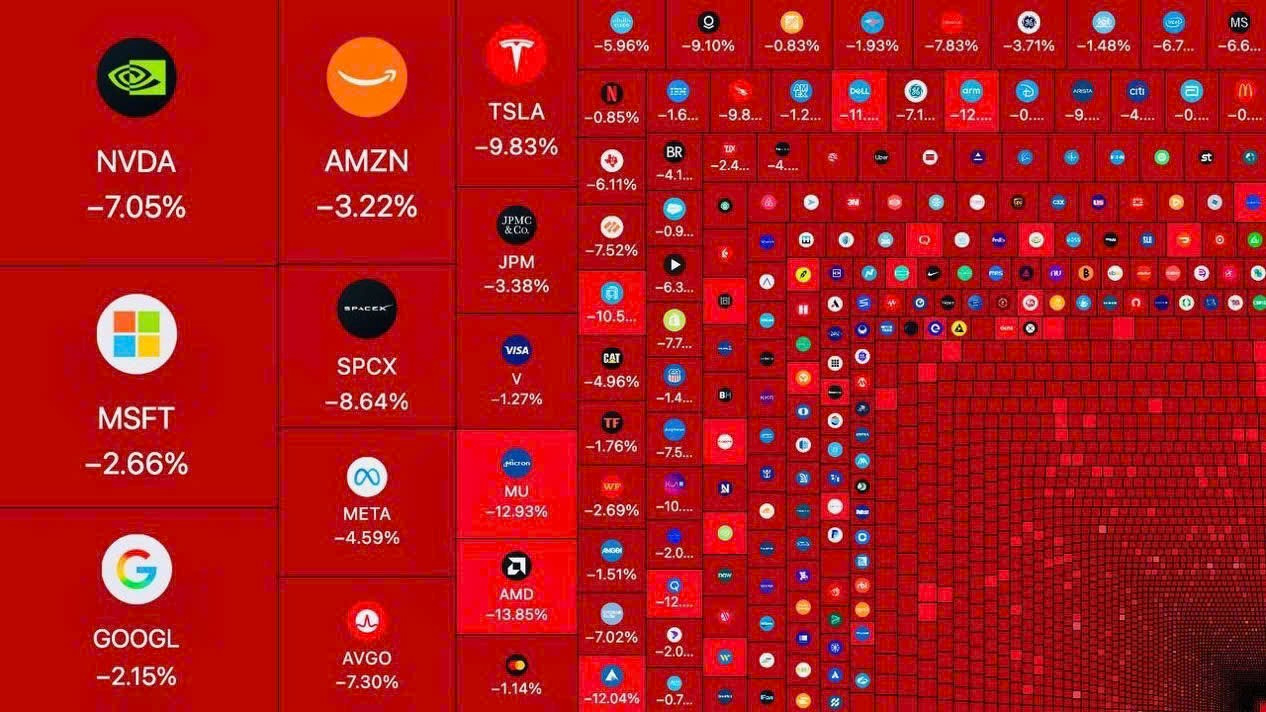

The Democrats take control of Congress in January 2027. These are the specific effects the market will have to price in over the next two years 🧐
Let’s start with the positives:
- Pressure from a Democratic Congress could push Trump to roll back some tariffs, which would be good news for risk assets and global trade.
- But Trump still holds executive power, so most tariffs are likely to remain in place. Pressure to end the Iran war could bring oil prices down and ease inflation -> just what the Fed needs to have room to cut interest rates.
- Stablecoins and real-world asset tokenization still have a strong enough bipartisan foundation to continue developing despite legal uncertainty.
Democrats are strongly opposed to AI and data centers, so here’s what you need to watch:
- A Democratic Congress and new state governors will tighten oversight of data centers’ electricity use and environmental costs -> direct pressure on the capex cycle across the chip industry.
- Budget: Democrats could restore cuts to Medicaid and SNAP, while legislative gridlock keeps the deficit high -> debt ceiling risks could return in 2027.
- Crypto: The CLARITY Act will have a significantly harder time passing. Democrats could propose a Crypto Bill of Rights that expands SEC oversight, protects customer assets if a company goes bankrupt, and limits conflicts of interest.
- Investigations into World Liberty Financial and the Trump family’s crypto activities are likely to be opened.
- Crypto in 401(k) plans and Polymarket/Kalshi could also face tighter oversight.
This is a two-speed environment. On one hand, traditional financial markets benefit from political gridlock because neither side can enact any extreme policies.
On the other hand, AI has lost its strongest policy tailwind, and crypto has lost its clearest path to rapid progress (the CLARITY Act).
The next two years will be shaped more by what Congress fails to do than by what it manages to accomplish.