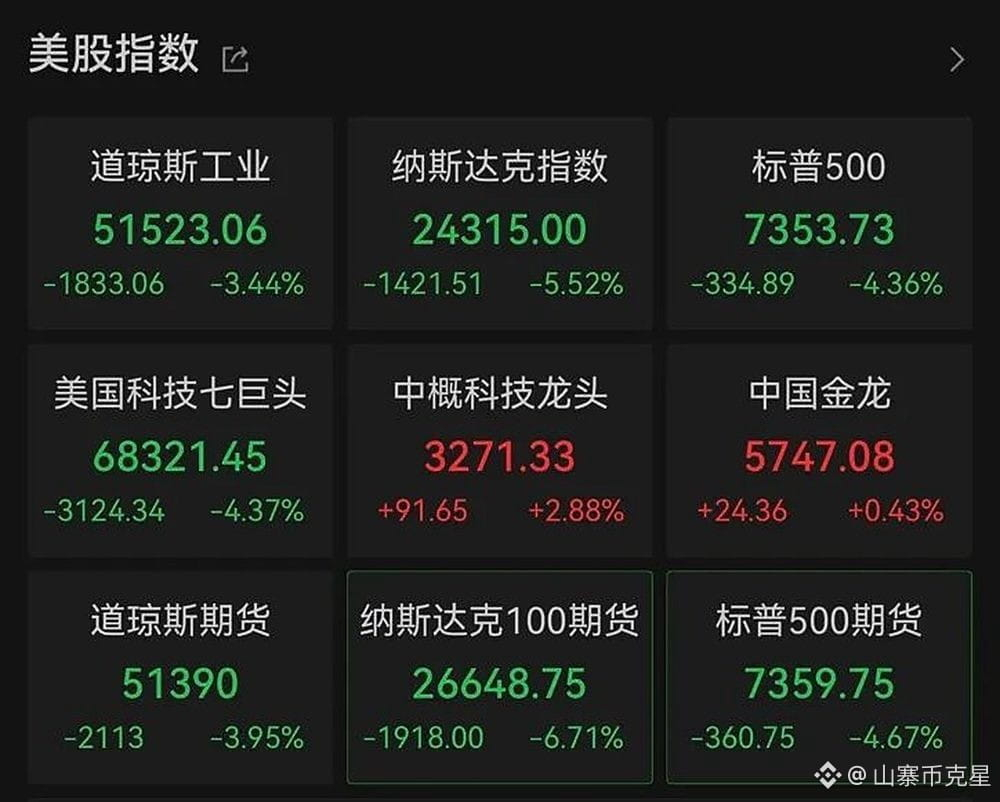
U.S. stocks fell to a record last night: about $2.8 trillion wiped out overnight
Dow down 3.44%, S&P 500 down 4.36%, Nasdaq down 5.52%
Philadelphia Semiconductor Index down 12.25%, its worst showing since March 2020
VIX up 69.66% in a day
But what really matters isn't these numbers—it's the order in which things fell
First the Nasdaq, then semiconductors, then memory and optical module stocks, and finally even power companies
Sandisk down 22%, AMD down 17%, Nvidia down 9%, wiping out $447 billion in market value
Even GE Vernova, which sells electricity, fell 7.5%
The entire chain was hit from top to bottom
Investors weren't selling based on any one company's earnings; they were recalculating the cost of AI capital spending
Put simply: before, the only question for expanding computing capacity was whether there was enough money. Now, it's also about who can approve the land and power
The trigger was the midterm elections
The Democrats won both chambers, and Texas's governor-elect immediately called for a pause on data center development
UBS estimates that about 30% of new data center capacity added in 2028 could be affected
There's another layer that's been overlooked
That same night, the Nasdaq Golden Dragon China Index rose 0.43%, and NetEase gained 4.37%
The worst-performing tech stocks and the only rising tech stocks were in the same market
Political risk, as a variable, works in the opposite direction for Chinese assets
Crypto wasn't spared either
$BTC fell below 76,000, hitting a low of 75,200, down more than 5% in 24 hours
ETH fell 8%, 210,000 traders were liquidated, with $1.05 billion in liquidations; 88% were long positions
Bitcoin is now much more correlated with the Nasdaq than with gold
My take
This isn't the end of the AI cycle; it's the end of the era of unconditional AI premiums
Going forward, companies in the same sector with cash flow and without cash flow will be valued differently
So don't rush to buy the dip—the policy guidance hasn't been finalized yet
Watch three things: whether approvals are actually acted on, whether the VIX falls back below 20, and whether BTC can reclaim 78,000
$2.8 trillion wiped out overnight—a record
But the costlier bill will be all the power and land that can't get approved down the road
#美股遭遇2020年以来最严重抛售