

November 6 Market Analysis: U.S. AI Stocks Crash, Dragging Down Crypto; BTC Falls Below $80,000
Key News
U.S. midterm election results are in: Democrats won majorities in both the House and the Senate. Markets initially rebounded briefly on Wednesday (November 4), but then repriced regulatory risks, particularly amid growing concerns about AI data center construction and crypto regulation.
AI and chip stocks plunged: The Philadelphia Semiconductor Index fell about 12%, one of the largest single-day declines in its history. Nvidia dropped more than 9%, while AMD and other stocks posted double-digit losses. Investors fear that Democrats taking control of Congress could slow data center expansion. (Opposition from local communities is strong in several states, and some analysts estimate that a significant share of new capacity planned for 2028 could face suspension risks.)
U.S. stock indexes plunged: The Nasdaq Composite fell 5.52% to 24,315, officially entering a technical correction (a decline of more than 10% from last month’s high); the S&P 500 fell 4.36% to 7,353.73; and the Dow fell 3.44% (about 1,833 points) to 51,523. This was the Nasdaq’s worst single-day performance in nearly 19 months and one of the sharpest tech stock sell-offs since the “Liberation Day” tariff shock in April 2025.
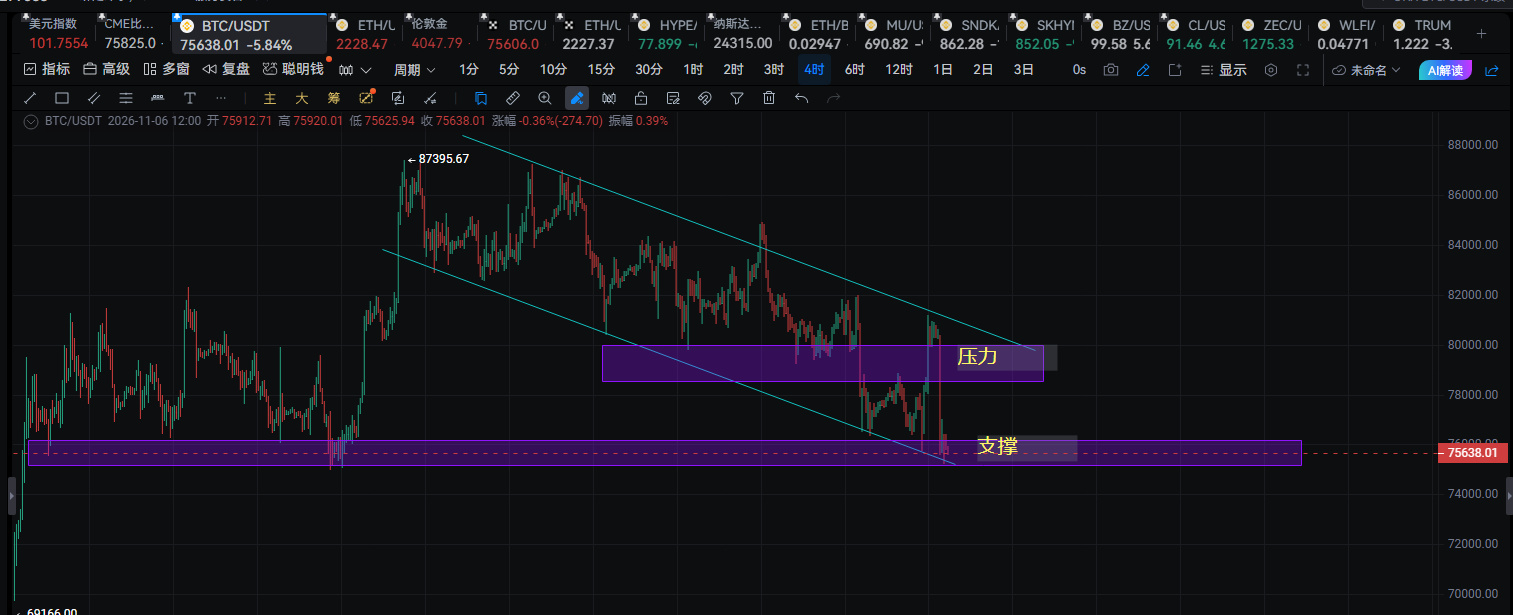
Crypto market moves in tandem: Bitcoin rapidly retreated from Wednesday’s high of around $80,800 to the $75,500–$76,000 range, down about 5–6%; Ethereum fell to around $2,230 (approximately 7–8%). Crypto derivatives liquidations exceeded $1 billion over 24 hours, mostly among long positions (with about $370–430 million concentrated in the first hour after the market opened).
Other background factors: The lingering effects of the Binance security incident, strong employment data weighing on expectations for rate cuts, and earlier net outflows from spot ETFs all contributed to a decline in risk appetite.
My take on yesterday’s steep drop in crypto and U.S. stocks: (As I’ve consistently emphasized in my market analysis during previous livestreams, the AI bubble is now bursting! I estimate that the U.S. stock bear market will last at least six months.)
The main drivers of the plunge were a sudden reversal in the “AI trade” and the repricing of political risk, rather than a deterioration in crypto’s own fundamentals.
A second look at the election results: Markets rebounded on Wednesday as political uncertainty eased, but on Thursday investors focused on the practical implications of Democrats potentially controlling Congress—stricter regulation of AI infrastructure and local-level resistance to data center construction. Analysts noted that around 30% or more of planned U.S. data center capacity could face near-term delays. Crypto miners, especially those pivoting to AI, are closely tied to tech stocks and therefore came under pressure at the same time.
Leverage and market correlations amplified volatility: For much of this year, Bitcoin has moved closely in line with tech stocks, which have significant exposure to AI. After U.S. stocks opened on Thursday, risk assets were sold off across the board, and highly leveraged long positions in crypto were forcibly liquidated, triggering a chain reaction. The sheer scale of liquidations in a short period further depressed prices. By comparison, crypto’s decline was roughly on par with the Nasdaq’s worst stretch, showing that it still behaves strongly as a “risk asset.”
Macro and micro factors converged: Strong labor market data lowered expectations for further Federal Reserve easing, while weak earnings guidance from chipmakers such as Qualcomm also acted as a catalyst. Crypto markets were already facing ETF outflows and the shadow of a security incident; combined with high leverage, these factors magnified the pullback.
This was a typical chain reaction: “a sudden drop in macro risk appetite → tech stocks lead the decline → highly leveraged crypto follows.” The election results were merely the trigger; underlying the move was a reassessment of returns on AI capital expenditure and the regulatory environment.
Market analysis:
Bitcoin (BTC): Touched a low of around $75,200. It is attempting to stabilize or rebound slightly today, but is still contending with a key support zone ($75,000–$76,000). If this zone fails, it could test lower support levels; resistance is concentrated around $80,000.
Ethereum (ETH): Fell to around $2,210, declining more than BTC. The short-term bearish structure is more pronounced, and the $2,200 psychological level is worth watching.
Altcoins: XRP, SOL, and others generally fell by more than 6%, with overall market sentiment leaning bearish.
Market sentiment: The Crypto Fear & Greed Index fell to around 40 (the fear zone), shifting from neutral to cautious. Total market capitalization saw a notable one-day decline. Leverage has eased somewhat following the wave of liquidations, and the market may enter a short-term period of consolidation and recovery.
Flows: Spot BTC ETFs had already seen consecutive outflows, and Thursday’s sell-off further dampened institutional risk appetite. Watch for signs of inflows today.
Technically, BTC has fallen below several medium- and long-term moving averages, leaving the short-term outlook bearish. However, if risk sentiment in U.S. stocks stabilizes, crypto may rebound in tandem. Crypto showed some resilience relative to the Nasdaq at certain points, but overall the two remain highly correlated.
Outlook and risk reminders
Near-term factors to watch: whether U.S. tech stocks continue to correct, Friday’s U.S. nonfarm payrolls report, and further market digestion of the specific details of Democratic policies. If the AI trade shows signs of stabilizing, crypto may find support near $75,000 and attempt a rebound; otherwise, declining risk appetite could persist.
In the medium term, the pace of regulatory implementation and macro liquidity will remain important. Volatility is expected to stay high in this highly leveraged environment.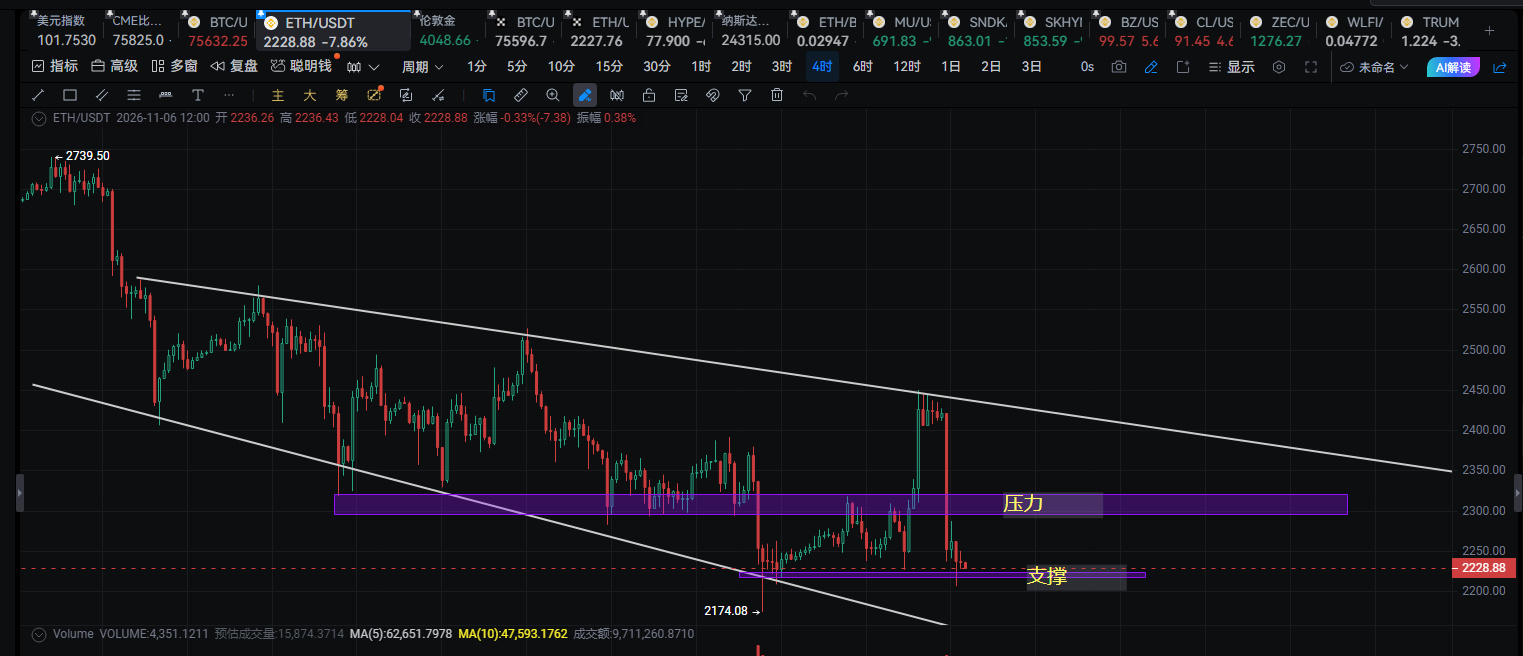
The above reflects my personal views and is for informational purposes only; it does not constitute investment advice. DYOR

