Qualcomm took in $3.721 billion less from handsets this year, and $2.047 billion more from autos. The new engine’s thrust was only a little more than half of what the old engine lost.
This isn’t a failed transition. The transition just isn’t finished yet.
In the earnings report filed on 11-04, two figures sit side by side. Handsets brought in $5.137 billion in the fourth quarter, down 26%.
Autos brought in $1.990 billion, up 89%. The company itself called it the first $2 billion quarter.
The full fiscal year makes the picture clearer. Handsets fell from $27.793 billion to $24.072 billion, while autos rose from $3.957 billion to $6.004 billion.
There was still a $1.674 billion gap in between. IoT made up $515 million of it, and in the end, the chip business brought in $1.159 billion less for the year.
After a whole year of changing engines, the new one’s thrust was only a little more than half of the old one’s.
The leak is in the costs column. Chip division revenue fell 26%, but costs only dropped from $6.925 billion to $6.873 billion—a decline of $52 million.
Revenue fell by a quarter, but costs fell by just 0.75%. The rest came straight out of profit.
As a result, pretax profit fell from $2.896 billion to $2.142 billion, and the margin shrank from 29% to 24%.
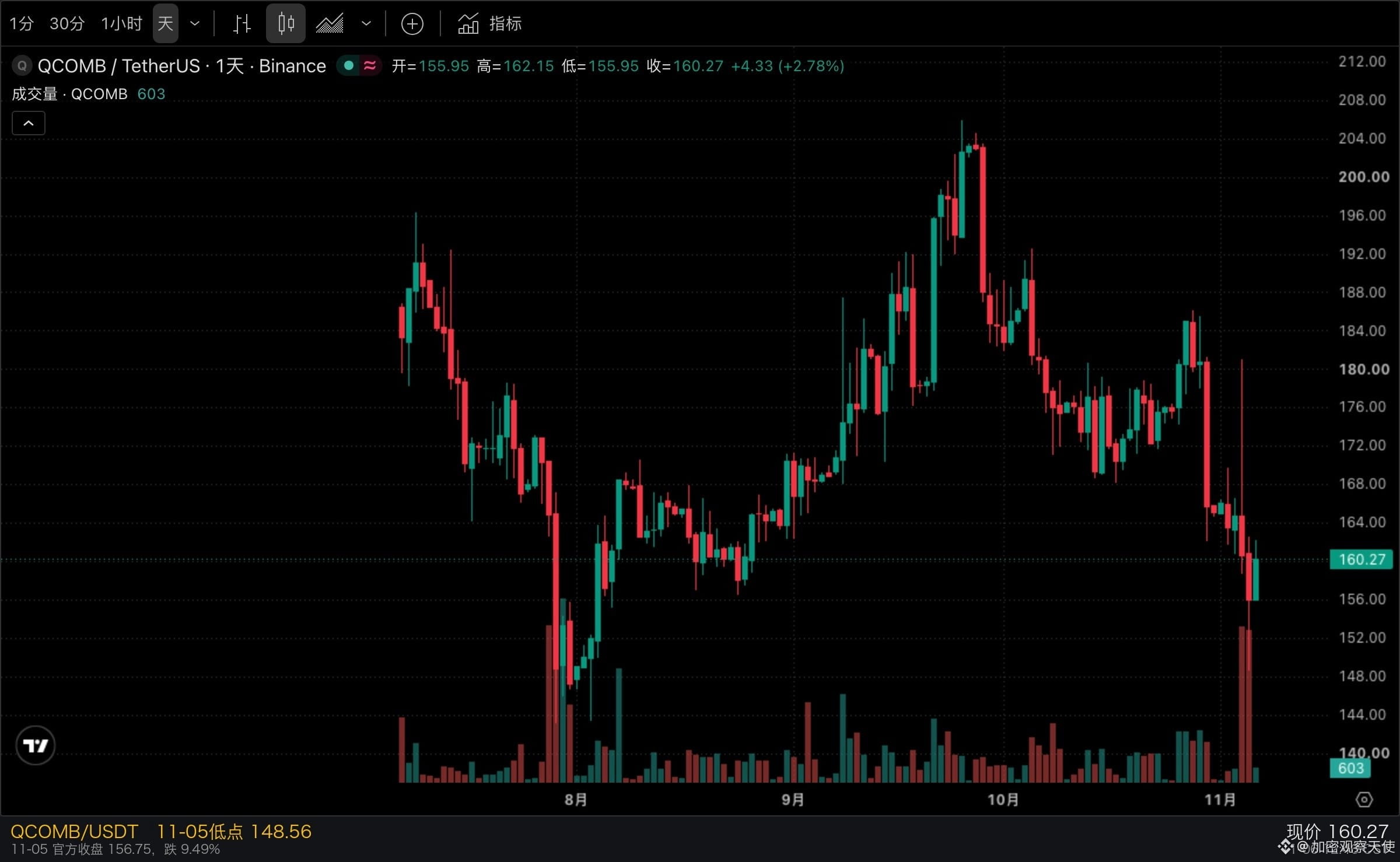
The market wasn’t prepared to give it the benefit of the doubt. On 11-05, $QCOM closed at $156.75, down 9.49%—a couple of percentage points less than the 11.61% reading during the session.
The reason is simple. The 26% handset decline has already happened; the 60% growth in non-handset businesses is guidance.
What’s already happened goes into the denominator. What hasn’t happened yet goes into the story.
The steadiest part is actually the least conspicuous one. The long-term QTL license was renewed with $AAPL , as well as with Huawei and Transsion. Licensing fees for the full year were $5.556 billion, down $26 million from last year—hardly a change.
This part of the business was never expected to grow much. It just needs to hold steady.
On the other hand, autos aren’t purely incremental either. At $1.990 billion, they’re only two-fifths of handsets’ $5.137 billion, and that 89% growth is still measured against a low base in 2025.
So the real takeaway from this earnings report isn’t that autos have taken off. It’s that the gap is now quantifiable.
That $1.674 billion shortfall will either be filled by data centers in fiscal 2027, or it will remain a shortfall.
What I’m unsure about is when the $5 billion in data center revenue will materialize. Amazon’s multigenerational product collaboration was announced in the same press release, but no quantity or timeline was given.
Watch for guidance to be delivered, not for the story.
$QCOM token is currently quoted at $160.27. This is a continuous 24-hour quote, not the official closing price.
From $173.19 before the earnings report, it fell to $156.75, then token trading brought it back above $160. That’s a recovery of one-fifth of the decline.
Would you rather wait for guidance to be delivered, or for the already-reported business to stop falling first?
Earnings figures are from Exhibit 99.1 of the 8-K filed on 11-04. Figures are in millions of dollars and have been converted to hundreds of millions of dollars.
The token quote is the 11-06 12:46 CST reading and reflects 24-hour trading. This is not investment advice.
This isn’t a failed transition. The transition just isn’t finished yet.
In the earnings report filed on 11-04, two figures sit side by side. Handsets brought in $5.137 billion in the fourth quarter, down 26%.
Autos brought in $1.990 billion, up 89%. The company itself called it the first $2 billion quarter.
The full fiscal year makes the picture clearer. Handsets fell from $27.793 billion to $24.072 billion, while autos rose from $3.957 billion to $6.004 billion.
There was still a $1.674 billion gap in between. IoT made up $515 million of it, and in the end, the chip business brought in $1.159 billion less for the year.
After a whole year of changing engines, the new one’s thrust was only a little more than half of the old one’s.
The leak is in the costs column. Chip division revenue fell 26%, but costs only dropped from $6.925 billion to $6.873 billion—a decline of $52 million.
Revenue fell by a quarter, but costs fell by just 0.75%. The rest came straight out of profit.
As a result, pretax profit fell from $2.896 billion to $2.142 billion, and the margin shrank from 29% to 24%.
The market wasn’t prepared to give it the benefit of the doubt. On 11-05, $QCOM closed at $156.75, down 9.49%—a couple of percentage points less than the 11.61% reading during the session.
The reason is simple. The 26% handset decline has already happened; the 60% growth in non-handset businesses is guidance.
What’s already happened goes into the denominator. What hasn’t happened yet goes into the story.
The steadiest part is actually the least conspicuous one. The long-term QTL license was renewed with $AAPL , as well as with Huawei and Transsion. Licensing fees for the full year were $5.556 billion, down $26 million from last year—hardly a change.
This part of the business was never expected to grow much. It just needs to hold steady.
On the other hand, autos aren’t purely incremental either. At $1.990 billion, they’re only two-fifths of handsets’ $5.137 billion, and that 89% growth is still measured against a low base in 2025.
So the real takeaway from this earnings report isn’t that autos have taken off. It’s that the gap is now quantifiable.
That $1.674 billion shortfall will either be filled by data centers in fiscal 2027, or it will remain a shortfall.
What I’m unsure about is when the $5 billion in data center revenue will materialize. Amazon’s multigenerational product collaboration was announced in the same press release, but no quantity or timeline was given.
Watch for guidance to be delivered, not for the story.
$QCOM token is currently quoted at $160.27. This is a continuous 24-hour quote, not the official closing price.
From $173.19 before the earnings report, it fell to $156.75, then token trading brought it back above $160. That’s a recovery of one-fifth of the decline.
Would you rather wait for guidance to be delivered, or for the already-reported business to stop falling first?
Earnings figures are from Exhibit 99.1 of the 8-K filed on 11-04. Figures are in millions of dollars and have been converted to hundreds of millions of dollars.
The token quote is the 11-06 12:46 CST reading and reflects 24-hour trading. This is not investment advice.