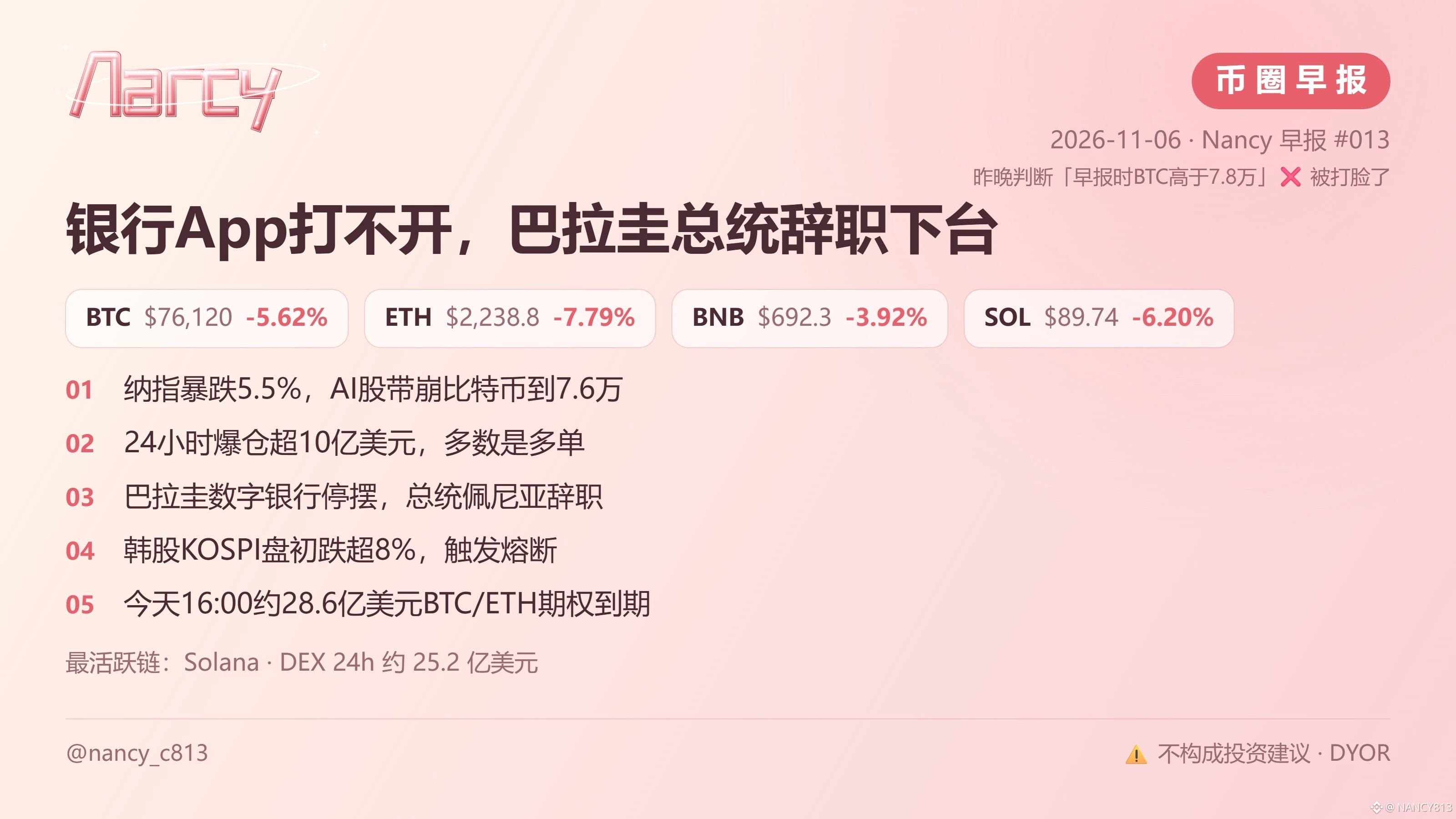
A bank shut down, and when the reimbursement rules were announced, people with larger deposits ended up further back in line. This is what really happened in Paraguay this week: after digital bank Ueno Bank shut down, its app, bank cards, and transfers all stopped working, affecting around 2.9 million customers. On Thursday, the country's president, Peña, announced his resignation. That same day, $BTC fell along with U.S. stocks, back to around $76,000, and the crypto market was struggling too.
【1. What happened】
According to Decrypt, on November 3, Paraguay's central bank found that Ueno's solvency ratio had fallen to less than half the legal minimum and placed it under resolution. The bank reportedly had more customers than 60% of the country's adult population and held around $800 million in public-sector deposits, including pension and healthcare funds. Peña was a business partner of the Vázquez Group, which controlled Ueno. He denied any wrongdoing and said he had sold his shares in March 2025. According to Decrypt, citing the Associated Press, just minutes after he announced his resignation, the House of Representatives voted 78–0 to impeach him.
【2. How will people get their money back?】
The central bank said each depositor is insured for up to around $36,000. But the first round of payouts will go only to accounts with balances of no more than 10 million guaraníes—roughly $1,600 at the exchange rate cited in reports. Depositors must also have no outstanding debts with Ueno and hold an account at another institution. Those with larger deposits will have to keep waiting. The central bank stressed that this is an isolated case and does not mean the entire banking system is in trouble. In his resignation speech, Peña said his greatest wish was for the deposit guarantee fund to do its job and ensure that the money is repaid.
【3. What should the crypto market take away?】
Cointelegraph reported that early Thursday, 1 $USDT was being offered for 6,942 guaraníes on the local P2P market, around 13% above the central bank's reference exchange rate. The report did not say this was directly related to the crisis. Decrypt, meanwhile, headlined its story “Can Bitcoin Fix This?” and also mentioned the newspaper headline about a British bank bailout that was embedded in Bitcoin's genesis block. Ultimately, this situation is a reminder to diversify—not to move all your wealth on-chain. If you lose your private keys, you won't be able to get it back either.
What proportion of your money would you keep in a wallet you control?
See today's other highlights in the image 👆
⚠️ Not investment advice · DYOR
#Paraguay #Bitcoin #USStocksWeaken #CryptoDailyBrief
This article is sponsored by AVE
https://share.ave.ai?lang=en&code=nancy.c0813