When withdrawing or transferring to a cold wallet, do you copy the address from “Recent Transfers / Transaction History,” or open your address book, verify it yourself, and then paste it?
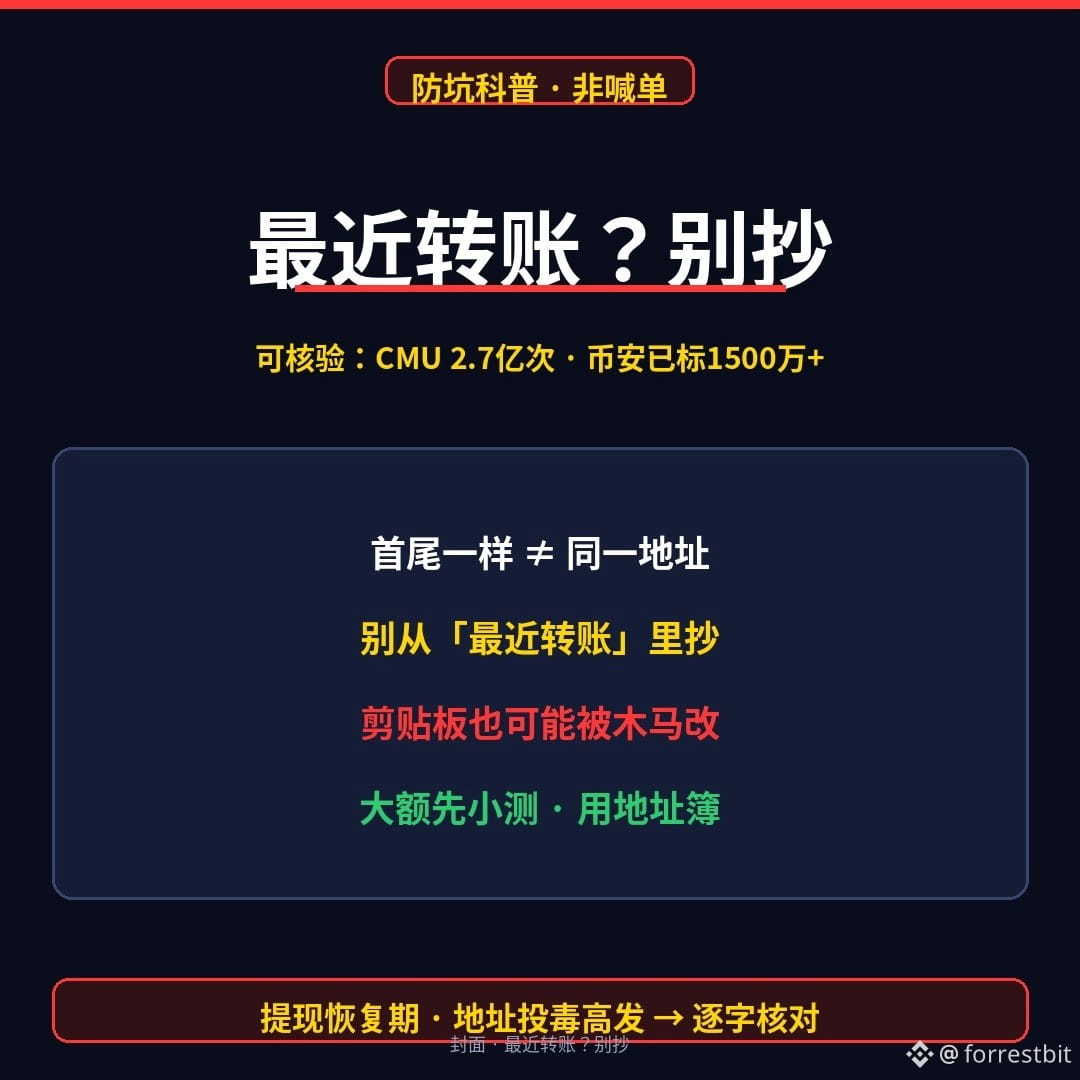
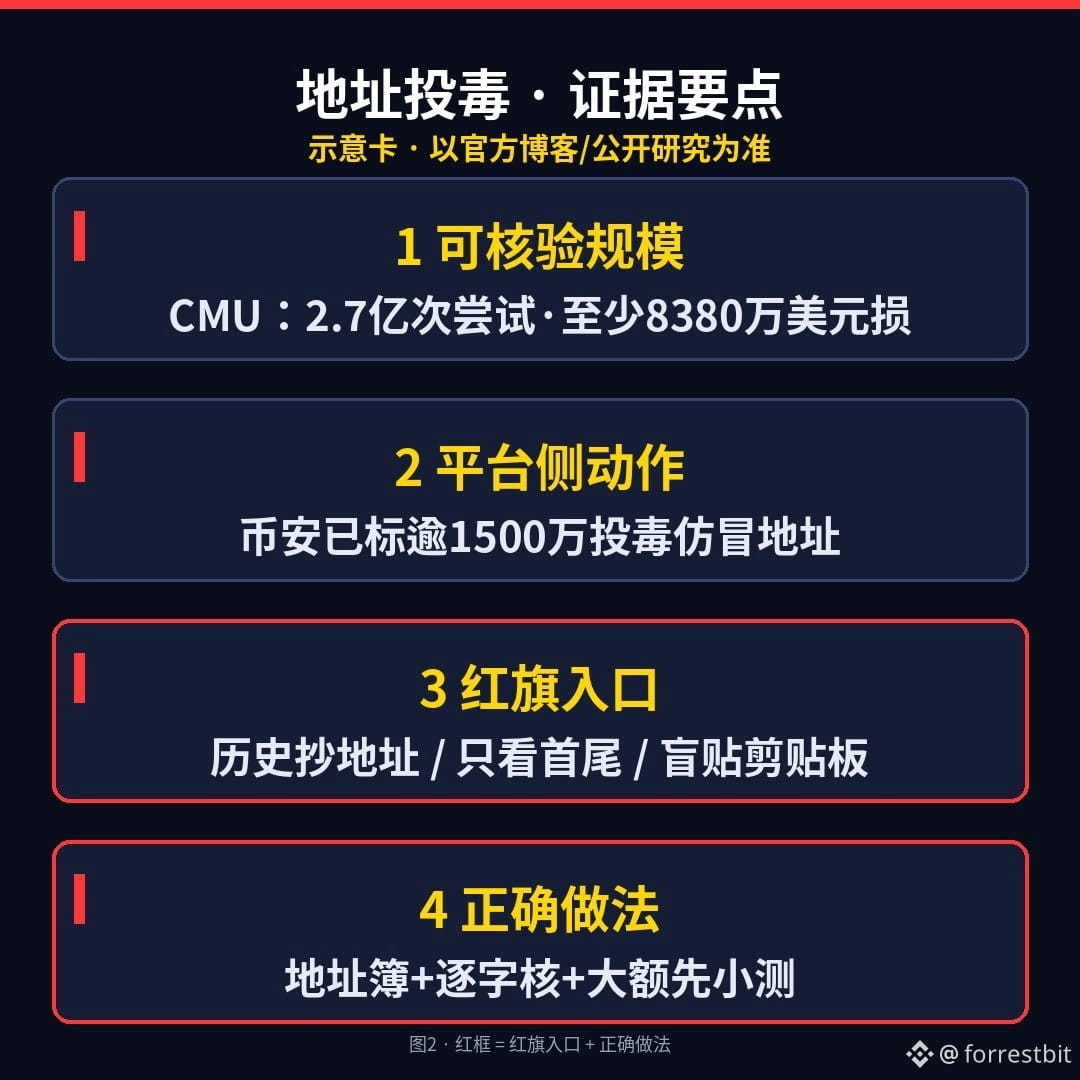
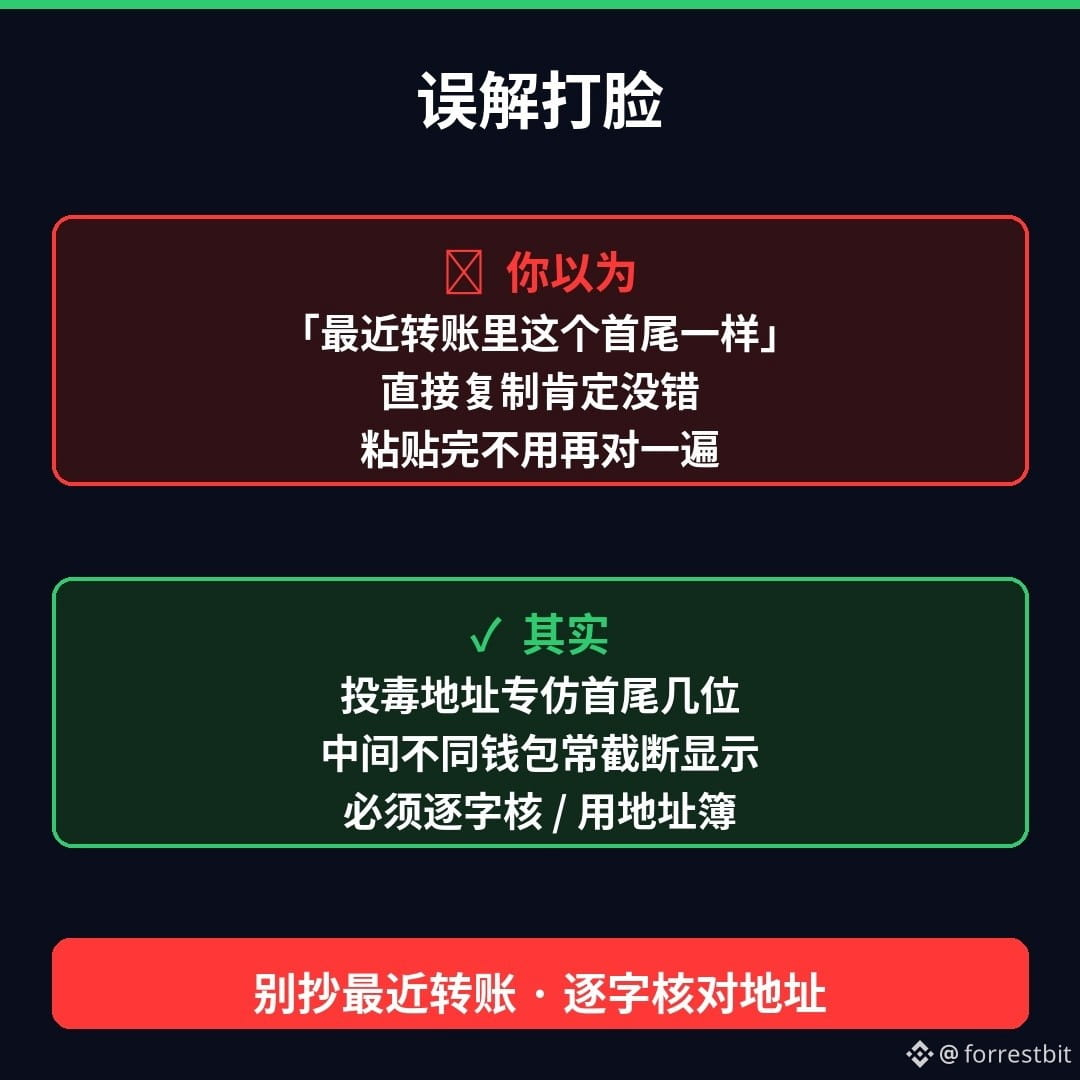
These days, as withdrawals resume, are a high-risk window for address poisoning. Public warnings (including from BlockBeats) and several warnings previously issued by He Yi have pointed to the same tactic: scammers watch public addresses or addresses that have recently made transfers, generate fake addresses with **first and last few characters that look very similar**, then send a small “poisoning” transaction to plant one in your history. Wallet interfaces often show only the beginning and end of a long address, so you can’t see the few characters that differ in the middle. Another method is clipboard malware—you copy the right address, but it gets changed in the middle when you paste it. Verifiable background: a Carnegie Mellon team counted over **270 million** poisoning attempts on Ethereum and BSC from July 2022 to June 2024, targeting over **17 million** addresses; 6,633 mistaken transfers amounted to at least approximately **$83.8 million**. Binance Security has publicly said it has flagged over **15 million** spoofed/poisoning addresses on ETH/BSC (refer to the official blog).
Remember these red flags: ① copying with one tap from “Recent Transfers” ② checking only the first and last four characters before confirming ③ not checking the entire address again after pasting ④ immediately “copying” a lookalike address after receiving an unfamiliar small deposit. The mechanism in a nutshell: same beginning and end ≠ same address.
Think “That familiar address in my history must be one of mine”? In reality, poisoning is designed to imitate the beginning and end, and to catch you when you’re being careless. Here are three things you can do tonight:
1) Prioritize verified addresses in your address book / whitelist; don’t copy from transaction history
2) After pasting, check the entire address character by character two or three times (including the network and coin)
3) For a large transfer, send a small test amount first, then send the rest once it arrives—but even after the test transfer, check the address on screen again before making the full transfer
Which worries you more: A, copying a poisoned address from “Recent Transfers,” or B, clipboard malware changing a few characters in the middle? Pick one in the comments (don’t post a full address or seed phrase).
(Educational content, not investment advice. I don’t trade or make calls to buy or sell. The information is paraphrased from Binance Security’s blog on address poisoning, public reports warning about poisoning during the withdrawal resumption period, and a compilation of relevant Carnegie Mellon statistics. Figures and tools are subject to the latest official announcements. This content was generated with AI assistance and reviewed by a human.)
$BNB $BTC
#加密安全 #防诈骗 #Web3Education
These days, as withdrawals resume, are a high-risk window for address poisoning. Public warnings (including from BlockBeats) and several warnings previously issued by He Yi have pointed to the same tactic: scammers watch public addresses or addresses that have recently made transfers, generate fake addresses with **first and last few characters that look very similar**, then send a small “poisoning” transaction to plant one in your history. Wallet interfaces often show only the beginning and end of a long address, so you can’t see the few characters that differ in the middle. Another method is clipboard malware—you copy the right address, but it gets changed in the middle when you paste it. Verifiable background: a Carnegie Mellon team counted over **270 million** poisoning attempts on Ethereum and BSC from July 2022 to June 2024, targeting over **17 million** addresses; 6,633 mistaken transfers amounted to at least approximately **$83.8 million**. Binance Security has publicly said it has flagged over **15 million** spoofed/poisoning addresses on ETH/BSC (refer to the official blog).
Remember these red flags: ① copying with one tap from “Recent Transfers” ② checking only the first and last four characters before confirming ③ not checking the entire address again after pasting ④ immediately “copying” a lookalike address after receiving an unfamiliar small deposit. The mechanism in a nutshell: same beginning and end ≠ same address.
Think “That familiar address in my history must be one of mine”? In reality, poisoning is designed to imitate the beginning and end, and to catch you when you’re being careless. Here are three things you can do tonight:
1) Prioritize verified addresses in your address book / whitelist; don’t copy from transaction history
2) After pasting, check the entire address character by character two or three times (including the network and coin)
3) For a large transfer, send a small test amount first, then send the rest once it arrives—but even after the test transfer, check the address on screen again before making the full transfer
Which worries you more: A, copying a poisoned address from “Recent Transfers,” or B, clipboard malware changing a few characters in the middle? Pick one in the comments (don’t post a full address or seed phrase).
(Educational content, not investment advice. I don’t trade or make calls to buy or sell. The information is paraphrased from Binance Security’s blog on address poisoning, public reports warning about poisoning during the withdrawal resumption period, and a compilation of relevant Carnegie Mellon statistics. Figures and tools are subject to the latest official announcements. This content was generated with AI assistance and reviewed by a human.)
$BNB $BTC
#加密安全 #防诈骗 #Web3Education