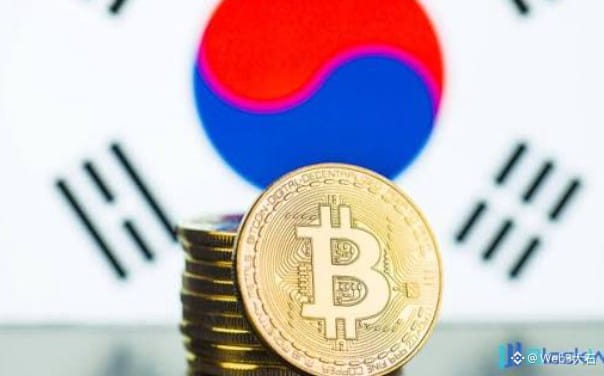
🚨 South Korea delays crypto tax again! Virtual asset income tax postponed until 2029, but oversight of overseas trading is tightening!
South Korean crypto investors are facing another change! According to Yonhap News Agency, Deputy Prime Minister and Minister of Finance and Economy Lee Hyung-il said the government has decided to postpone the collection of virtual asset income tax by another two years, until 2029. But don’t assume the delay means lighter regulation: the South Korean government is also preparing to strengthen the infrastructure for taxing overseas transactions.
In simple terms, if the South Korean government can obtain virtual asset transaction information from the United States in the future, it may be able to access data on South Korean investors’ trades on US exchanges, providing a basis for future taxation. South Korea also plans to establish a public-private task force on digital asset taxation, improve the tax system, and accelerate legislation related to digital assets.
📌 My take: This delay only pushes back the start of taxation; it does not mean taxation has been canceled. What the South Korean government really wants to do is first build the infrastructure for data collection, oversight, and cross-border information sharing. In the future, trading on local exchanges and overseas platforms alike may gradually come under a more comprehensive tax system.
🔥 For South Korea’s crypto market, the short-term delay gives investors more time to prepare, but the long-term trend is already clear: digital assets are moving out of a regulatory gray area and toward formal regulation. Going forward, crypto traders will need to study not only market trends but also tax rules and transaction records.
Taxes can wait a little, but it’s best to get ready for compliance now!$SNXX $MVLL $HUT