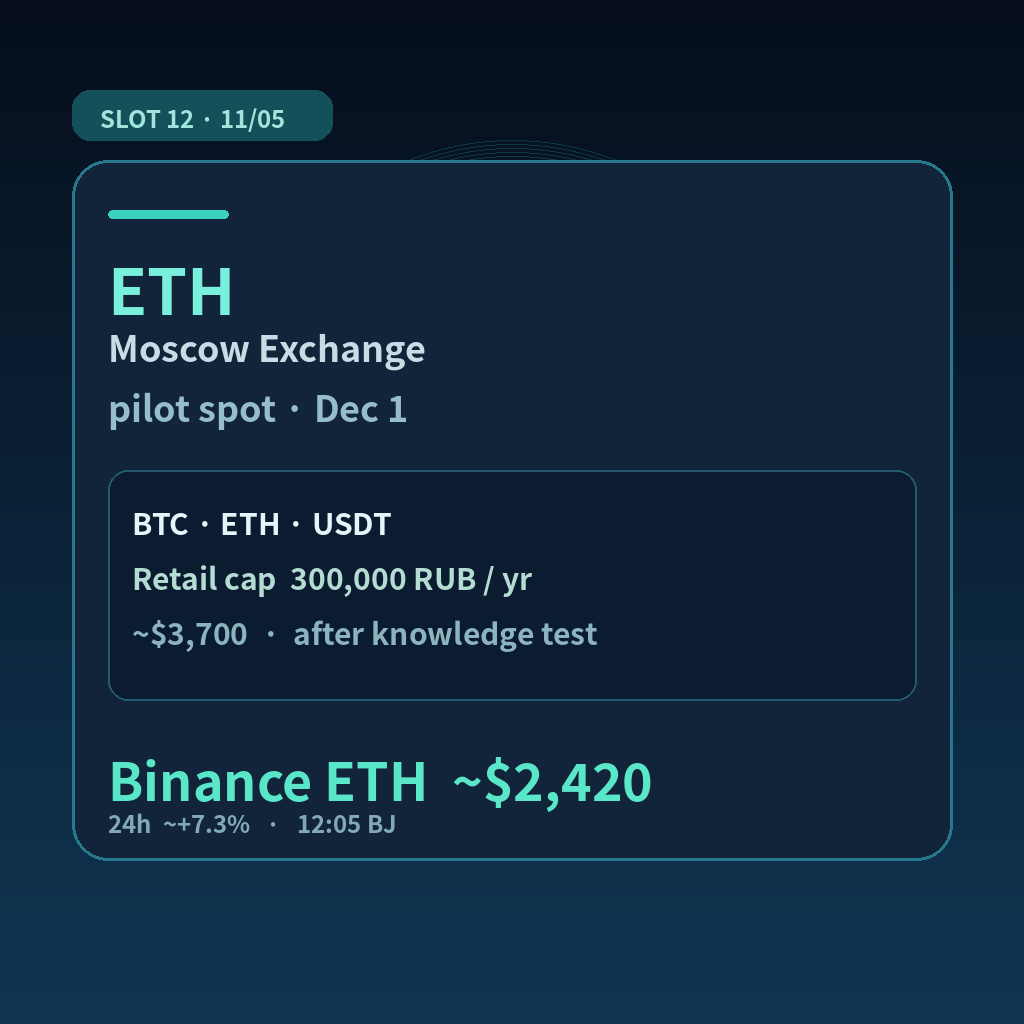

The Moscow Exchange has officially confirmed: starting December 1, it will pilot trading in BTC, ETH, and USDT using its existing stock-matching system, with clearing handled by the National Clearing Center. Trading hours will be 06:50–23:50 Moscow time. Retail investors will have to pass a test, and purchases through any one broker will be capped at 300,000 rubles a year, or about $3,700; there will be no cap for qualified investors. CoinDesk and Bitcoin Magazine both picked up on the same story.
The key point isn’t that ETH has gained another order book, but that offshore trading is being brought inside the country’s regulatory framework. The exchange and clearing center have both been on the US sanctions list since June 2024, while USDT also faces Tether’s policy of freezing sanctioned addresses. The pilot going live doesn’t mean funds can flow freely in and out.
Trading volume in the first week after December 1 will tell the story. If ETH spot trading is thin, or retail limits are quickly maxed out without qualified investors stepping in, treat this as regulation being implemented, not as new buying demand. Snapshot at around 12:05 Beijing time: Binance ETH at about $2,420, up about 7.3% over 24 hours.
$ETH
#ETH #MOEX #Cryptocurrency