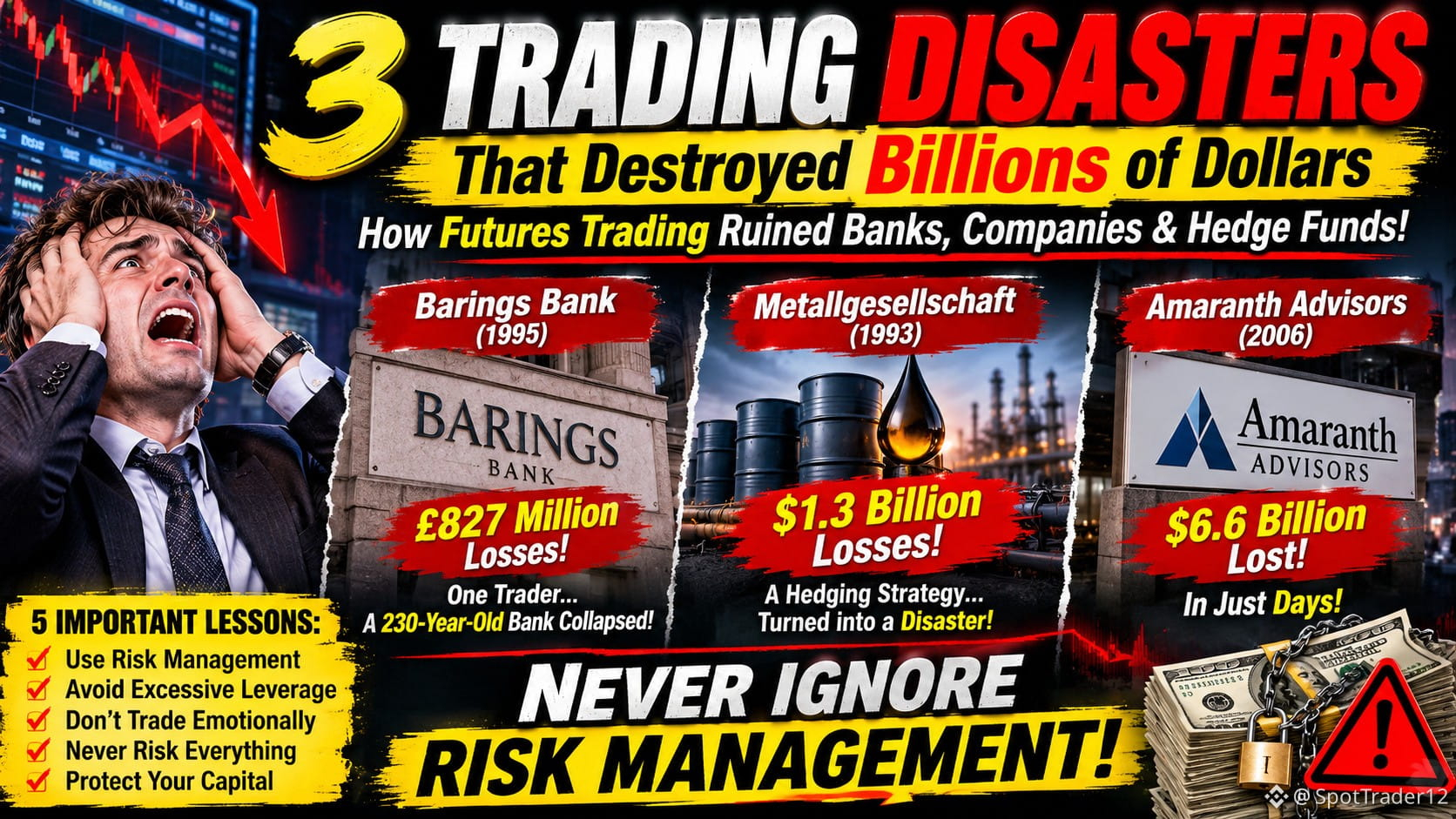
💀 3 TRADING DISASTERS THAT DESTROYED BILLIONS OF DOLLARS
How Futures Trading Destroyed Banks, Companies, and Billion-Dollar Hedge Funds!
Futures trading can create enormous profits, but it can also destroy entire financial empires.
High leverage, emotional decisions, poor risk management, and unexpected market movements have caused some of the biggest financial disasters in history.
Here are three real-life trading disasters that shocked the financial world.
1. Barings Bank (1995) – One Trader Destroyed a 230-Year-Old Bank!
Barings Bank was one of Britain's oldest and most respected financial institutions, with a history of approximately 230 years.
But everything changed because of one trader named Nick Leeson.
He was trading Nikkei 225 stock index futures in Japan and Singapore.
Initially, some of his trades were profitable. However, when the market moved against him, he started hiding his losses and making even bigger unauthorized bets.
Instead of accepting his losses, he continued taking enormous risks, hoping to recover the money.
Eventually, his losses became so massive that the bank could no longer survive.
💥 The Result: In 1995, Barings Bank collapsed after suffering losses of approximately £827 million.
One trader's unauthorized trading destroyed a 230-year-old financial institution.
2. Metallgesellschaft (1993) – A $1.3 Billion Oil Trading Disaster!
Metallgesellschaft was a major German industrial company.
The company entered into large oil-related contracts and used futures positions as part of its hedging strategy.
However, its long-term contracts and short-term futures positions created a complicated financial structure.
When oil prices and market conditions changed, the company faced enormous cash-flow pressure.
Instead of having enough liquidity to manage its positions, it struggled to meet the growing financial demands.
The situation became so serious that the company had to restructure its operations and receive financial support.
💥 The Result: Metallgesellschaft suffered approximately $1.3 billion in losses.
#Binance