
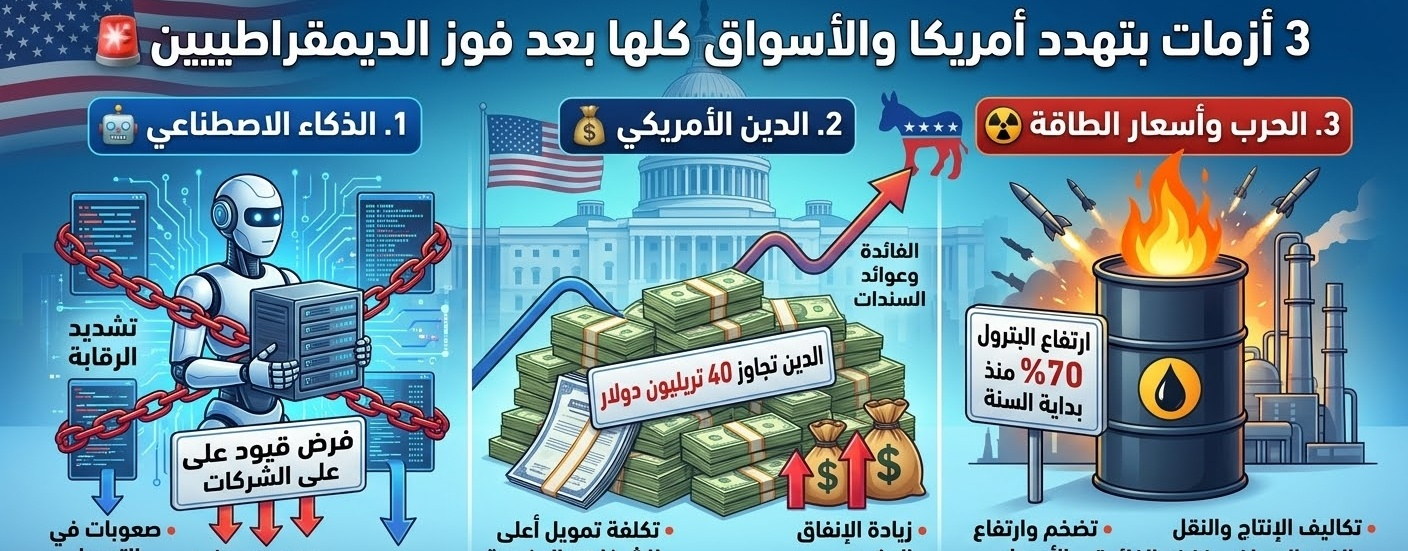
A Democratic victory in the U.S. midterm elections could have a bigger impact than simply shifting the balance of power in Congress, because markets are now watching three major issues that are practically driving the market.
The first crisis is artificial intelligence 🤖
This sector has become one of the most important engines of growth and investment in the U.S. economy, with companies pouring billions of dollars into data centers, infrastructure, and new technology.
But with the Democrats in control, concerns have emerged about tighter oversight of the sector and greater restrictions on companies. This doesn’t mean investment in AI will stop, but it could face funding challenges, changing the calculations of companies and investors.
The second crisis is U.S. debt 💰
U.S. debt has exceeded $40 trillion, a huge figure that makes markets more sensitive to any increase in government spending or interest rates.
The problem is that raising interest rates pushes up bond yields, which means the U.S. government itself faces higher costs to finance its debt. At the same time, companies face higher borrowing costs, which could put pressure on investment and growth.
The third crisis is the war with Iran and energy prices ☢️
Oil is up 70% since the start of the year, adding a heavy burden to countries’ economies by raising production and transportation costs, and consequently driving up inflation and prices. It also made the Federal Reserve abandon the idea of easing monetary policy and cutting interest rates.
If we look at the whole picture, tighter oversight of AI could put pressure on growth, rising debt and yields could increase financing costs, and the war and higher energy prices could put pressure on inflation.
This creates a difficult, complex equation for the U.S. economy and the Federal Reserve: how can they sustain growth without letting inflation and debt spiral out of control? 🤔
For markets, the risk doesn’t necessarily lie in the election result itself, but in the decisions that may follow and how well they can balance growth with financial stability.
This means the coming period could see greater volatility in stocks, bonds, the dollar, and gold, as investors will have to reassess their outlook for the U.S. economy ⭕
$SHIB
🌑 $SLP 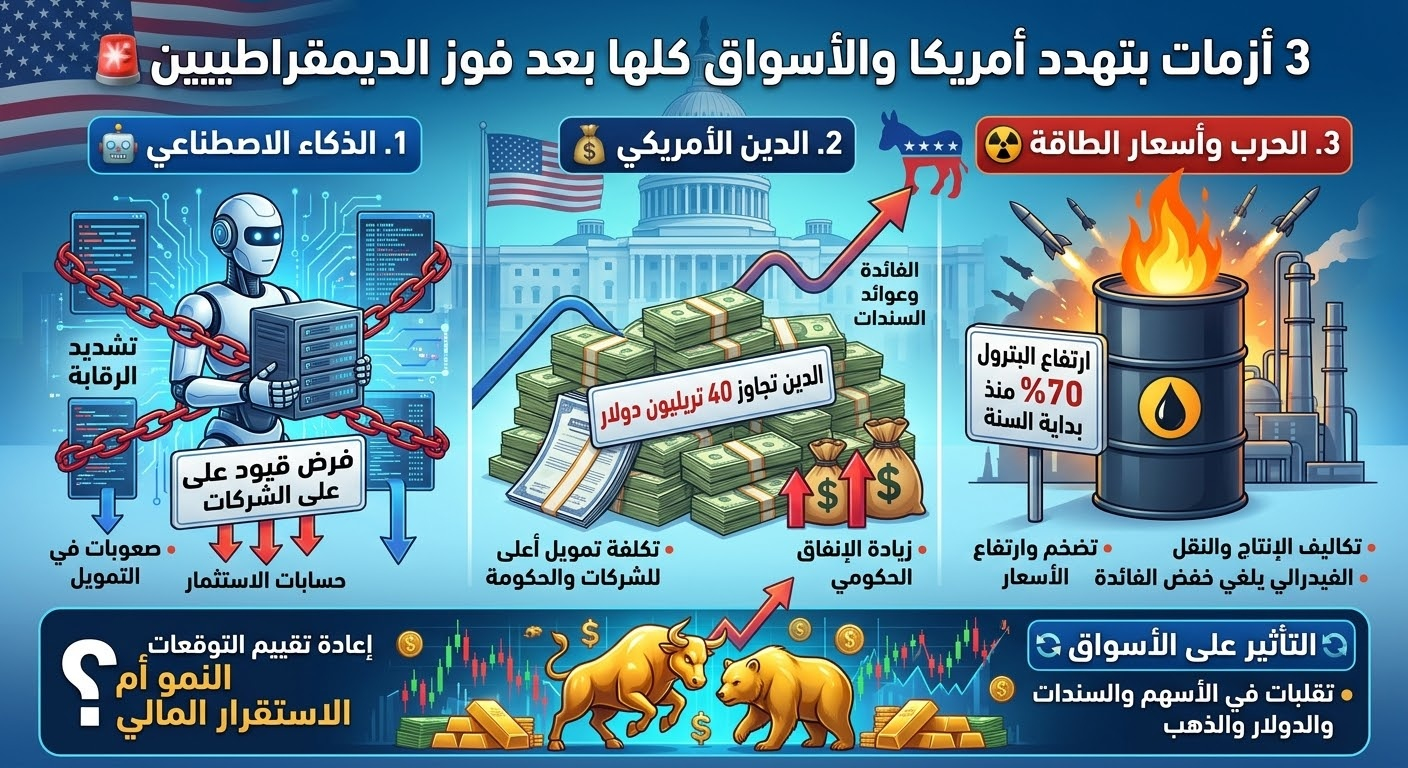
✅@undefined $PEPE

#USOctoberNFP-AreRateCutsStillPossible #BinanceIncidentReport #USMidterms-WhatAreMarketsExpecting?