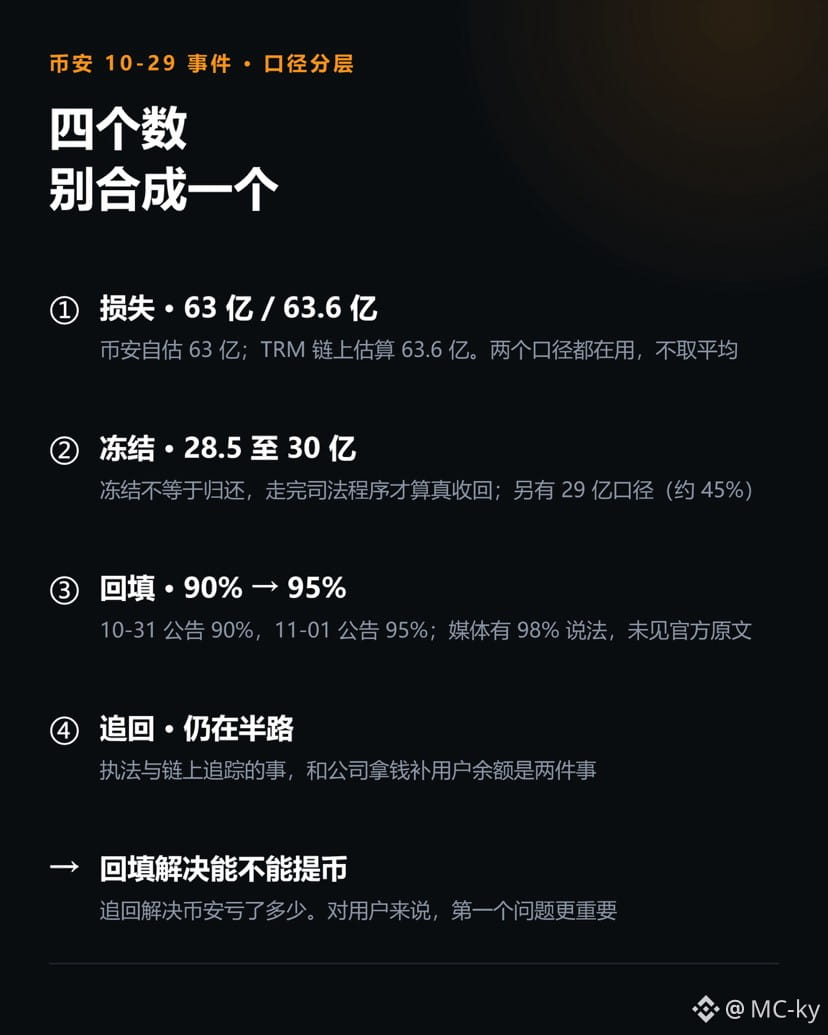
📌 First, let’s clarify one thing: in the Binance incident, losses, frozen funds, and reimbursement are three different figures. Mixing them up can lead to exactly the opposite conclusion.
🔍 The figures currently being cited are: approximately $6.3 billion in affected assets (Binance’s own estimate), approximately $6.36 billion (TRM’s on-chain estimate); $2.85 billion to $3 billion frozen; and reimbursement rates of 90% (announcement on 10-31) → 95% (announcement on 11-01) → 98% (as of 10-31, according to media reports). Each figure has its own source and refers to a different point in time, so they shouldn’t be combined into one.
The key distinction is between “reimbursement” and “recovery”: reimbursement means Binance uses its own funds to restore users’ balances—the money has already left the company’s books. Recovery means retrieving the stolen assets from the hackers, which involves law enforcement and on-chain tracing. The former has already happened; the latter is still underway.
⚠️ Two reminders: when you see statements like “95% recovered,” check the original source first—most of the time, they’re referring to reimbursement, not recovery. And when you see “$2.9 billion frozen,” remember that freezing doesn’t mean the funds have been returned; that only counts once the legal process is complete.
Reimbursement determines whether you can withdraw your funds; recovery determines how much Binance has lost. For users like us, the first question matters more. For the industry as a whole, the second is what matters for the balance sheet.