Why did transaction fees drop so much on the same Layer 2 network after the Cancun upgrade?
First, what it is: blob data cannot be read by the EVM; contracts can only see a versioned hash derived from the blob’s KZG commitment.
Why this is the case: blobs are cheap because their data is retained for only about 18 days, does not need to be stored permanently, and is not included in EVM computations, which greatly reduces the burden on nodes.
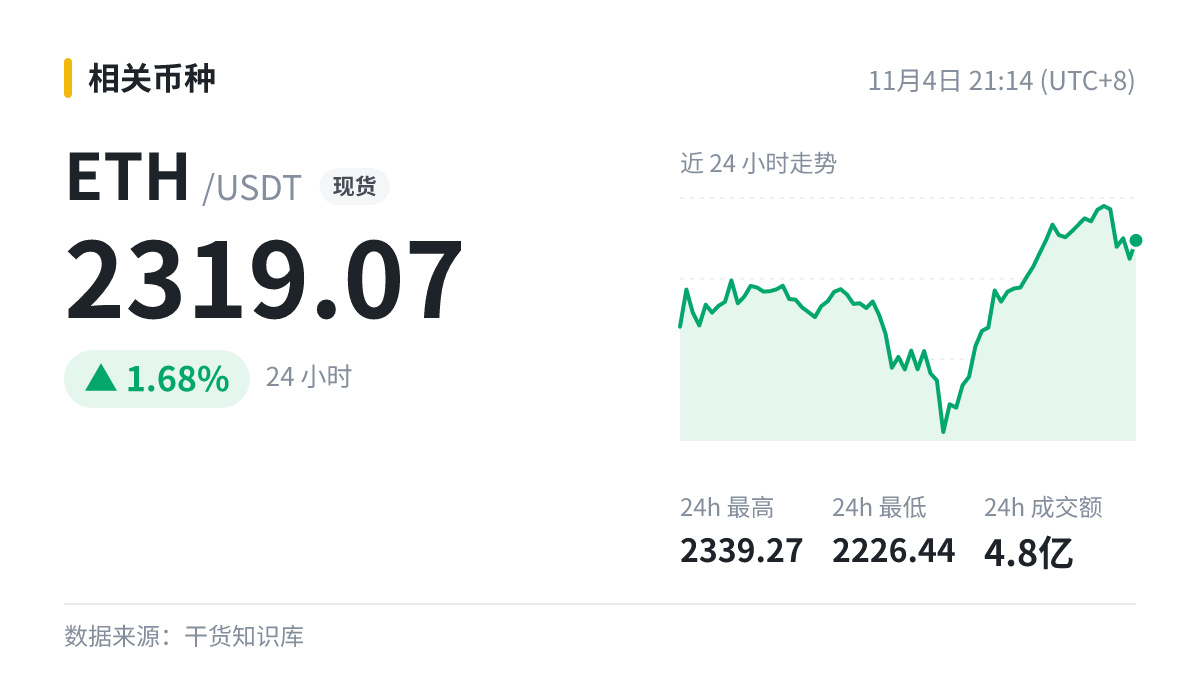
When a Layer 2 network writes blob data to the mainnet, the blob fee is also paid in $ETH . The current price is 2319.07.
Every potential gain comes with a corresponding risk, so consider the worst-case scenario first.