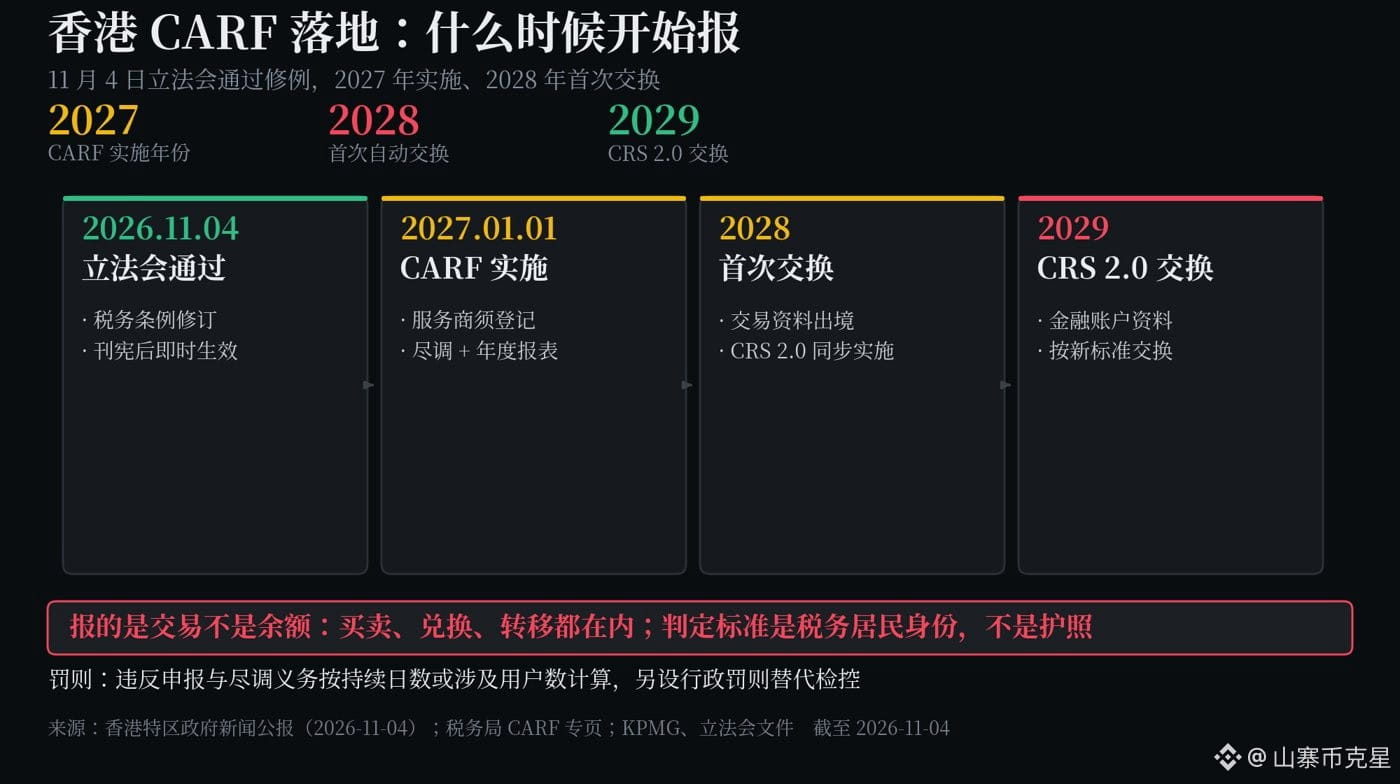
On November 4, Hong Kong’s Legislative Council passed amendments to the crypto-asset reporting framework
Coming into effect on January 1, 2027, with data exchange with partner jurisdictions starting in 2028
The first thing many people think is, “So now we’ll have to pay tax on crypto trading.”
This bill doesn’t mention tax rates at all.
It deals with something else: who has the right to know about your transactions.
In plain English: before, the tax authority could only see your bank accounts; now it can see your exchanges.
The rules are very specific.
Crypto-asset service providers with a reporting connection to Hong Kong must register with the tax authority,
conduct due diligence, submit reports annually, and keep records.
What gets reported isn’t your balance, but your transactions: buying, selling, exchanging, and transferring.
Starting in 2028, this information will be automatically exchanged between partner tax jurisdictions.
One point that’s easiest to overlook:
The determining factor isn’t your passport or ID card, but your tax residency status.
If you hold a Hong Kong ID card and live long-term in mainland China, getting your self-certification wrong even once can cause a lot of trouble.
Withdrawing coins to a self-custody wallet doesn’t change the fact that the “transfer” is also reportable.
Moving funds around doesn’t make them disappear.
My take:
Hong Kong isn’t raising taxes here; it’s trading information transparency for the credibility of an international financial center.
For licensed platforms, it’s a short-term pain for long-term gain: costs go up, but their moat gets stronger.
For offshore platforms and people playing games with residency status, this is a clear signal that the door is closing.
Which assets are affected?
The compliance premium for Hong Kong-licensed exchanges will continue to grow.
$BTC is not directly affected, but the “on-chain anonymity” narrative has taken another hit.
Stablecoins and digital financial products have also been brought under CRS 2.0 this time, and will be reported together starting in 2028.
Three practical steps you can take right now:
Check the tax residency status and address you’ve provided to every platform.
Don’t treat changing wallets as an invisibility cloak; the records held by the exchange are what matter.
Getting your residency status, living arrangements, and transaction records aligned before 2027 will be far cheaper than explaining things afterward.
Transparency is irreversible. The only choice is whether to get clear on things in advance or explain yourself after the fact.
Do you think this framework will drive capital out of Hong Kong, or make institutions more willing to come in?
#香港通过加密资产申报框架修订