Let’s talk about transaction finality.
Bitcoin has probabilistic finality: the more blocks are added after a transaction, the less likely it is to be rewritten, but theoretically, the probability never reaches zero.
Here’s another way to think about it: probabilistic finality is like a stack of paper that gets taller and taller. The more sheets piled on top, the harder it is to pull out the one at the bottom. Deterministic finality, on the other hand, is like a signed contract—you can’t take it back once it’s signed.
When depositing or withdrawing between different chains, confirmation times vary, so a slow arrival doesn’t necessarily mean something has gone wrong.
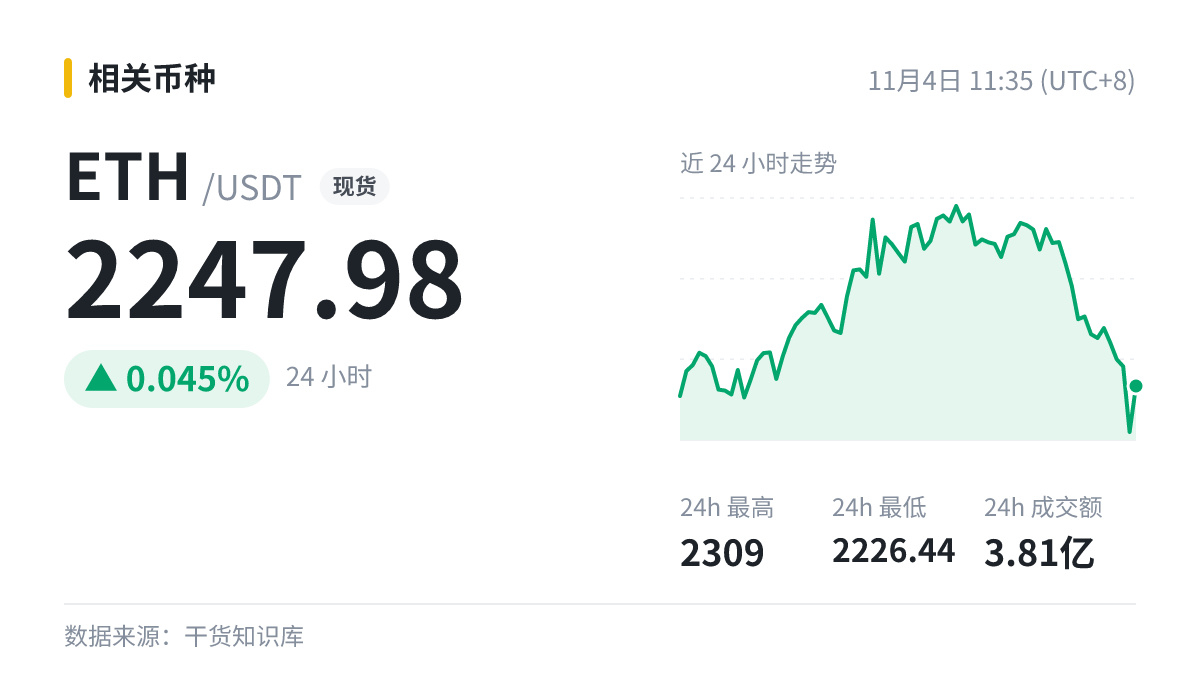
On Ethereum, the staked $ETH is the guarantee of finality: rewriting a finalized block would mean losing a large amount of staked funds. Currently, 2247.98.