
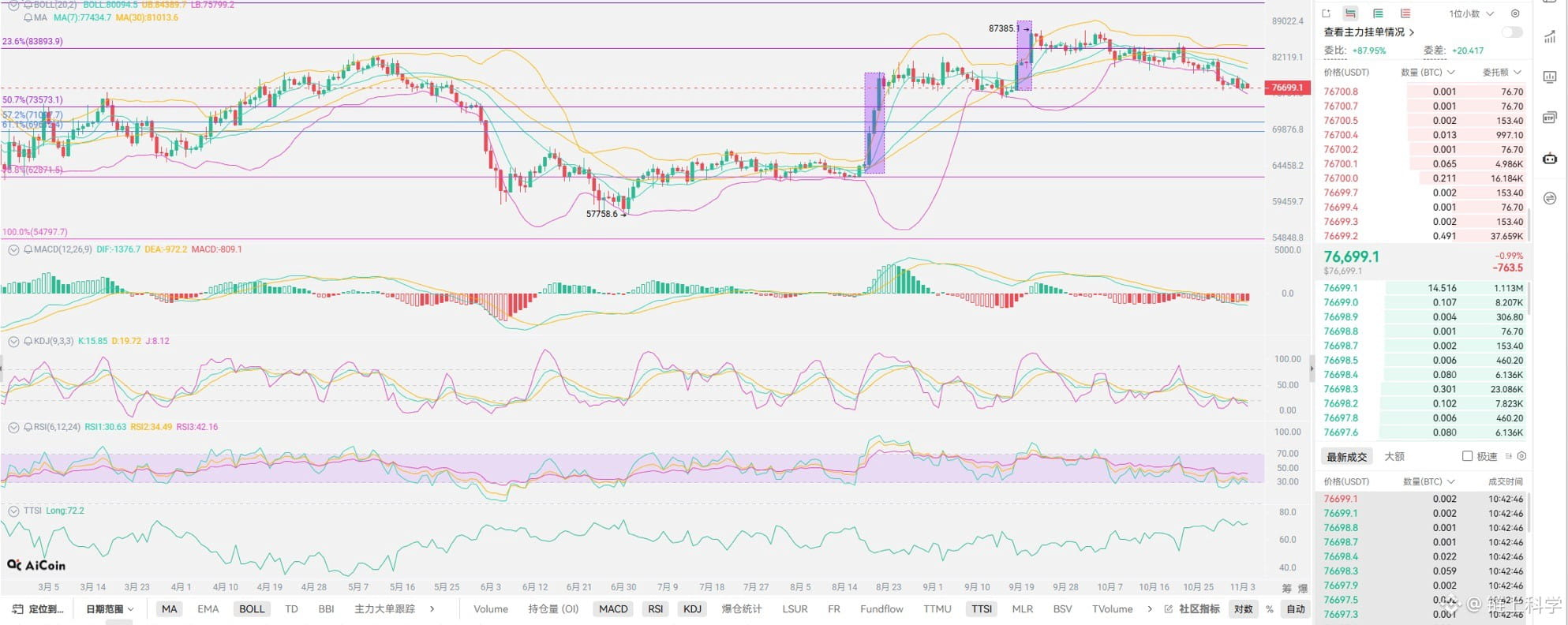

The predicted short entry at 78,000 only came around early morning. Lao Cui’s estimate was probably too high for most people, who likely didn’t enter the market. Today, attention has shifted back to the midterm elections, with the Democrats still in the lead. The latest data puts the probability of Democrats sweeping both chambers at 92%. If the Republicans lose, President Trump’s legislative influence for the remainder of his term will be limited. Democrats may take control of the relevant committees, delaying regulatory legislation such as the CLARITY Act and stepping up scrutiny of the crypto industry. What we feared is closing in, and the correlated moves in crypto prices, gold, and U.S. stocks have been quite pronounced. Spot gold has fallen below $3,900 per ounce, down 1.19% on the day. The bears are gaining the upper hand, and many of you want Lao Cui to provide a more detailed analysis. I also need to talk with you about strategies for SOL and Ethereum.
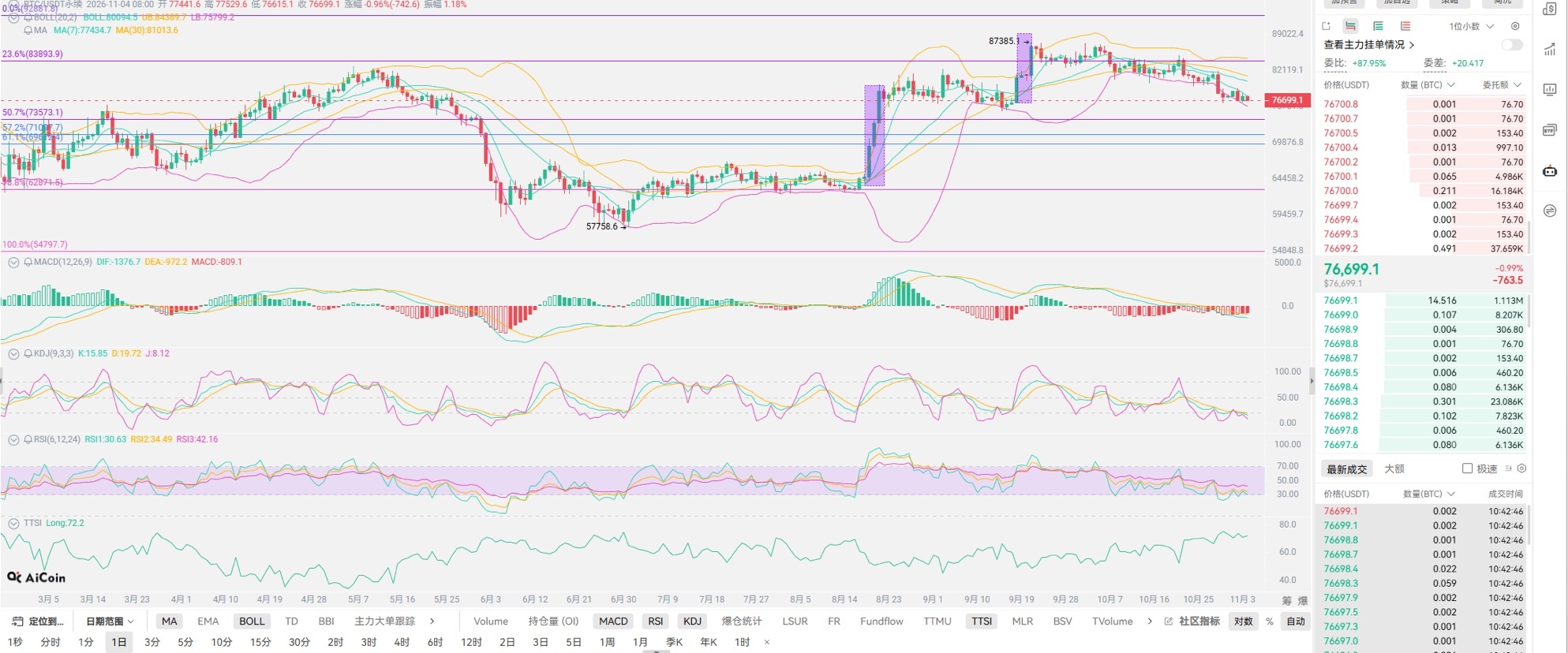
The downward pressure from the trend has taken hold, and Bitcoin's decline is underway. The broader market is in the same situation, and smaller coins like these will face even more pressure. I had high hopes for SOL from last year through this year. That forecast also turned out to be wrong, and I never shy away from admitting mistakes. The facts are clear: as SOL fell, I started buying the dip below 200, bringing my average cost down to around 120. The spot holdings I sold during the previous rally were sold around 70–80, accounting for only about 20% of my total position. My average exit price was also between 100 and 110. Because I took profits on earlier spot holdings, my final average cost ended up back around 130–140, so it was essentially a short-term spot trade. I also needed to free up some of my position to short, and when I exited, I had already anticipated an opportunity like this. That was during the previous rate hike, when I started building short positions. My futures plan was part of that too. Looking back from your perspective at the time, there were still some missteps: my Bitcoin short also got caught in a 5,000-point rally.
Of course, looking back at the market setup at the time, it was definitely the right call. The debate before rate hikes began was essentially about whether to rescue the AI industry: would the US step in to save the market or walk away? Many people couldn't fully get to grips with this question, and that included me—I spent two or three months weighing it up. In the end, the US chose to raise rates, which was effectively a way of abandoning this market. The performance of stocks and crypto today reflects the risks that came with that decision, and the US didn't have many other options. Some things take priority over others; with the trend turning bearish, abandoning the industry was inevitable. The same rule applies to crypto. Compared with other coins, Bitcoin will definitely have stronger support, since BlackRock is among the capital behind it. Listed coins can also withstand pressure better than unlisted ones, while the most vulnerable group at the bottom of the market is the smaller coins and altcoins.
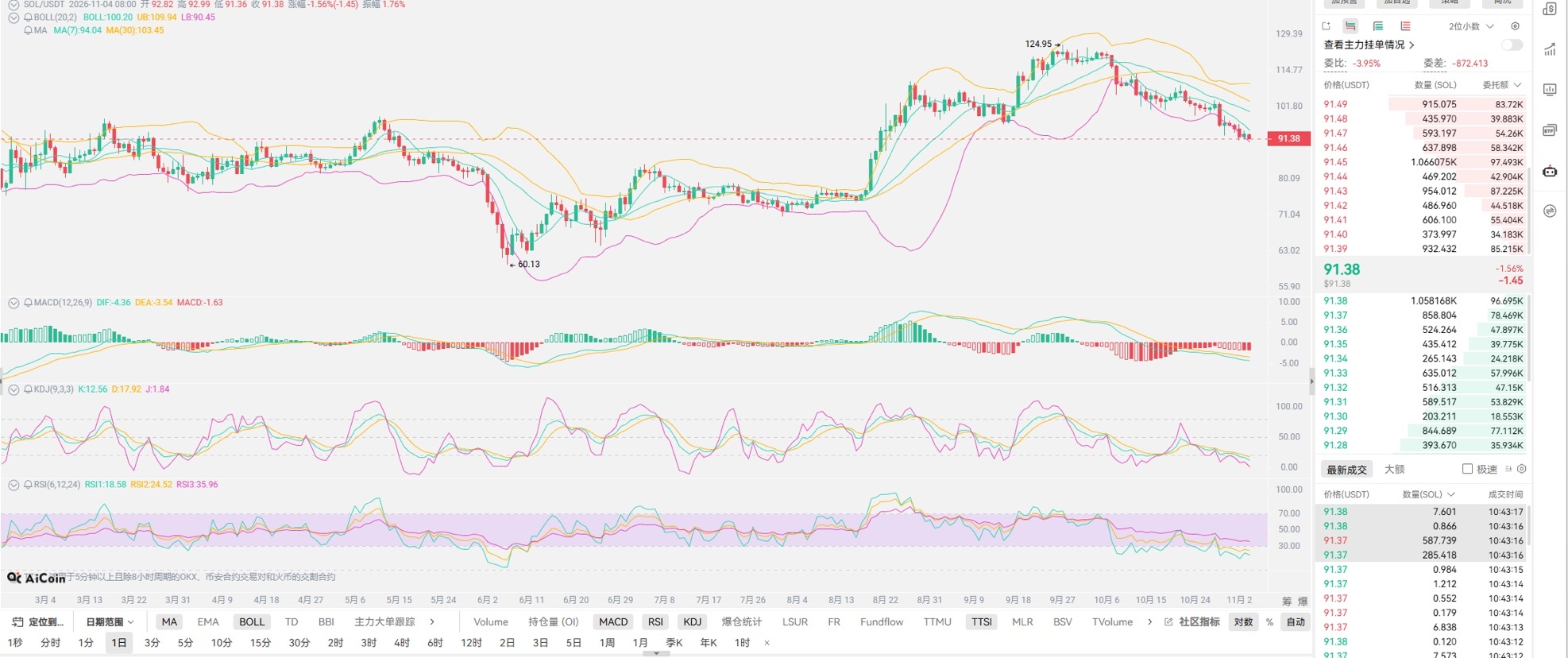
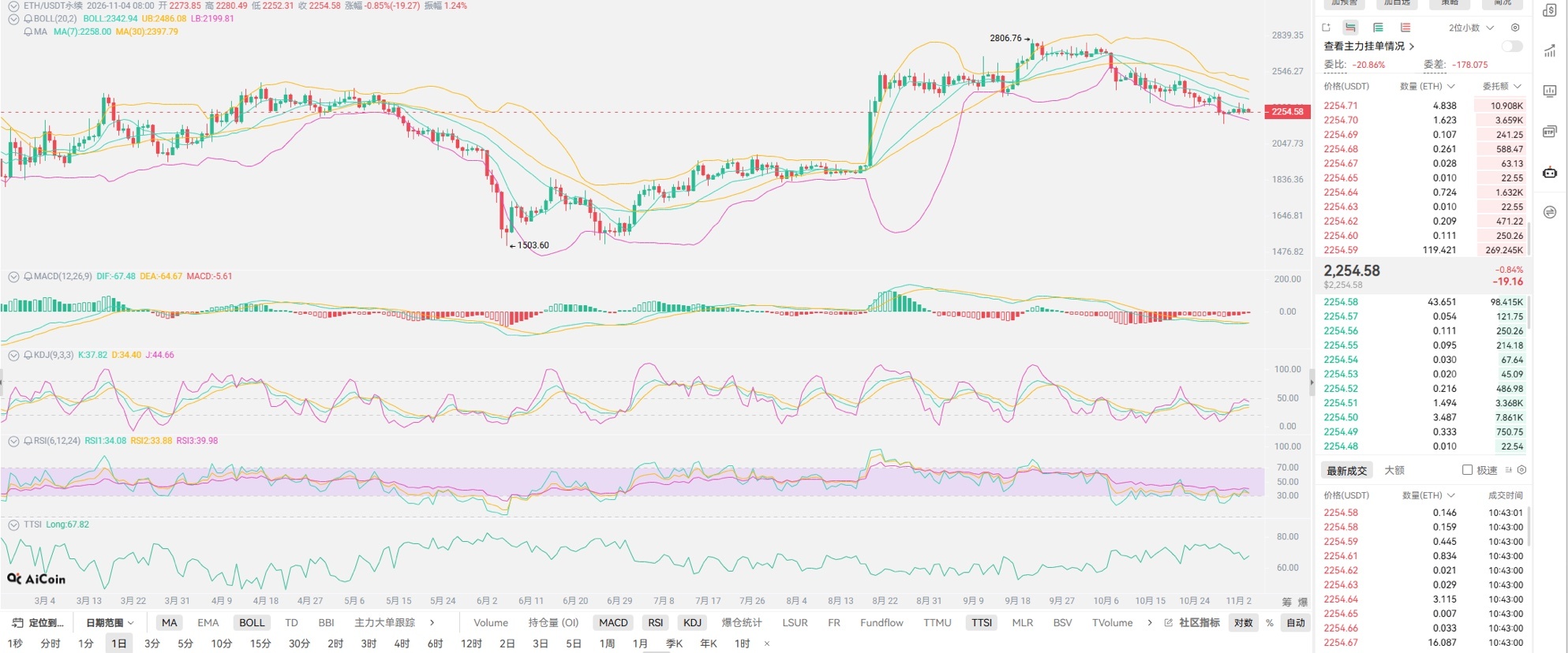
SOL and Ethereum were both coins I strongly recommended during the last bull market, and I kept recommending them even toward the end of the bull run. When SOL was above 200, I was still telling everyone to buy. As you can see, I didn't sell at the peak; I only told everyone to exit when it hit the 250 level for the second time. The mistake was getting in below 200, which left me overexposed. Ethereum's performance has been extremely disappointing: an entry cost of 2,000–2,600 hasn't even doubled. I measure an investment by its return. Of the three coins I recommended in the last bull market—Bitcoin, Ethereum, and SOL—two delivered greater returns, and at least reached new all-time highs. Judging by returns, Ethereum has had the bigger problem, and that has a lot to do with Vitalik. The price has been above 2,500, while he has been selling aggressively. So my view of Ethereum is that I'll only trade it short-term using futures; I'll pause spot purchases for a while.
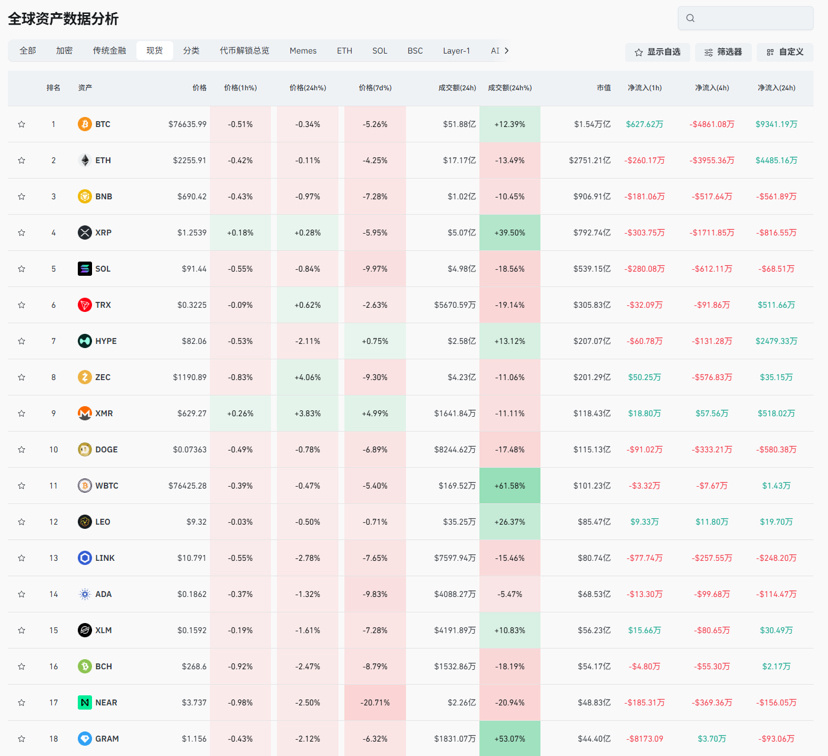
Those who have followed me for a long time will have noticed that I've rarely mentioned this coin since the bull market. My preference for investing in SOL is partly because we've already seen the limits of Ethereum. Despite both being listed coins and having the same stablecoin selection mechanism, Ethereum hasn't managed to make history. I don't know what other positive news could push this coin to a new high. Perhaps all we can do now is watch how SOL performs. I've already talked plenty about its advantages, so I won't go into them today. I'll just talk about price: both coins will fall along with the decline in the financial sector. Their market depth will certainly be greater, and they could even hit new lows. The capital behind them is different, and the contrast will be obvious. These two established altcoins, Ethereum and SOL, have a lot of retail investors, so this kind of opportunity will certainly shake some of them out. If prices are to go higher, there will inevitably be market conditions that scare retail investors.
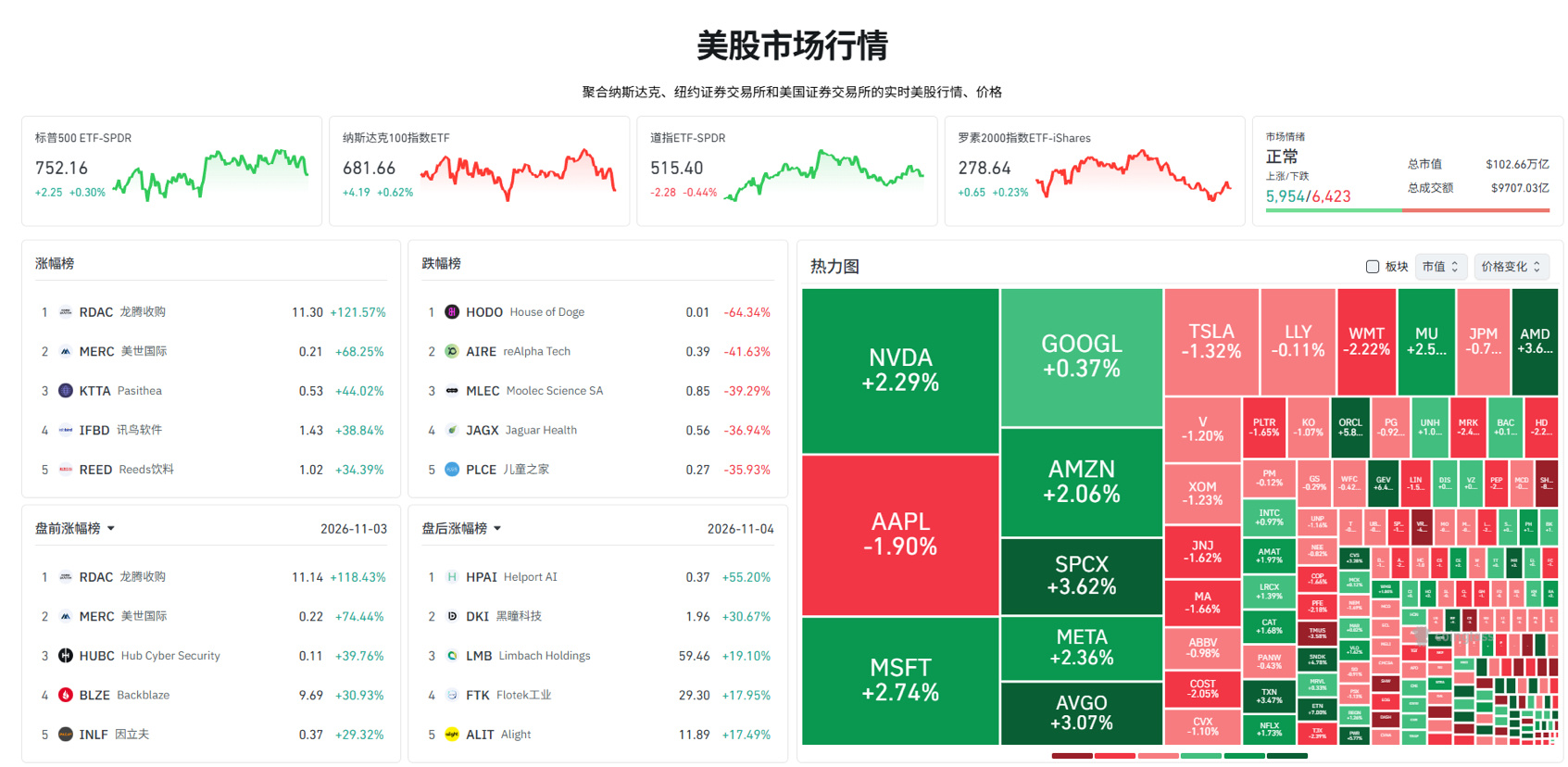
My summary: I'm limited on space and don't want to write too much, so I'll keep it brief. The two-year lows for SOL and Ethereum were 60 and around 1,500, respectively. The (CLARITY Act) has been delayed. I'll set aside the question of crypto regulation for now and focus on how this coincides with the rate-hiking cycle. These two coins will certainly hit new lows. Bitcoin is harder to call; it depends on how much support the major investors behind it can provide. I think it's unlikely to hit a new low, and even if it does, it will probably be just a brief wick down. They certainly can't afford to harm their own interests, especially those tied to long-term investment assets such as pension funds. One thing crypto assets have in common is that they can all be shorted right now. Ethereum may offer greater returns; I don't recommend that people trade SOL futures. My plan is to use profits from Bitcoin and Ethereum futures to dollar-cost average into SOL. If it reaches the 60–80 price range, I'll consider buying, at least to rebuild the portion of my position that I previously sold at a profit and hold it for the long term. Crypto isn't dead. If the (CLARITY Act) passes, there will certainly be another bull market. Until then, it's best to hold on to some tokens and wait for the right opportunity.