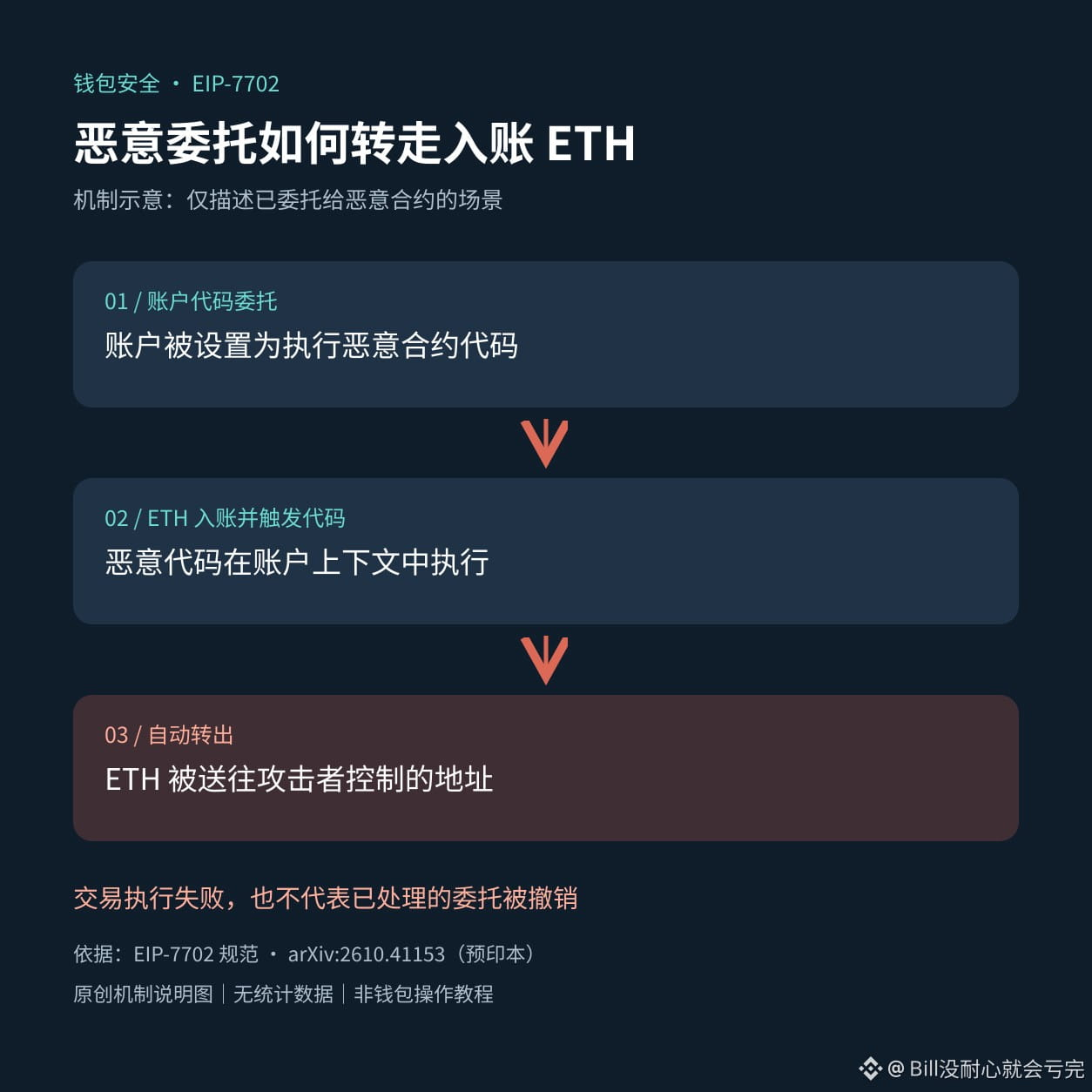

Adding ETH to a compromised wallet to cover fees may result in the funds being transferred out as soon as they arrive. If the address has been delegated to a malicious contract through EIP-7702, code triggered when funds arrive may send the ETH to an attacker's address.
An arXiv preprint submitted on October 30 analyzed this type of automated fund-sweeping attack. One thing it reminded me of: when checking a wallet, don't just look at the token approval list. Also check whether the account has a code delegation and which contract it points to.
The Ethereum specification is clear: a 7702 delegation remains in place. Even if a transaction fails, a delegation that has already been processed is not rolled back. A failure notice alone does not mean the authorization didn't take effect.
Disconnecting from a website, revoking token allowances, and clearing an account's code delegation are different operations. If something seems wrong, first contact official wallet support to confirm the delegation status and how to handle it. Don't repeatedly top up a suspicious address to cover fees, and don't give your seed phrase to anyone claiming they can help recover your funds.
On-chain approvals and contracts both carry risks. This is an explanation of security mechanisms, not investment advice.
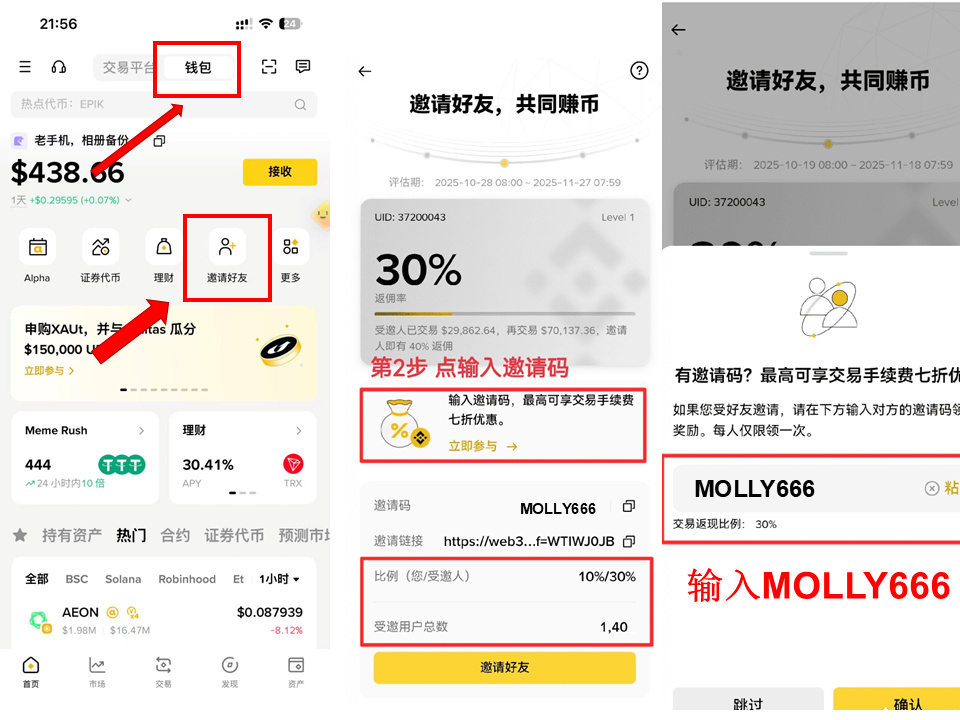
Binance Wallet invitation code: MOLLY666
An arXiv preprint submitted on October 30 analyzed this type of automated fund-sweeping attack. One thing it reminded me of: when checking a wallet, don't just look at the token approval list. Also check whether the account has a code delegation and which contract it points to.
The Ethereum specification is clear: a 7702 delegation remains in place. Even if a transaction fails, a delegation that has already been processed is not rolled back. A failure notice alone does not mean the authorization didn't take effect.
Disconnecting from a website, revoking token allowances, and clearing an account's code delegation are different operations. If something seems wrong, first contact official wallet support to confirm the delegation status and how to handle it. Don't repeatedly top up a suspicious address to cover fees, and don't give your seed phrase to anyone claiming they can help recover your funds.
On-chain approvals and contracts both carry risks. This is an explanation of security mechanisms, not investment advice.
Binance Wallet invitation code: MOLLY666