
The sender channel may be legitimate, but the security instructions in the email may still be fake.
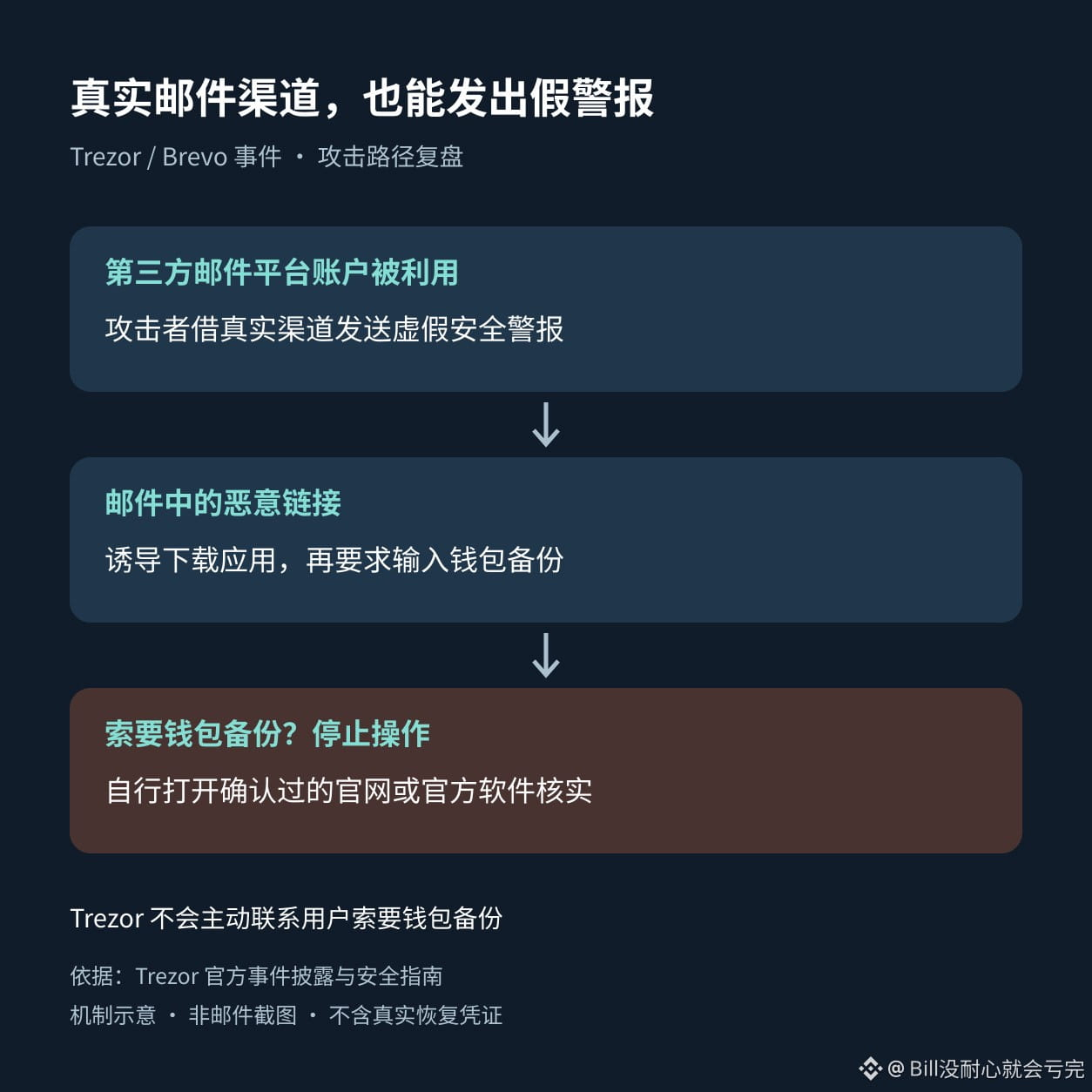
On October 26, security professional Terry Cutler reviewed Trezor’s Brevo incident: Attackers used access to a third-party email platform to send fake security alerts from Trezor’s email account, tricking users into downloading an app and then entering their wallet backup—that is, their recovery seed phrase. In its official disclosure in September, Trezor confirmed this attack path and stated that its wallet and product systems were not affected.
These emails don’t necessarily have misspelled domains or look poorly written. Checking only the sender can make you miss the truly dangerous action: asking you to hand over your wallet backup to a website or a downloaded app.
If you receive a security alert, stop and don’t follow the instructions in the email. Open a verified official website or app yourself to check. Trezor has explicitly stated that it will never proactively contact users to ask for their wallet backup. A hardware wallet can’t protect against the risk of users voluntarily exposing their recovery credentials.
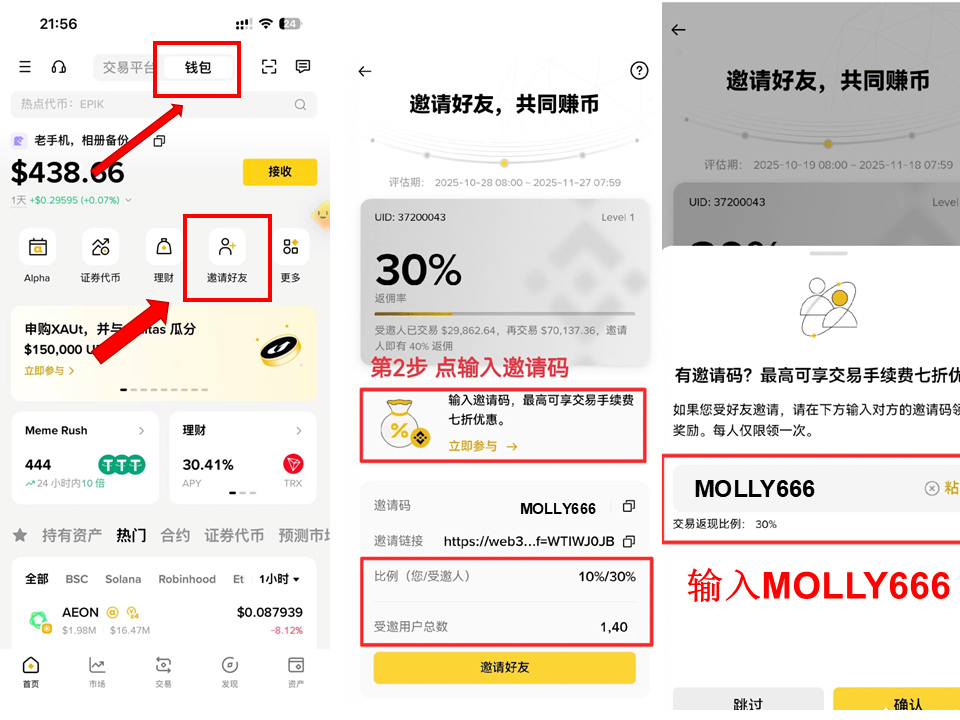
Binance Wallet invitation code: MOLLY666
On October 26, security professional Terry Cutler reviewed Trezor’s Brevo incident: Attackers used access to a third-party email platform to send fake security alerts from Trezor’s email account, tricking users into downloading an app and then entering their wallet backup—that is, their recovery seed phrase. In its official disclosure in September, Trezor confirmed this attack path and stated that its wallet and product systems were not affected.
These emails don’t necessarily have misspelled domains or look poorly written. Checking only the sender can make you miss the truly dangerous action: asking you to hand over your wallet backup to a website or a downloaded app.
If you receive a security alert, stop and don’t follow the instructions in the email. Open a verified official website or app yourself to check. Trezor has explicitly stated that it will never proactively contact users to ask for their wallet backup. A hardware wallet can’t protect against the risk of users voluntarily exposing their recovery credentials.
Binance Wallet invitation code: MOLLY666