

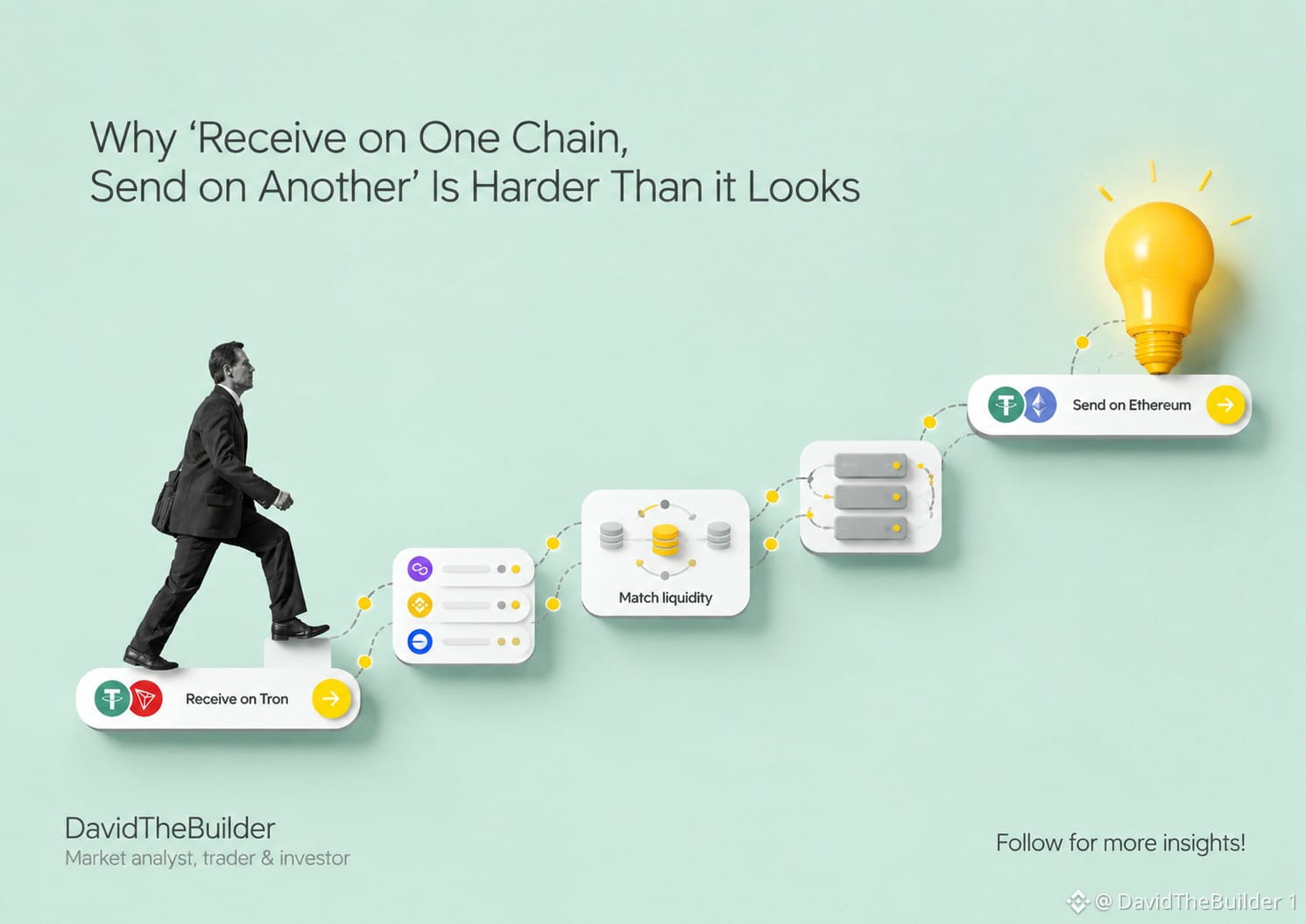
Why “Receive on One Chain, Send on Another” Is Harder Than it Looks Moving stablecoins between networks is just part of everyday $BTC crypto life now. Just look at USDT: $87.9B of it sits on Tron and $78.7B on Ethereum, according to Messari (Q2 2026). So it’s pretty common to have your funds on one chain and need them on the other. Say you top up with USDT on Tron and a few minutes later send it out on Ethereum. Easy, right? It feels like moving money between two accounts at your bank. Behind the screen, the platform confirms, matches, and pays out from its own liquidity on Ethereum thousands of times a day. Keeping all of that hidden matters. According to the National Cryptocurrency Association, 49% of Americans who don’t hold crypto say the biggest barrier is not understanding how it works. For them, simplicity could be what finally brings them in, and that simplicity has to be built somewhere. That’s the part Payward could take off a business’s plate. A bank, fintech or telco could plug in through one integration and offer on- and off-ramps across fiat and digital assets to its users. They could receive on one network and withdraw on another, while the payment infrastructure behind it could be built and managed by Payward. The coverage spans 600+ assets, 24+ payment methods and 190+ countries.https://services.payward.com/on-off-ramps?utm_source=coinmarketcap&utm_medium=davidpayw_r&utm_campaign=post So the user could just tap and get on with their day and the business could get to focus on its own product while the heavy lifting happens somewhere else. Question for builders: how much of your roadmap would you give to managing liquidity across chains? Disclaimer: This is not financial or investment advice. Do your own research before making any decisions. Use at your own risk. #BTC Price Analysis# #Bitcoin Price Prediction: What is Bitcoins next move?#
Join global crypto users on Binance Square
⚡️ Get latest and useful information about crypto.
💬 Trusted by the world’s largest crypto exchange.
👍 Discover real insights from verified creators.
Email / Phone number