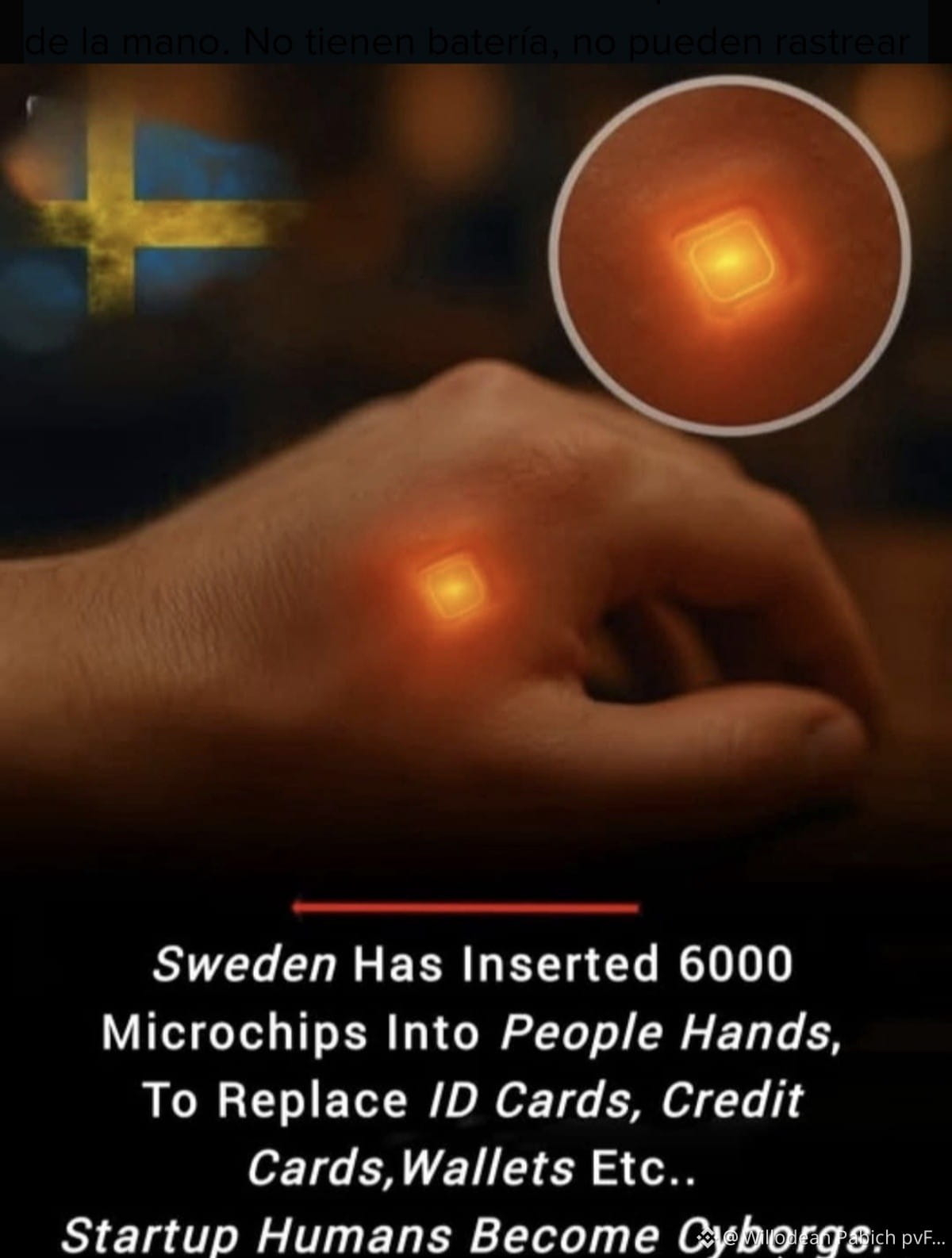
Around 6,000 people in Sweden have voluntarily had tiny microchips—roughly the size of a grain of rice—implanted under their skin.
These chips can be used to open doors, access offices, store tickets, and make certain everyday tasks easier with a simple wave of the hand. They have no battery, cannot track people using GPS, and only work when held very close to a compatible scanner.
Supporters see them as a glimpse of a more connected future, while critics raise concerns about privacy, security, and the long-term implications of integrating people and technology.
$EVAA $ZRO $MORPHO