I deposited crypto and borrowed stablecoins. Why can a big drop in the collateral lead to liquidation?
This is how I understand it: when borrowing stablecoins, the liquidation risk mainly comes from the collateral falling in value. When borrowing a volatile coin, its price rising can also bring the position closer to liquidation.
Each type of collateral has its own loan-to-value ratio (LTV). For example, with an LTV of 75%, assets worth $100 can be used to borrow up to $75.
My current rule of thumb: borrowing rates are variable. When pool utilization nears its limit, rates can rise sharply, so this cost needs to be factored in when borrowing for the long term.
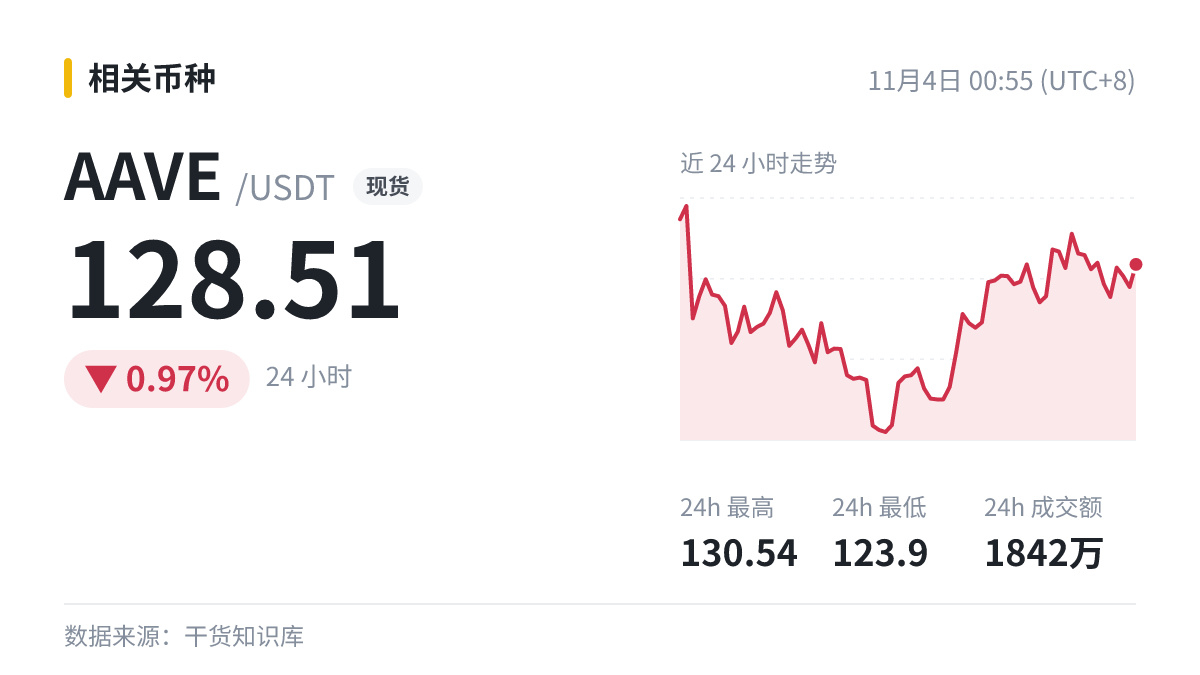
$AAVE is the governance token of Aave, an on-chain lending protocol.
#AAVE