


Whenever Bitcoin comes up, there’s one question we can’t avoid:
Who exactly is Satoshi Nakamoto? One person—or a team—created Bitcoin, left behind the original software, white paper, and millions of bitcoins mined in the early days, then vanished completely in 2011.
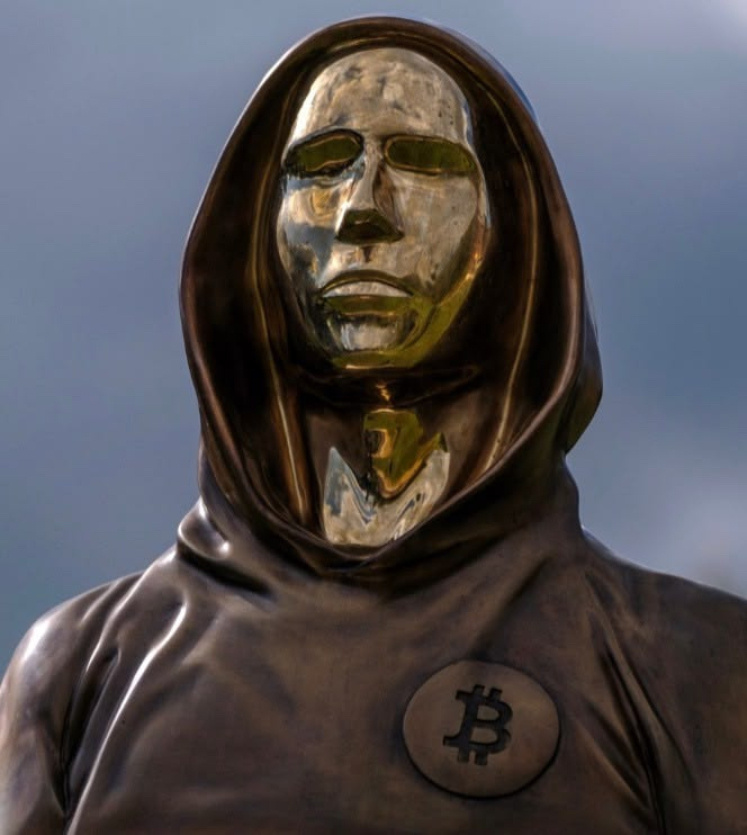
More than a decade has passed, and countless journalists, cryptographers, and investigators around the world have tried to unravel this mystery, but no answer has ever gained widespread acceptance.
I recently took another look at some of the most controversial candidates.
Interestingly, if we move the timeline further back, the person truly worth paying attention to may not be someone who later worked on Bitcoin, but someone who was already researching digital currency before Bitcoin was created.
Let's start with the Bitcoin white paper.
1. Bitcoin did not appear out of nowhere
On October 31, 2008, Satoshi Nakamoto published (Bitcoin: A Peer-to-Peer Electronic Cash System).
But there is one very important detail in the white paper.
It cited the Hashcash proof-of-work mechanism proposed by Adam Back in 1997.
Hashcash was originally designed to address spam by making abuse of a system more difficult through computational costs.
Bitcoin introduced a similar proof-of-work mechanism into digital currency, solving a problem that had long troubled the cryptography community: How can double-spending be prevented without a central authority?
This means that Satoshi had at least a fairly deep understanding of the early Cypherpunk movement and digital currency research.
And Adam Back happened to be an early participant in this field, as well as the creator of Hashcash.
This is just the first clue.
2. Why did Adam Back become a prime suspect?
Adam Back is a British cryptographer and co-founder of Blockstream.
He not only created Hashcash, but also participated in discussions on the Cypherpunks mailing list for many years.
More notably, Satoshi Nakamoto had already been in contact with the cryptography community before publicly releasing the Bitcoin white paper.
Adam Back later said that he only began paying serious attention to Bitcoin after the white paper was released.
But this raises an interesting question worth exploring:
If Satoshi was someone familiar with Hashcash and the Cypherpunk community, did Adam Back have the knowledge and background needed to create Bitcoin?
The answer is yes.
However, having the right technical skills does not mean they are the same person.
What is truly interesting is the later analysis of their writing.
(The New York Times) conducted an extensive comparison of Satoshi's historical emails, forum posts, and messages on the Cypherpunks mailing list.
The investigators collected data from tens of thousands of historical posters, then gradually narrowed down the candidates.
One particularly interesting finding was this:
Satoshi and Adam Back showed notable similarities in their use of hyphens, spelling, and certain grammatical details.
One analysis cited in the article found that Adam Back matched 67 of the 325 instances in which Satoshi used hyphens incorrectly, while the runner-up matched only 38.
This does not prove that the two are the same person, but it does at least point to similarities in their language habits that warrant further investigation.
3. Why have several other people also been suspected?
Of course, Adam Back is not the only candidate for Satoshi Nakamoto.
Hal Finney was one of the first people to take part in testing Bitcoin and the recipient of the first Bitcoin transaction.
On January 12, 2009, Satoshi sent him 10 bitcoins.
Hal Finney was a cryptographer himself and had long been involved in the Cypherpunk community.
His technical background, timing, and connection to Satoshi all fit remarkably well.
The problem, though, is that he publicly described his exchanges with Satoshi. If they really were two different people, then he was someone very close to the heart of Bitcoin's creation.
Of course, the possibility that they communicated under different identities cannot be ruled out entirely.
The second person is Nick Szabo.
Long before Bitcoin was created, he proposed a digital currency concept called Bit Gold.
Bit Gold is very similar to Bitcoin in some of its design ideas, including digital scarcity, computational work, and decentralization.
His research interests closely overlap with the intellectual foundations of Bitcoin.
But so far, there is no direct evidence proving that Nick Szabo is Satoshi Nakamoto.
The third person is Peter Todd.
In 2024, the HBO documentary (Money Electric: The Bitcoin Mystery) pointed suspicion toward Peter Todd.
The documentary's most important clue was an exchange on a Bitcoin forum in 2010.
After Satoshi raised a technical question, Peter Todd replied about 90 minutes later, adding a point about transaction fees.
The documentary's director argued that Peter Todd may have accidentally revealed that he was Satoshi while switching between forum accounts.
But there is plenty of room for interpretation in this reasoning.
Peter Todd himself has also explicitly denied it.
So, for now, this clue remains speculation rather than confirmation of anyone's identity.
4. One person has already been ruled out by a legal investigation
Craig Wright has publicly claimed on multiple occasions that he is Satoshi Nakamoto.
But in 2024, the High Court of England and Wales issued a clear ruling in COPA v. Wright:
Craig Wright is not Satoshi Nakamoto and is not the creator of Bitcoin.
The court also found that he had forged documents on a large scale to support his identity claims and had repeatedly lied in court.
This means that at least one identity claim that once attracted enormous attention has now been conclusively resolved by the courts.
5. Looking at all the clues together, who is the most suspicious?
Personally, I lean more toward Adam Back.
It's not because he's the most famous or because he later founded a blockchain company.
It's because his experience is closely connected to the technological environment that existed before Bitcoin was created.
He studied proof of work, took part in the Cypherpunk movement, was familiar with early ideas about digital currency, and showed noteworthy similarities in analyses of language habits.
Taken together, these clues are more compelling than simply suspecting someone because they were involved in Bitcoin's early development.
But I also don't think this evidence is enough to convict Adam Back.
He has consistently denied being Satoshi Nakamoto.
There is another very important question:
If Adam Back really is Satoshi Nakamoto, why did he spend so many years participating in the industry under another identity after Bitcoin was created?
This could certainly be explained by a desire to remain anonymous, but there could be other reasons too.
But we cannot use one speculation to prove another.
6. What evidence could truly end this debate?
The answer is actually quite simple.
Satoshi controlled a large number of Bitcoin addresses in the early days.
If someone could use the private keys corresponding to Satoshi's known early wallets to produce a digital signature that could be independently verified, that would be extremely important evidence of identity.
Of course, even if someone could prove they controlled an early wallet, it would still be necessary to establish whether that was enough to prove they were the original creator.
In addition, early development records, original emails, reliable historical correspondence, and technical evidence that corroborates other evidence could all help uncover the truth.
Until such evidence emerges, no one can be officially identified as Satoshi Nakamoto.
In the end, I've always thought that the more interesting question than who Satoshi Nakamoto is, is why he chose to disappear.
If he really holds millions of bitcoins mined in the early days, he may possess enough wealth to change the rankings of the richest people in the world.
But over the years, we haven't seen him publicly sell these assets, nor have we seen him return and try to seize control of Bitcoin.
He created a system that can run without anyone's permission, then stepped away himself.
Maybe that's the most thought-provoking part of the whole story.
If Satoshi Nakamoto suddenly appeared tomorrow, who do you think he would be? Adam Back, Hal Finney, or someone we have never suspected? $BTC