


On Tuesday, American voters will head to the polls for the midterm elections, which could shift the balance of power in Congress and determine the future of cryptocurrency regulation.
According to an October 27 Reuters report, cryptocurrency industry groups spent approximately $176 million across more than 100 races during this election cycle.
Coinbase, Ripple and Andreessen Horowitz are among the leading funders of the Fairshake political network.
The results could alter the prospects of the stalled CLARITY Act and determine which lawmakers lead the committees overseeing the industry.
Democrats are seeking control of Congress
Ahead of Tuesday’s midterm elections, Republicans control both chambers of Congress, holding 219 seats in the House of Representatives and 53 in the Senate, according to the Blockchain Association’s election dashboard.
Democrats are seeking to overturn that majority; as of publication, prediction markets favor the party to win control of both the House and Senate, according to Kalshi.
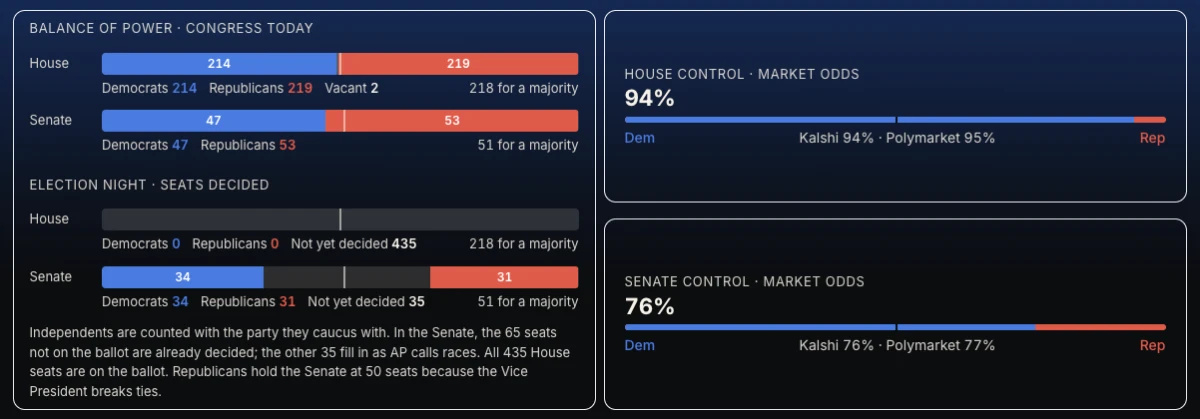
Voters will decide the makeup of all 435 House seats and 35 Senate seats, determining which party will control Congress during the final two years of President Donald Trump’s second term.
Democratic control could lead to greater congressional scrutiny of Trump-linked crypto businesses and regulatory decisions. Control of the Senate would also affect confirmation of the president’s future nominees for regulatory posts.
Ohio, Nebraska and Texas draw crypto industry attention
The Ohio Senate race between Republican Jon Husted and Democrat Sherrod Brown is a key test of the crypto industry’s political influence. Industry groups have reportedly spent more than $50 million opposing Brown, a longtime crypto critic who could return to a leadership role on a key Senate committee.
In Nebraska, Republican Senator Pete Ricketts is facing independent candidate Dan Osborn. Ricketts, a member of the Senate Banking Committee who has supported crypto-friendly legislation, gained an advantage from nearly $11 million in Fairshake spending, according to the Washington Examiner.
Texas is another state to watch: Republican Ken Paxton is facing Democrat James Talarico in a closely contested Senate race. As Cointelegraph previously reported, the Winklevoss-backed Digital Freedom Fund spent money supporting Paxton.
The CLARITY Act faces challenges regardless of who wins
A change in control of Congress could delay the CLARITY Act, although the crypto market structure bill has already faced challenges under Republican leadership.
The bill was intended to divide oversight of cryptocurrency markets between the Securities and Exchange Commission and the Commodity Futures Trading Commission, as well as establish rules for intermediaries. On Sept. 15, the Senate failed to advance it in a procedural vote, 49–50; 60 votes were required.
Democratic Senator Mark Warner pointed to inadequate safeguards against Trump profiting from his administration’s crypto policies. Republican authors of the bill said their final version included substantial ethics concessions sought by Democrats.
“A change in control of Congress will likely send the CLARITY Act’s timeline back to square one,” Christian Davis, head of innovation and digital capital at Relm Insurance, told Cointelegraph.
Ryan Kirkley, CEO of Global Settlement Network, agreed that the challenges go beyond party control.
“The CLARITY Act was already struggling to make its way through the Senate under Republican control, so it’s clear the problem goes beyond which party holds the majority,” Kirkley said.
The industry has already secured a federal regulatory framework for stablecoins through the GENIUS Act, which took effect in July 2025.
Bitcoin’s (BTC) price performance during US midterm election periods has drawn attention on social media, but analysts warn that past declines offer little insight into what may happen after Tuesday’s vote.
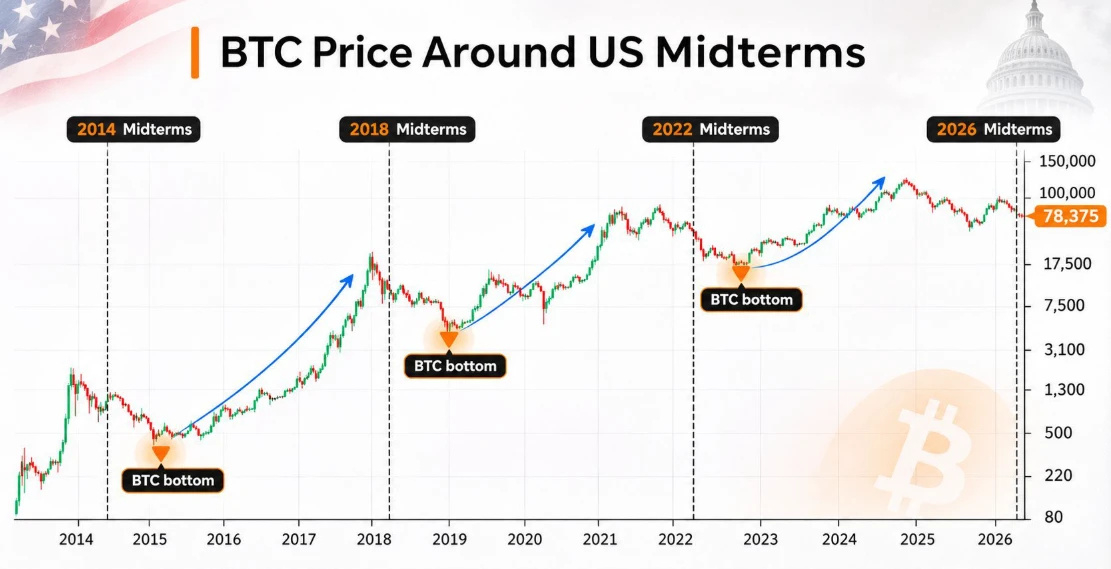
“I’d be cautious about reading too much into Bitcoin’s performance after previous midterm elections. There haven’t been enough cycles to establish a pattern, and the market is structured differently now: ETF flows, institutional portfolios and global liquidity affect prices much more than they used to,” Michael Heinrich, CEO and co-founder of 0G Labs, told Cointelegraph.
GSN’s Kirkley said institutional flows, interest rate expectations and market liquidity were more immediate factors affecting Bitcoin.
“Bitcoin doesn’t need any particular election outcome to succeed. It needs capital, confidence and a macroeconomic environment that gives investors a reason to take risks again,” Kirkley said.