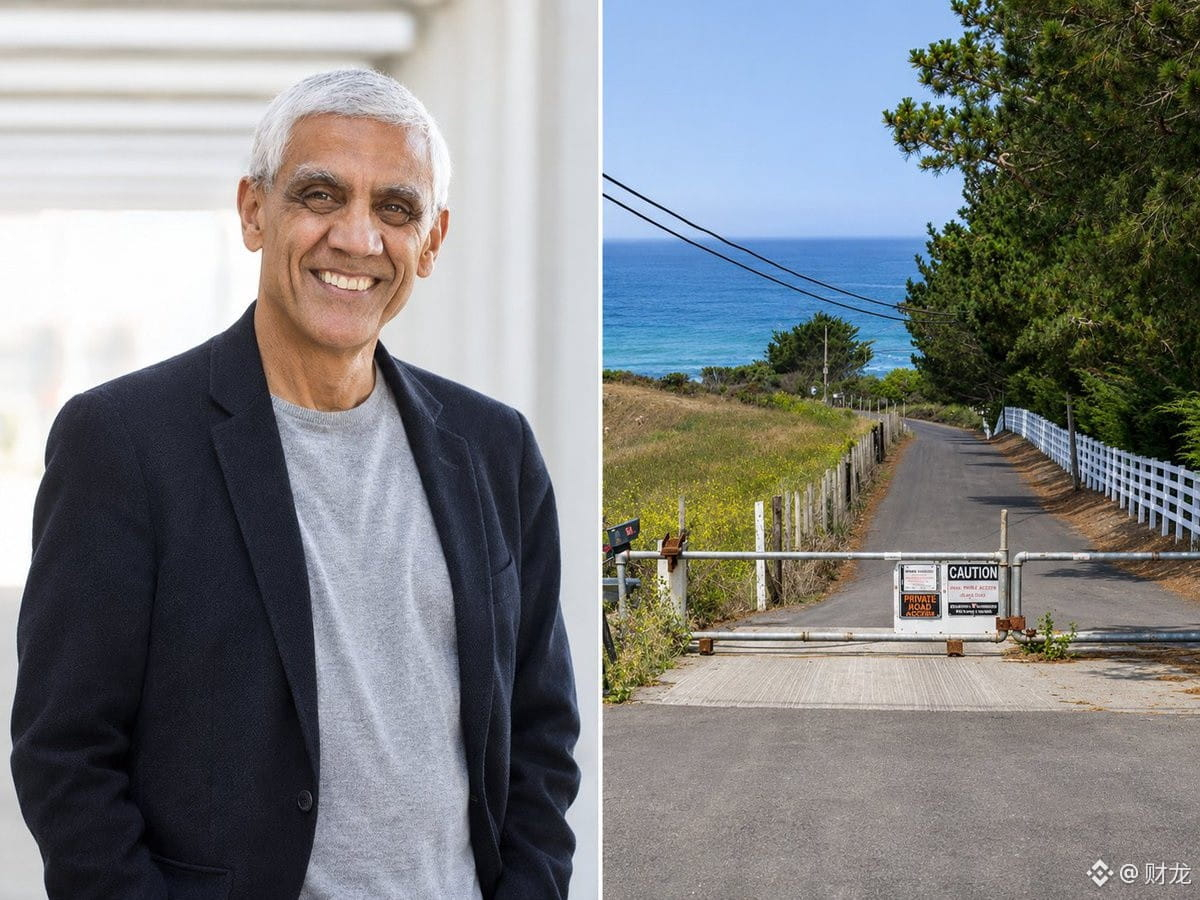

A billionaire worth tens of billions spent more than a decade battling the state of California to keep a road leading to the beach locked.
His name is Vinod Khosla, co-founder of Sun Microsystems and a renowned Silicon Valley venture capitalist.
In 2008, he paid $32.5 million for a coastal property in Half Moon Bay, south of San Francisco.
The property had one unusual feature.
The only road in and out of Martins Beach, a favorite spot among local surfers, ran through it.
The previous owner had always left the gate open, charging a few dollars for parking so anyone could go surfing.
After Khosla took over, he decided he didn’t want outsiders coming in and making noise.
His security guards locked the large gate leading to the beach with a heavy chain.
A sign at the entrance said that the public was not allowed in.
The problem was, this was California.
Under California’s Coastal Act, the state’s beaches are public resources. Even the wealthy can’t fence off a beach as their own private backyard.
The California Coastal Commission warned him:
If he didn’t open the gate, he’d be fined $11,000 a day.
Khosla had no intention of backing down.
He spent millions of dollars hiring one of the country’s top constitutional law teams to fight the California government and a surfers’ association in court.
He appealed all the way from the local courts to the U.S. Supreme Court.
His core argument never changed: private property rights outweigh the public’s right to surf.
And so, a little coastal road became the focus of a drawn-out legal battle that lasted more than a decade.