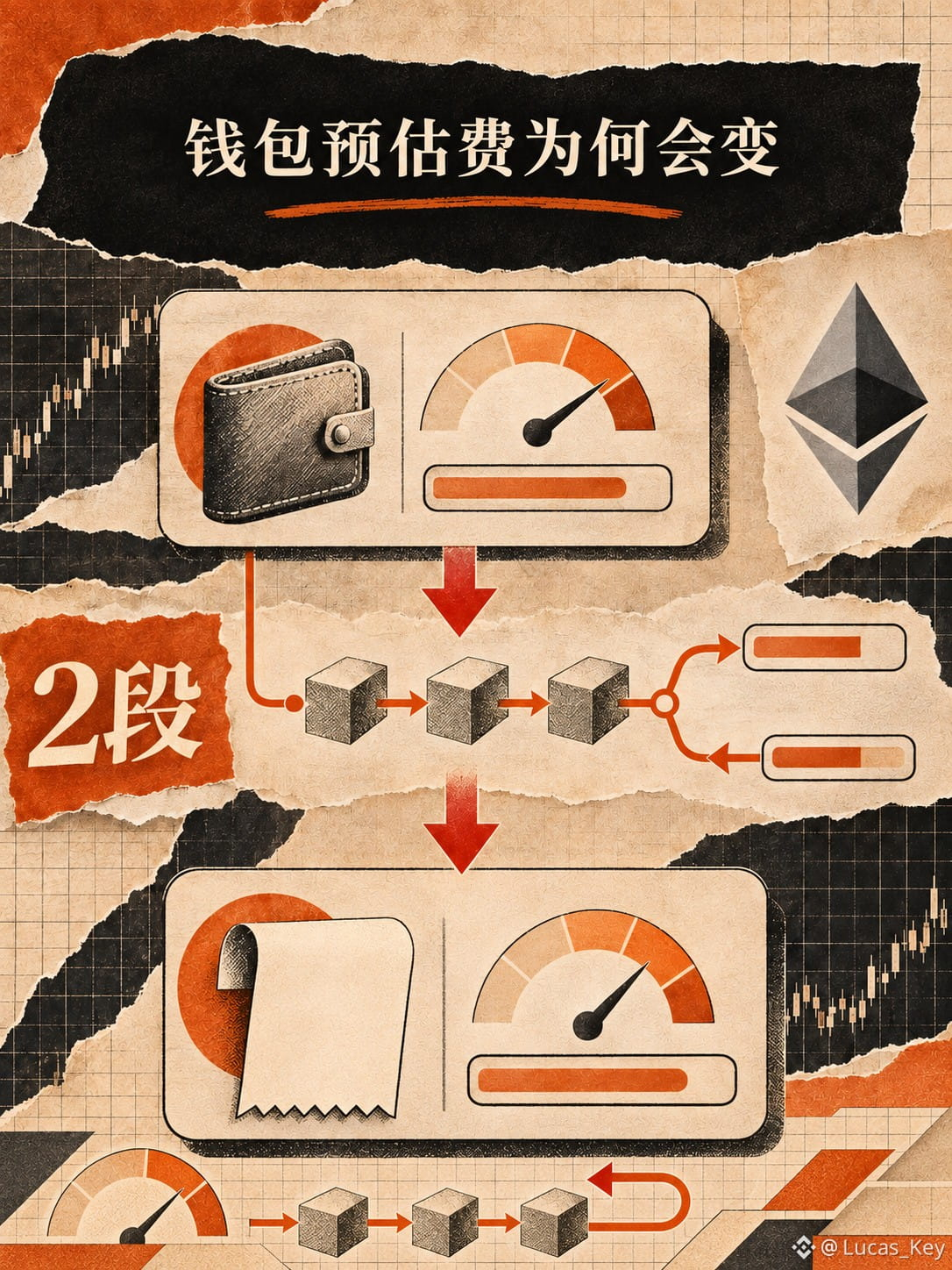
$ETH The fee on a wallet’s confirmation page is more like a quote before departure than a bill already issued on-chain. The wallet first simulates how much Gas the transaction will consume, then gives you a figure based on the current base fee, priority fee, and the maximum you’re willing to pay. Once the transaction is actually included on-chain, it is usually settled based on the Gas used and the fee rates in effect at that time. The max fee is only a ceiling; any unused portion won’t be charged.
That’s why the estimate can change if you wait a few seconds or move to another block. A sudden surge in network congestion can raise the base fee, while changes in contract state may cause the same call to take a different execution path. Even if the transaction ultimately reverts, the validator has already performed the computation, so the Gas consumed still has to be paid for.
$BNB The BSC, like Ethereum, is an EVM environment, but it currently uses Gas price bidding. The official standard Gas price is 0.05 Gwei. Faster blocks and lower unit prices simply mean fluctuations are usually less noticeable; Gas usage still varies for token approvals, swaps, and complex contract calls, and a wallet simulation may differ from the final result if the state changes.
$SOL The charging model is different again: the base fee is charged per signature, while the priority fee is determined by multiplying the compute unit price by the requested compute unit limit. If the limit is set too high, you may pay more in priority fees even if the program doesn’t use the full allowance. So if two wallets show different figures, don’t immediately assume one is “overcharging”—they may be using different congestion estimates, safety margins, or compute limits.
I pay more attention to whether the limits, priority fee, and contract actions on the confirmation page are reasonable than to comparing a single total. Sources: official Ethereum, BNB Chain, and Solana documentation; checked on November 3, 2026. Risk warning: complex contracts and network congestion can increase fees and the cost of failed transactions. This article does not constitute investment advice.