
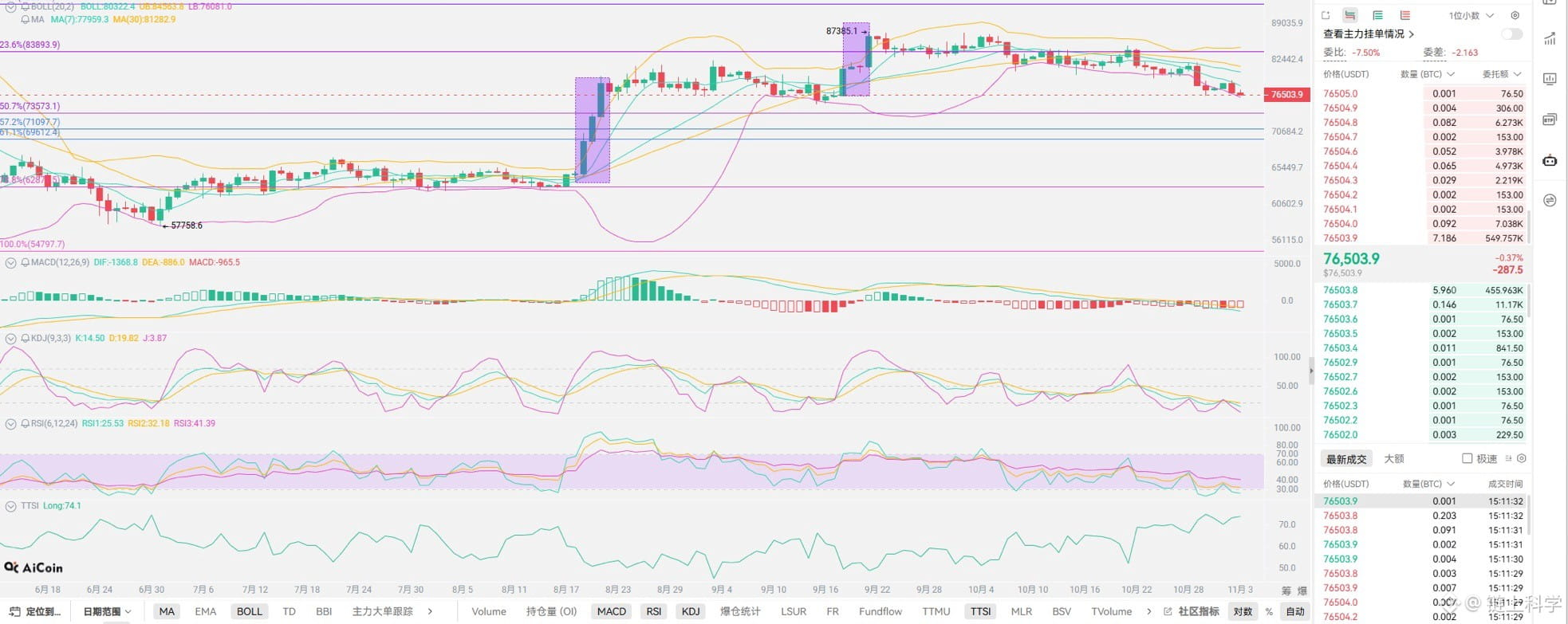

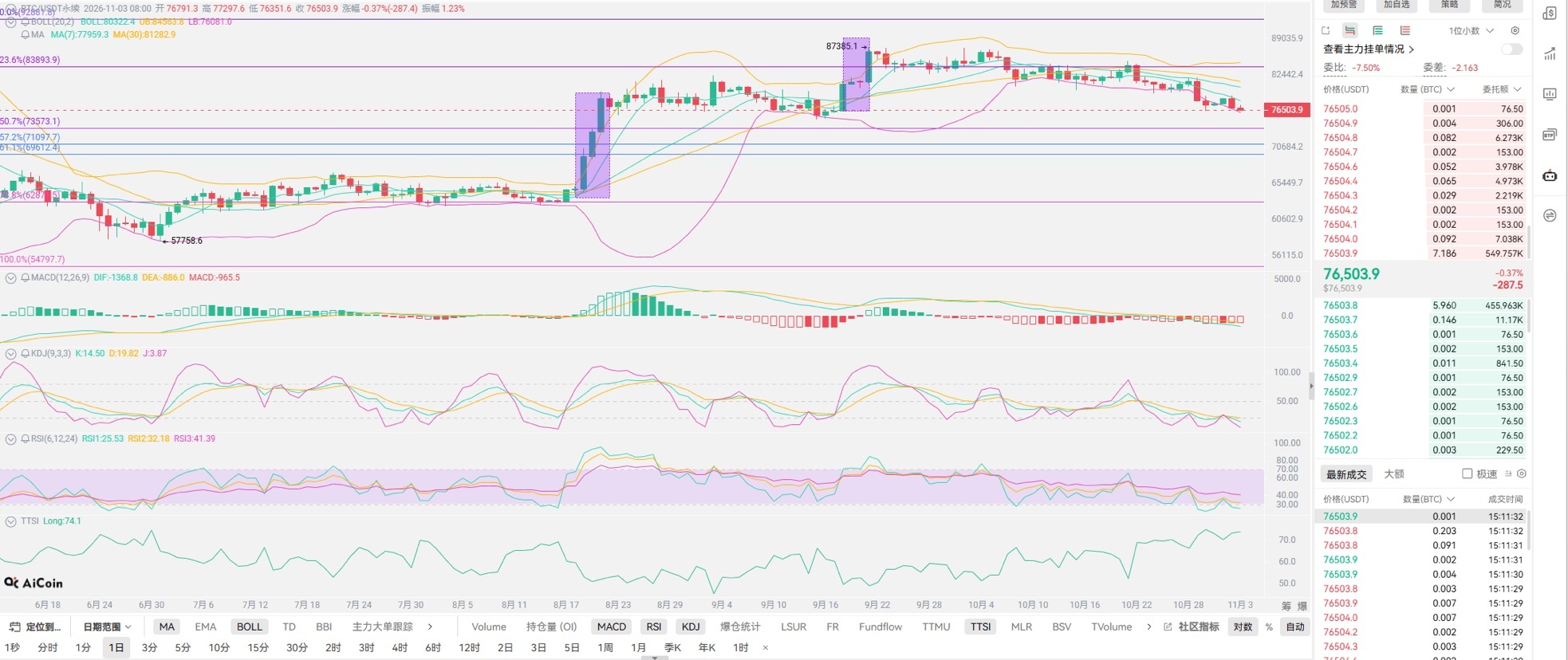
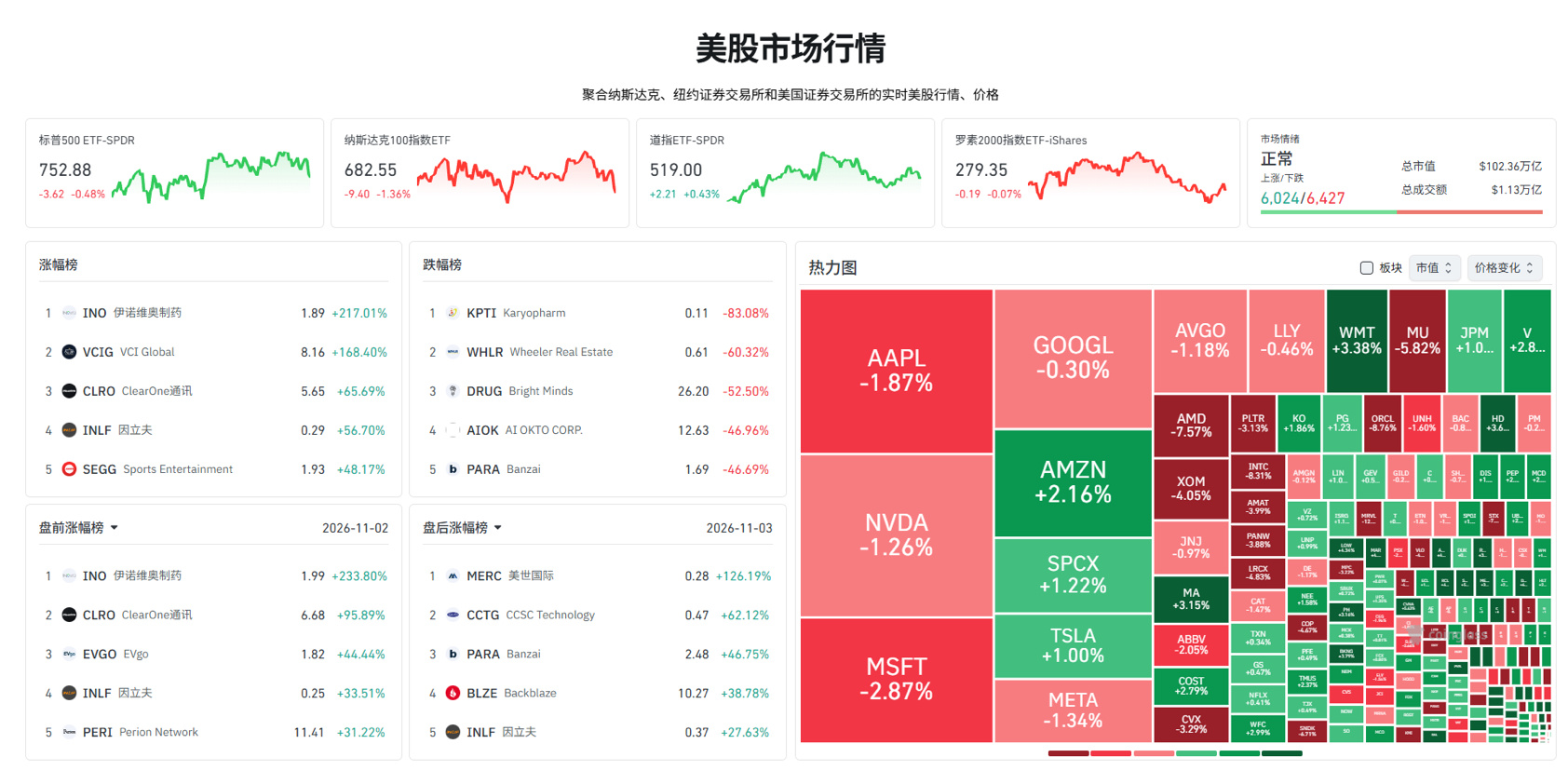
Today's decline has fully erased the lower shadows from the previous period, bringing us back to a familiar rhythm. The market still has room to fall further. Based on a linear analysis, a drop to the previous low of around 76,200 would mark the start of a new market cycle. The previous cycle coincided with the beginning of the interest rate hike cycle, while this decline should be attributed to the impact of the midterm elections. Lao Cui's earlier estimate was around 74,000 (a conservative estimate; it could go lower, but not higher). The trend in the crypto market is now almost clear, so Lao Cui doesn't really want to say too much—doing so might affect your judgment. Instead, let's talk about the US stock market: the sharp plunge led by the tech sector seems to be signaling the end of an era. Individual companies—including Google, Microsoft, and AAOL—as well as the entire downstream industry chain, have plunged. It's important to distinguish between falling share prices and the demise of an industry. Lao Cui thinks the current trend can only be seen as a clearing out of the bubble.
AI has very promising prospects. Lao Cui thinks the main limitation is materials: current technology can’t support its powerful applications. The timeline Lao Cui has in mind is also within six months. If we can’t make a breakthrough during the rate-hiking cycle, we may be headed for a financial winter. Even if a breakthrough comes then, it will be hard to reach historic highs, and the impact on the crypto market will be substantial. You can already see from everyone’s holdings that the major investors in the AI sector are almost the same players as the whales behind the cryptocurrency market. A crash in the technology sector could force them to sell in order to bail out their own companies. Combined with a cyclical pullback, it’s entirely possible that Bitcoin will hit a new low. That possibility is growing. As for oil prices, a short-term decline wouldn’t mean much. The drop is due to negotiations between Trump and Russia, and increased production can only provide temporary relief; it won’t have much of an effect. Inflation will continue.
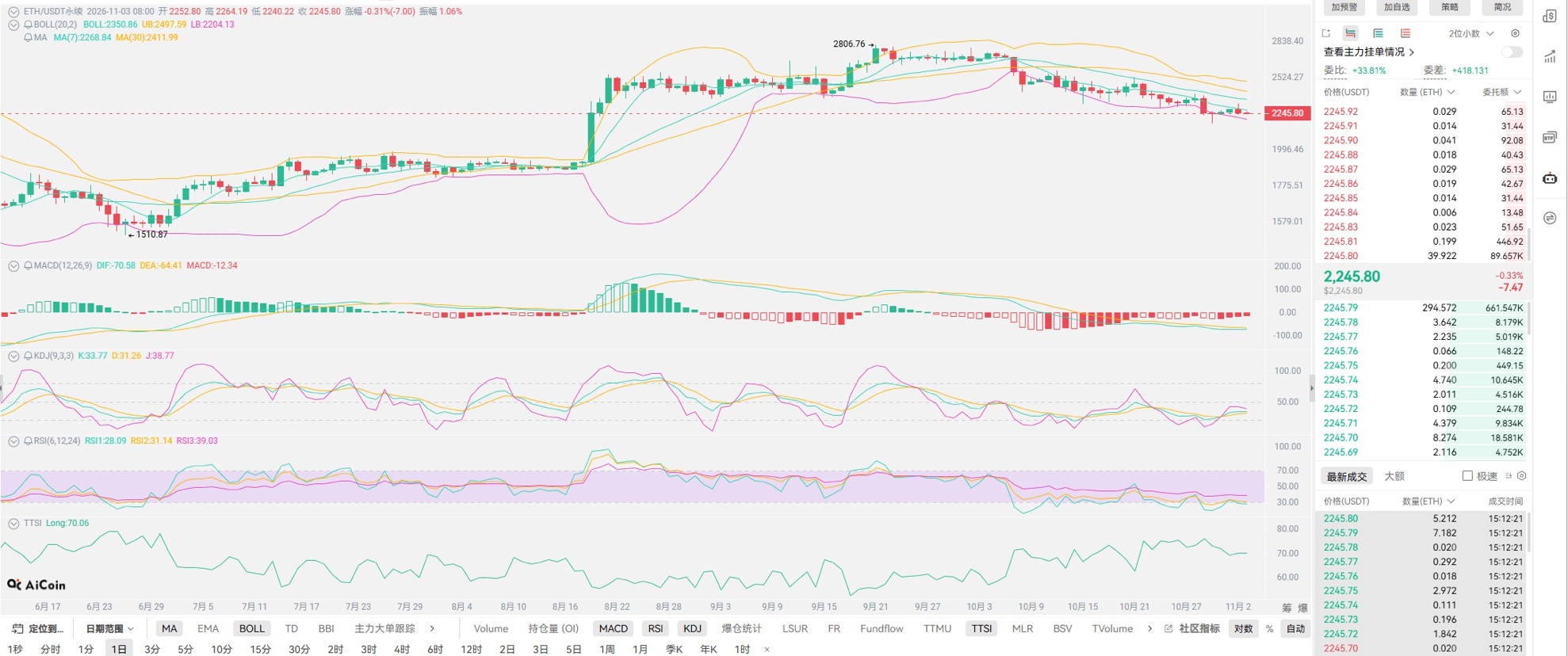
Lao Cui’s summary: The only thing that can affect the crypto market’s short-term movements is the midterm elections, but this factor has already been analyzed to death. From Lao Cui’s perspective, the outcome is practically set in stone, so there isn’t much more to say. It is also inherently bearish news. Contract traders don’t have much to worry about either; most of our energy is going toward planning for next year. I’m slightly pessimistic about next year’s gains. The main uncertainty at the moment is the progress of the tokenization bill. It failed to pass while Trump was at the peak of his power, and things will probably only become more uncertain from here. If the bill fails to pass in 2027, that will be a major headwind for spot traders. We may not even get the one strong bullish counterattack opportunity, and the market could stay range-bound for a year. Of course, it’s hard to see the downside extending too far. The bill will eventually pass, and the two outcomes would be complete opposites. Even if the market moves lower, short sellers will see the bill as a Sword of Damocles hanging over their heads.
Of course, as of now, Lao Cui still has some confidence in the outlook for next year. That’s not to say we can already see what next year’s market will look like—there are still two full months left in this year, so it’s too early to predict. Any overall forecast needs to take December’s news into account, including annual global growth figures and the earnings reports of major companies. We also need to consider the average price of crude oil for all of 2026, as well as the performance of U.S. stocks and Treasuries. Only after these figures are released can we get a rough picture of next year. Until then, we can stick with our current approach. Even if problems arise, there will still be time to make adjustments in early January 2027. There’s no need to be overly worried. First, use contract trading to build up your capital. When prices reach the right levels, Lao Cui will let you know when to enter. I also shared my view in yesterday’s Moments post: from a short-term perspective, 78000 is not support—it’s resistance. You can try shorting around 78000 and aim to take profit at 500-1000; that should be fine. A break below 75000 could happen at any time. As long as you’re shorting, you should be fine, so feel free to trade with confidence.