WTI December futures fell 7.36% in one day, while 30-year inflation compensation dropped just 1 basis point.
What fell wasn’t inflation expectations, but the layer of geopolitical risk premium. The bond market is accounting for these two things separately.
First, let’s lay out three figures.
The U.S. Treasury’s daily curve for November 2: the 10-year nominal yield was 4.91%, down 3 basis points from the previous trading day.
That same day, the 10-year real yield was 2.62%, up 2 basis points.
Subtract one from the other, and inflation compensation comes to 2.29%, down 5 basis points from 2.34% on the previous trading day.
Nominal equals real plus inflation compensation. The subtraction makes the direction clear: it’s the term on the right that fell.
The 30-year end is even clearer. Nominal: 5.28%; real: 3.06%; the difference: 2.22%, just 1 basis point lower than on the previous trading day.
Oil fell more than 7% in one day, and the long end gave it just 1 basis point.
That reaction is unusually small.
If the bond market were treating oil as a guide to the inflation path, long-term yields should fall harder than short-term ones. In reality, short-term yields are moving up.
The 2-year yield was 4.59%, up 3 basis points from the previous trading day—the first rebound since October 27.
Oil plunged 7.36%, yet short-term rate-hike pricing got stronger. The same event, two different directions.
So that more-than-7% drop wasn’t about inflation. It was about the risk premium.
The market lowered the probability of a Strait of Hormuz blockade, and the insurance premium embedded in oil came out. The bond market didn’t mark down next year’s prices.
Inflation expectations price in how policy will respond, not how much a barrel of oil costs this month.
How much of those 5 basis points was just a technical move from month-end rebalancing? Probably some, but there’s no way to prove it.
That same day, the COMEX December gold contract settled at $3,969.60, up 2.2% from the October 30 settlement.
Real yields moved higher, and gold moved higher too. Both lines rising at the same time shows that the money buying gold isn’t there to profit from real rates.
This rise in gold wasn’t driven by interest rates.
Either real yields will turn back down to meet it, or gold will make up for that drop. Watch whether the 10-year real yield holds 2.6%.
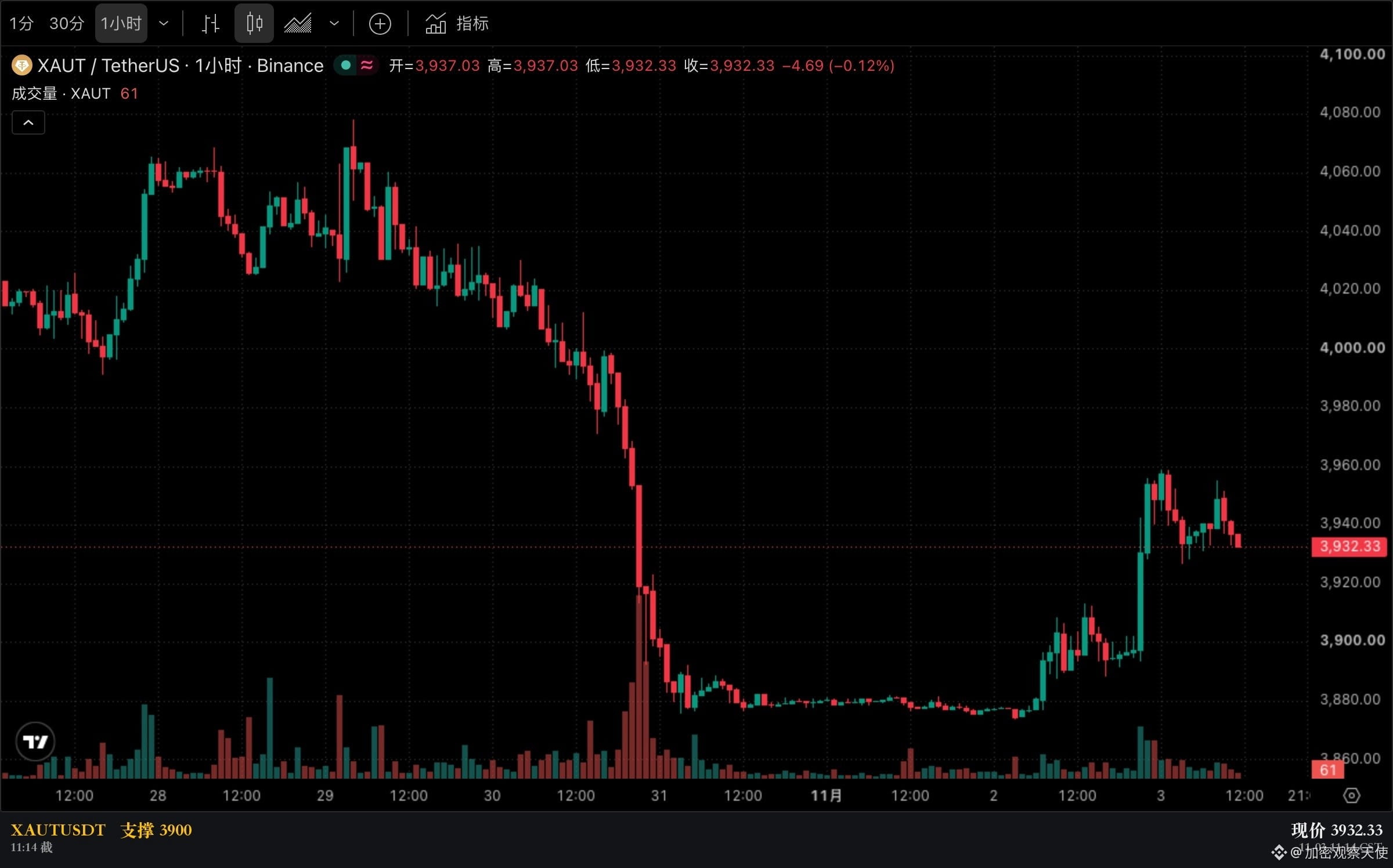
$XAUT was at 3932.33 this morning. $BTC was at 78878 around noon yesterday and hit a low of 76541.60 this morning. It couldn’t hold onto this “good news.”
If you’re going long gold on the theory that this oil-price move means “inflation is going down,” how are you planning to handle this divergence now?
Yields are from the U.S. Treasury’s November 2 daily curve; oil and gold prices are same-day settlements, with gold compared against the October 30 settlement.
The above is a compilation of public data and personal analysis, and does not constitute investment advice.
What fell wasn’t inflation expectations, but the layer of geopolitical risk premium. The bond market is accounting for these two things separately.
First, let’s lay out three figures.
The U.S. Treasury’s daily curve for November 2: the 10-year nominal yield was 4.91%, down 3 basis points from the previous trading day.
That same day, the 10-year real yield was 2.62%, up 2 basis points.
Subtract one from the other, and inflation compensation comes to 2.29%, down 5 basis points from 2.34% on the previous trading day.
Nominal equals real plus inflation compensation. The subtraction makes the direction clear: it’s the term on the right that fell.
The 30-year end is even clearer. Nominal: 5.28%; real: 3.06%; the difference: 2.22%, just 1 basis point lower than on the previous trading day.
Oil fell more than 7% in one day, and the long end gave it just 1 basis point.
That reaction is unusually small.
If the bond market were treating oil as a guide to the inflation path, long-term yields should fall harder than short-term ones. In reality, short-term yields are moving up.
The 2-year yield was 4.59%, up 3 basis points from the previous trading day—the first rebound since October 27.
Oil plunged 7.36%, yet short-term rate-hike pricing got stronger. The same event, two different directions.
So that more-than-7% drop wasn’t about inflation. It was about the risk premium.
The market lowered the probability of a Strait of Hormuz blockade, and the insurance premium embedded in oil came out. The bond market didn’t mark down next year’s prices.
Inflation expectations price in how policy will respond, not how much a barrel of oil costs this month.
How much of those 5 basis points was just a technical move from month-end rebalancing? Probably some, but there’s no way to prove it.
That same day, the COMEX December gold contract settled at $3,969.60, up 2.2% from the October 30 settlement.
Real yields moved higher, and gold moved higher too. Both lines rising at the same time shows that the money buying gold isn’t there to profit from real rates.
This rise in gold wasn’t driven by interest rates.
Either real yields will turn back down to meet it, or gold will make up for that drop. Watch whether the 10-year real yield holds 2.6%.
$XAUT was at 3932.33 this morning. $BTC was at 78878 around noon yesterday and hit a low of 76541.60 this morning. It couldn’t hold onto this “good news.”
If you’re going long gold on the theory that this oil-price move means “inflation is going down,” how are you planning to handle this divergence now?
Yields are from the U.S. Treasury’s November 2 daily curve; oil and gold prices are same-day settlements, with gold compared against the October 30 settlement.
The above is a compilation of public data and personal analysis, and does not constitute investment advice.