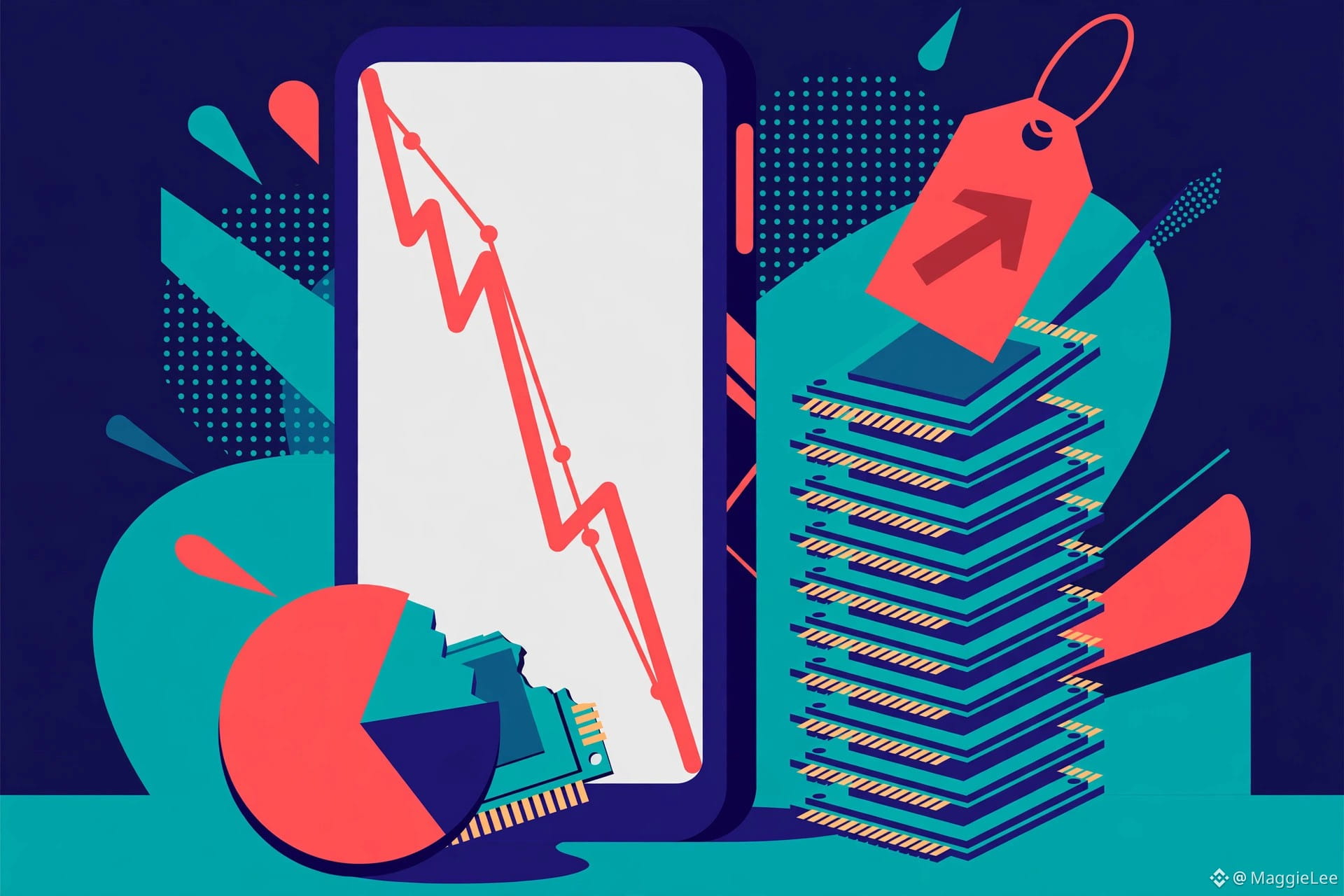
📱 Apple (AAPL): Its best quarter ever, yet the stock fell—the problem isn’t Apple, it’s the “memory tax”
📊 Market snapshot (U.S. trading, 11-02; cross-verified across multiple sources in the finance vertical):
Closed at $338.32 (-1.83%); after earnings, shares fell as much as another 4% after hours, then ended the session around -2%. The options-priced ±3.5% move hasn’t played out yet. The market was quick to penalize the new CEO’s first report card.
📊 The earnings themselves were strong across the board:
Revenue of $114.48 billion (+12%), beating expectations of $113.39 billion; EPS of $2.10, ahead of expectations of about $1.99; net income of $30.71 billion; iPhone revenue of $57.58 billion (+17.5%), a September-quarter record; Services revenue hit a record $31.57 billion; Mac revenue was $10.79 billion (+24%); and full-year revenue reached $479 billion, an all-time high.
📉 What sparked the sell-off?
① Holiday-quarter gross margin guidance of 45%–46%, below this quarter’s 47.9%;
② Services revenue growth guidance of 8%–9%, below Wall Street’s 10.7% expectation;
③ There was just one culprit: rising memory chip prices. Both the CEO and CFO said plainly that memory costs will keep rising into next year.
My take:
1) The “memory price hike tax” has, for the first time, been passed down the supply chain to a consumer-facing giant. AI data centers are scrambling to secure supplies, and SK Hynix has warned that memory shortages could last until 2030. Yesterday, Intel said memory shortages were weighing on PCs; today, Apple is picking up the tab.
2) Apple is already stockpiling: inventory rose 31% quarter over quarter to $14.54 billion. But with price hikes continuing into next year, stockpiling can only delay the impact, not offset it.
3) About one percentage point of this quarter’s 47.9% gross margin came from tariff refunds ($731 million, or +$0.05 EPS), putting the underlying figure at around 46.9%. The market is pricing in “underlying gross margin plus the continued impact of the memory tax next year.”
4) Greater China revenue was $17.54 billion, below the expected $18.75 billion—a shortfall of about $1.2 billion. The good news: Apple Intelligence begins testing in China on November 4, in partnership with Alibaba’s Qwen, which could help offset the weakness.
5) At its core, this is a “transfer payment” caused by the price-hike tax: consumer electronics makers’ margins get squeezed, while the money flows into memory makers’ pockets. Memory leaders (like $MU ) are the real beneficiaries of this cycle.
⚠️ Risks:
This isn’t a collapse in Apple’s fundamentals—recurring cash flow from its $31.57 billion in Services revenue is still there. The real risks are memory prices rising more than expected and the challenge of passing costs on: raising prices could suppress the upgrade cycle, while holding prices steady would squeeze margins from both sides.
Bottom line: On earnings day, the stock’s “up or down” and the results’ “good or bad” often point in opposite directions. This time, the market penalized the guidance, not the results. Those watching memory price trends are really watching the fate of Apple’s gross margins next year.
$AAPL $MU
#苹果 #财报季 #MemoryChips
Personal research; not investment advice.
📊 Market snapshot (U.S. trading, 11-02; cross-verified across multiple sources in the finance vertical):
Closed at $338.32 (-1.83%); after earnings, shares fell as much as another 4% after hours, then ended the session around -2%. The options-priced ±3.5% move hasn’t played out yet. The market was quick to penalize the new CEO’s first report card.
📊 The earnings themselves were strong across the board:
Revenue of $114.48 billion (+12%), beating expectations of $113.39 billion; EPS of $2.10, ahead of expectations of about $1.99; net income of $30.71 billion; iPhone revenue of $57.58 billion (+17.5%), a September-quarter record; Services revenue hit a record $31.57 billion; Mac revenue was $10.79 billion (+24%); and full-year revenue reached $479 billion, an all-time high.
📉 What sparked the sell-off?
① Holiday-quarter gross margin guidance of 45%–46%, below this quarter’s 47.9%;
② Services revenue growth guidance of 8%–9%, below Wall Street’s 10.7% expectation;
③ There was just one culprit: rising memory chip prices. Both the CEO and CFO said plainly that memory costs will keep rising into next year.
My take:
1) The “memory price hike tax” has, for the first time, been passed down the supply chain to a consumer-facing giant. AI data centers are scrambling to secure supplies, and SK Hynix has warned that memory shortages could last until 2030. Yesterday, Intel said memory shortages were weighing on PCs; today, Apple is picking up the tab.
2) Apple is already stockpiling: inventory rose 31% quarter over quarter to $14.54 billion. But with price hikes continuing into next year, stockpiling can only delay the impact, not offset it.
3) About one percentage point of this quarter’s 47.9% gross margin came from tariff refunds ($731 million, or +$0.05 EPS), putting the underlying figure at around 46.9%. The market is pricing in “underlying gross margin plus the continued impact of the memory tax next year.”
4) Greater China revenue was $17.54 billion, below the expected $18.75 billion—a shortfall of about $1.2 billion. The good news: Apple Intelligence begins testing in China on November 4, in partnership with Alibaba’s Qwen, which could help offset the weakness.
5) At its core, this is a “transfer payment” caused by the price-hike tax: consumer electronics makers’ margins get squeezed, while the money flows into memory makers’ pockets. Memory leaders (like $MU ) are the real beneficiaries of this cycle.
⚠️ Risks:
This isn’t a collapse in Apple’s fundamentals—recurring cash flow from its $31.57 billion in Services revenue is still there. The real risks are memory prices rising more than expected and the challenge of passing costs on: raising prices could suppress the upgrade cycle, while holding prices steady would squeeze margins from both sides.
Bottom line: On earnings day, the stock’s “up or down” and the results’ “good or bad” often point in opposite directions. This time, the market penalized the guidance, not the results. Those watching memory price trends are really watching the fate of Apple’s gross margins next year.
$AAPL $MU
#苹果 #财报季 #MemoryChips
Personal research; not investment advice.