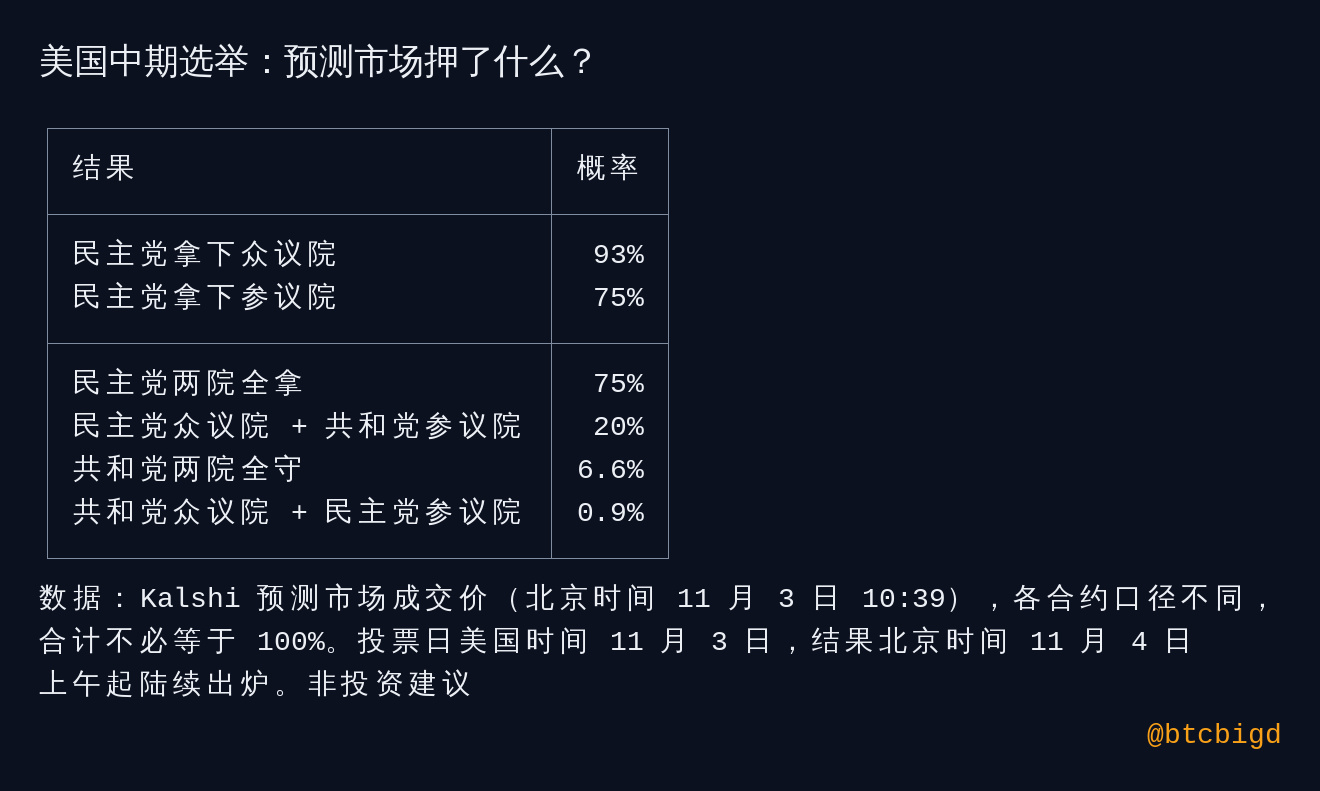
The results of the U.S. midterm elections come out tomorrow. Prediction markets are already pricing in a 75% chance that Democrats will sweep both chambers, with the House looking all but certain at 93%. If things go as expected, the market probably won’t react much; the real action is in the roughly one-in-four chance of a surprise: Republicans holding on to the Senate. Do you think there’ll be an upset? What happens next if Democrats win both chambers as expected?
A few things are likely:
- The House will start investigating the Trump administration and subpoena officials, significantly slowing the pace of policymaking.
- Legislation on issues like tax cuts and tariffs will have a hard time passing Congress, leaving the administration to rely more on executive orders.
- Congress could use war powers and funding restrictions to limit military action against Iran and put pressure on ceasefire talks. On November 2, the U.S. and Iran had just signaled a willingness to negotiate, and Brent crude fell about 7% that day.
- Face-offs between the White House and Congress will become more frequent. The current stopgap funding bill expires on December 11, and Kalshi puts the odds of a government shutdown on December 12 at about 34%. After Democrats won the House in 2018, the U.S. went straight into the longest shutdown in its history, lasting 35 days. In 2019, the House also impeached Trump, but the Senate did not convict him, so he remained in office.
- The clashes will likely play out publicly on social media. During those two years, the market was often swayed by a single post, so short-term volatility in U.S. stocks and $BTC is likely to increase after the election.
- The crypto market structure bill (CLARITY), which stalled in the Senate in September, will have only the remaining weeks of the year after the election. If it doesn’t pass, the new Congress will have to start from scratch next year.
#CountdownToTheUSMidterms: Is the window for trading U.S. stocks now open?