On November 2, NYMEX WTI December futures settled at $96.46, down 7.36% for the day. This wasn’t a switch in risk appetite; it was four prices each going their own way.
That same day, December gold futures closed at 3969.60, up 1.8%.
The Philadelphia Semiconductor Index fell 3.37%.
If things really had eased in the Middle East and risk appetite had returned, gold should have fallen and the Philadelphia Semiconductor Index should have risen.
Neither happened.
Oil gave back its Strait of Hormuz risk premium, not demand.
On November 1, OPEC+ had just decided to keep December output at September’s level. Supply conditions hadn’t eased one bit.
So what’s missing from that 96.46 is the assumption that “a blockade will happen,” not the view that “oil will be in surplus.”
Gold is following a different path.
Gold buyers didn’t interpret oil’s 7.36% drop as a sign that the risks had passed.
And the Philadelphia Semiconductor Index’s 3.37% drop wasn’t macro-driven at all; the compute chain itself was being sold off.
The most striking trade came on November 1: Marvell signed an agreement to acquire Lumentum, with a stock exchange ratio of 4.5 to 1.
On the first trading day after the announcement, the buyer’s shares fell 12.72%, the seller’s fell 18.59%, and the entire optical transceiver supply chain followed suit.
Three prices, three drivers.
Crypto isn’t in this table.
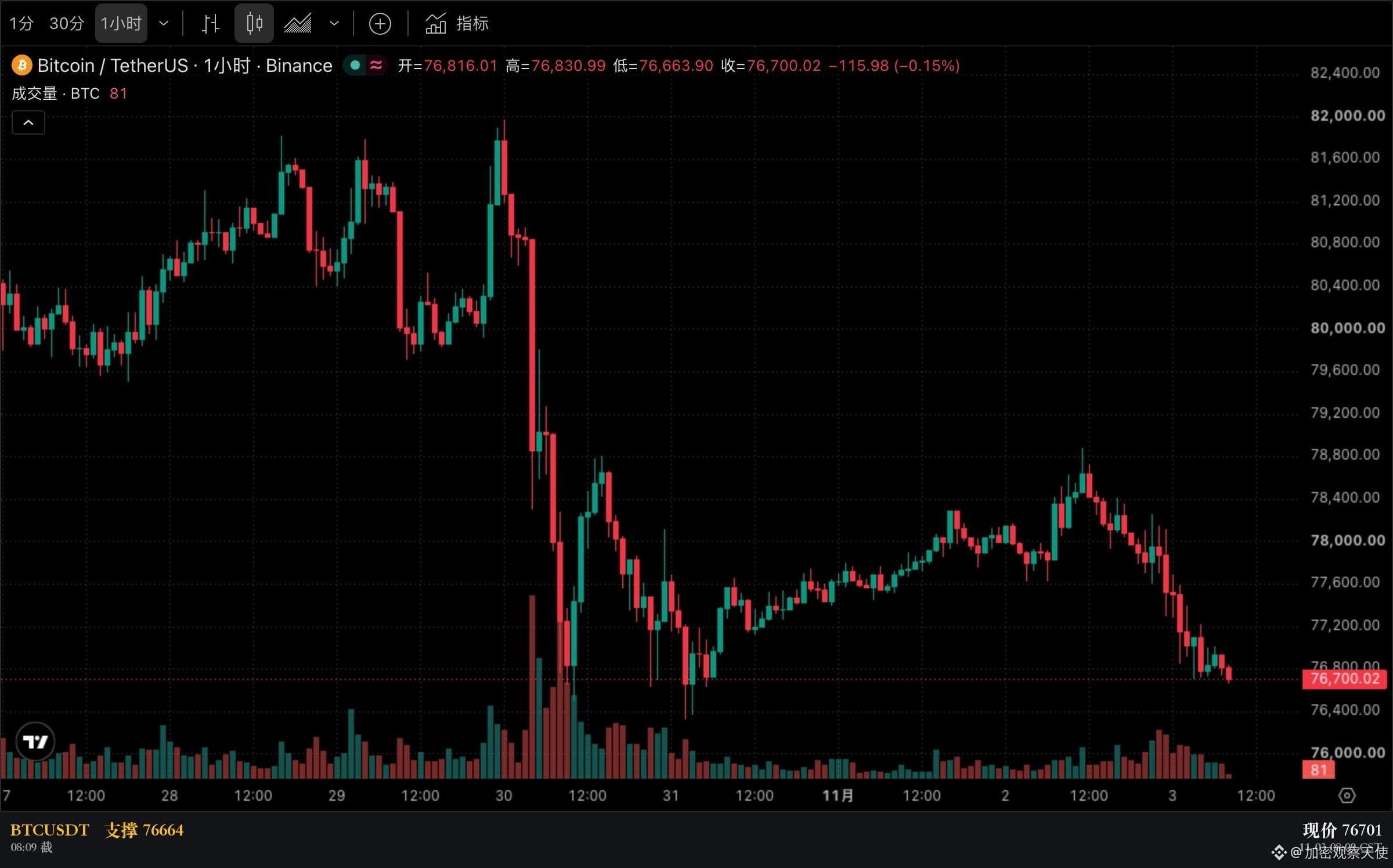
$BTC fell all night, from 78254 to 76705, and was at 76701 at 8:10 this morning.
$ETH 2250, down 1.11%. $XAUT 3941.82, up 1.19%.
On the same quote board, safe havens and risk assets were moving in opposite directions again.
Crypto didn’t catch that “good news,” because the inputs to its pricing have nothing to do with this story.
What’s weighing on it is net ETF redemptions and a repricing of trust in exchanges—neither has anything to do with crude oil.
The Dollar Index closed at 101.79, down 0.08%—effectively unchanged.
If this really were a global switch in risk appetite, the dollar should have moved first.
It didn’t.
What I can’t tell is whether gold’s 1.8% gain means safe-haven demand hasn’t faded, or whether real interest rates are being repriced. Both explanations make sense, but there’s no way to prove either.
What’s really worth remembering is this separation.
Any framework that treats crypto as a “high-beta version of macro risk appetite” will eventually fail on a day like this.
Because oil is giving back its risk premium, while crypto is giving back trust.
U.S. stocks open at 22:30 tonight. If the Philadelphia Semiconductor Index’s 3.37% loss is recovered and gold is still rising, then today’s separation was just an illusion.
Of these four lines, which one would you want to verify first?
Settlement prices are from NYMEX and COMEX on November 2; index figures are official closes for the day; crypto prices are readings taken before 08:10 CST this morning.
The above is a compilation of publicly available data and personal analysis, and does not constitute investment advice.
That same day, December gold futures closed at 3969.60, up 1.8%.
The Philadelphia Semiconductor Index fell 3.37%.
If things really had eased in the Middle East and risk appetite had returned, gold should have fallen and the Philadelphia Semiconductor Index should have risen.
Neither happened.
Oil gave back its Strait of Hormuz risk premium, not demand.
On November 1, OPEC+ had just decided to keep December output at September’s level. Supply conditions hadn’t eased one bit.
So what’s missing from that 96.46 is the assumption that “a blockade will happen,” not the view that “oil will be in surplus.”
Gold is following a different path.
Gold buyers didn’t interpret oil’s 7.36% drop as a sign that the risks had passed.
And the Philadelphia Semiconductor Index’s 3.37% drop wasn’t macro-driven at all; the compute chain itself was being sold off.
The most striking trade came on November 1: Marvell signed an agreement to acquire Lumentum, with a stock exchange ratio of 4.5 to 1.
On the first trading day after the announcement, the buyer’s shares fell 12.72%, the seller’s fell 18.59%, and the entire optical transceiver supply chain followed suit.
Three prices, three drivers.
Crypto isn’t in this table.
$BTC fell all night, from 78254 to 76705, and was at 76701 at 8:10 this morning.
$ETH 2250, down 1.11%. $XAUT 3941.82, up 1.19%.
On the same quote board, safe havens and risk assets were moving in opposite directions again.
Crypto didn’t catch that “good news,” because the inputs to its pricing have nothing to do with this story.
What’s weighing on it is net ETF redemptions and a repricing of trust in exchanges—neither has anything to do with crude oil.
The Dollar Index closed at 101.79, down 0.08%—effectively unchanged.
If this really were a global switch in risk appetite, the dollar should have moved first.
It didn’t.
What I can’t tell is whether gold’s 1.8% gain means safe-haven demand hasn’t faded, or whether real interest rates are being repriced. Both explanations make sense, but there’s no way to prove either.
What’s really worth remembering is this separation.
Any framework that treats crypto as a “high-beta version of macro risk appetite” will eventually fail on a day like this.
Because oil is giving back its risk premium, while crypto is giving back trust.
U.S. stocks open at 22:30 tonight. If the Philadelphia Semiconductor Index’s 3.37% loss is recovered and gold is still rising, then today’s separation was just an illusion.
Of these four lines, which one would you want to verify first?
Settlement prices are from NYMEX and COMEX on November 2; index figures are official closes for the day; crypto prices are readings taken before 08:10 CST this morning.
The above is a compilation of publicly available data and personal analysis, and does not constitute investment advice.