
Revoking token approvals does not clear a wallet’s EIP-7702 delegation. This is an easily overlooked layer of permissions when troubleshooting wallet issues.
A preprint submitted to arXiv on October 30 examined attacks in which malicious delegation contracts divert ETH received by a wallet. The paper has not yet been peer-reviewed; here, we discuss only mechanisms that can be cross-checked against Ethereum specifications.
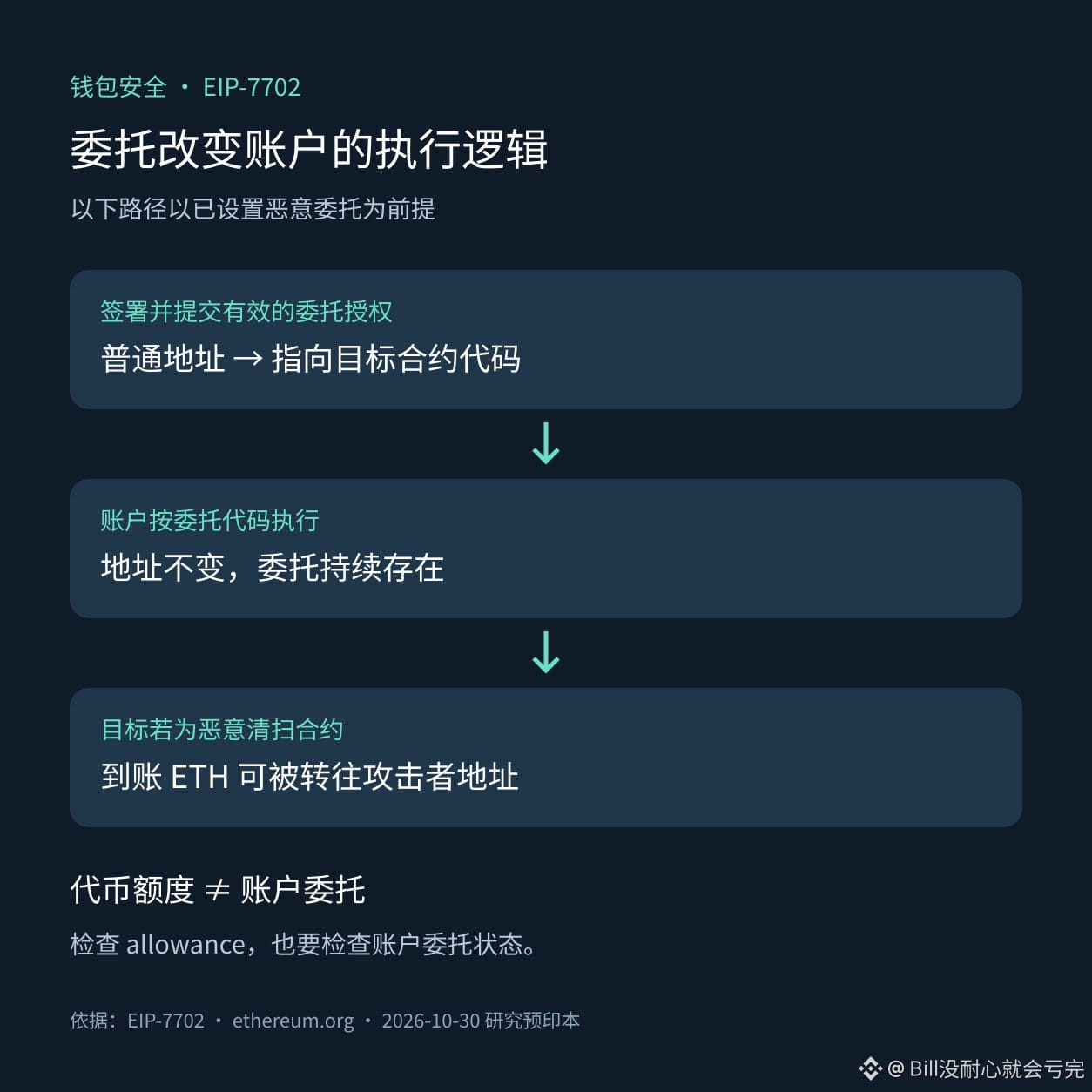
EIP-7702 allows regular addresses to delegate the execution of contract code. The address remains the same, but its execution logic can change; delegation also does not automatically disappear when a transaction ends. Legitimate uses include batch operations and sponsored fees. The risk lies in who you grant execution permissions to.
When you see a signature request for something like upgrading to a smart account, don’t just check whether it triggers an immediate transfer. Verify the delegation target shown by the wallet, the network it belongs to, and the source of the code. If you suspect an existing malicious delegation, your investigation should include the account’s delegation status—not just its ERC-20 allowance.
Wallet signatures and contracts both carry risks. Verify permissions before taking action, and never sign blindly.
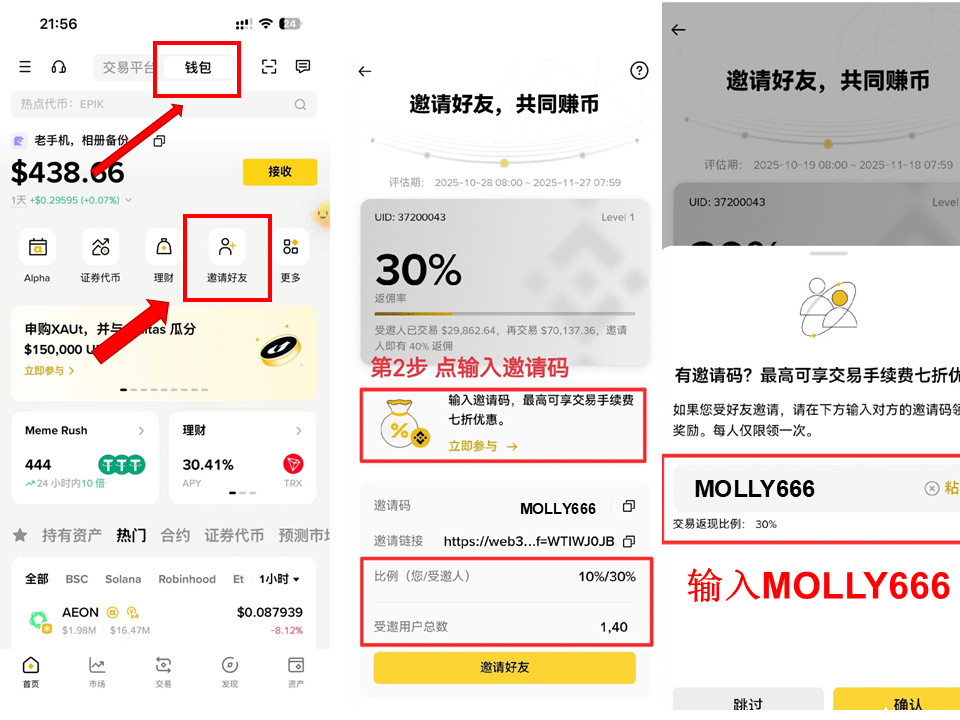
Binance Wallet referral code: MOLLY666
A preprint submitted to arXiv on October 30 examined attacks in which malicious delegation contracts divert ETH received by a wallet. The paper has not yet been peer-reviewed; here, we discuss only mechanisms that can be cross-checked against Ethereum specifications.
EIP-7702 allows regular addresses to delegate the execution of contract code. The address remains the same, but its execution logic can change; delegation also does not automatically disappear when a transaction ends. Legitimate uses include batch operations and sponsored fees. The risk lies in who you grant execution permissions to.
When you see a signature request for something like upgrading to a smart account, don’t just check whether it triggers an immediate transfer. Verify the delegation target shown by the wallet, the network it belongs to, and the source of the code. If you suspect an existing malicious delegation, your investigation should include the account’s delegation status—not just its ERC-20 allowance.
Wallet signatures and contracts both carry risks. Verify permissions before taking action, and never sign blindly.
Binance Wallet referral code: MOLLY666