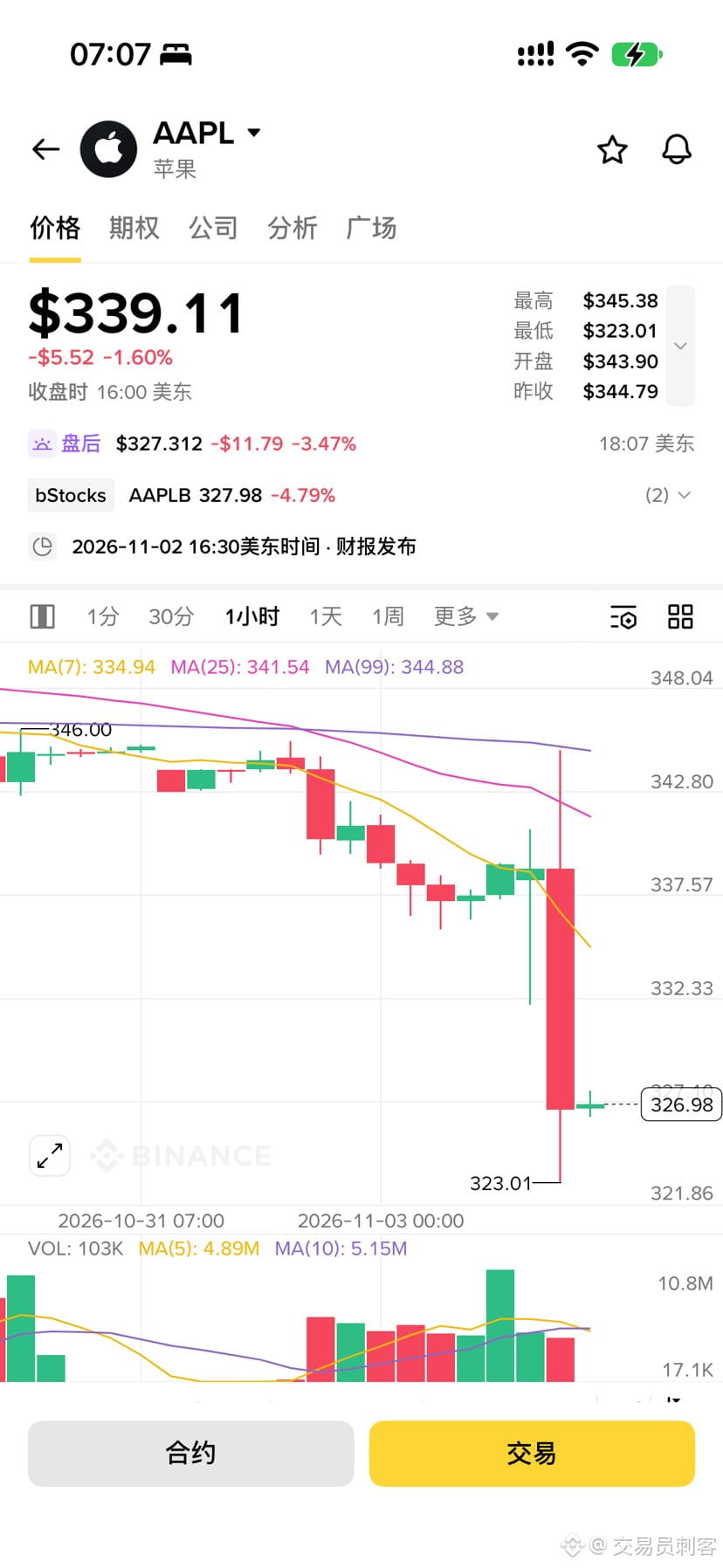
To be honest, Apple’s earnings report is a classic case of “looking good on the outside, under pressure on the inside.” Revenue for the quarter came in at $114.48 billion, and both revenue and profit beat expectations. Its market cap has also climbed back to $5 trillion, making the numbers look very impressive. But if you’re putting real money to work, you need to look at the undercurrents beneath the surface.
The market is actually quite divided right now: nearly half the community is sitting on the sidelines, while only a little over 30% are bullish. Why such a big split? Even the institutions are at odds. Goldman Sachs is calling for a $390 price target, but the consensus target among analysts is only $332—below the current share price. That suggests there’s very little upside left for anyone chasing the stock in the short term.
Given these fundamentals, if you’re considering a position in Apple, my personal approach would be to take it in three steps:
First, don’t get carried away in the short term; a rally is a good time to trim your position. Earnings beats often trigger a sentiment-driven surge, but memory costs are rising at an “unprecedented” rate, the share of costs attributable to memory has doubled, and the December quarter faces severe supply shortages. Those are all swords hanging over the stock. If you already own shares, taking some profits while sentiment is high is the prudent move. If you’re on the sidelines, don’t jump in and chase the rally. Wait for the earnings call and listen to what management has to say about gross margins.
Second, wait for a chance to buy after an “unjustified sell-off” in the medium term. The December quarter will be the most challenging: higher memory prices will directly eat into profits, and Oppenheimer has already warned that margins could be affected by 150 basis points. If gross margin pressure drives the share price down into the $300–$310 range, that would be a good area to build a position in stages. Apple’s sticky ecosystem and pricing power are still there. Cost pressures are cyclical, so a pullback could be an opportunity.
Third, keep a close eye on AI hardware for the long term. What could really take Apple to the next level isn’t today’s phone, but its desktop robot in 2027. With a 9-inch screen and a rotating robotic arm, it’s designed to be the hub of the smart home—and the most imaginative new product category since the Apple Watch. If you’re investing for the long haul, ignore the short-term cost noise and focus on the rollout of the new Siri. Hold on to your core position for the post-iPhone era.#苹果财报发布在即,股价能否再创新高 $AAPL
The market is actually quite divided right now: nearly half the community is sitting on the sidelines, while only a little over 30% are bullish. Why such a big split? Even the institutions are at odds. Goldman Sachs is calling for a $390 price target, but the consensus target among analysts is only $332—below the current share price. That suggests there’s very little upside left for anyone chasing the stock in the short term.
Given these fundamentals, if you’re considering a position in Apple, my personal approach would be to take it in three steps:
First, don’t get carried away in the short term; a rally is a good time to trim your position. Earnings beats often trigger a sentiment-driven surge, but memory costs are rising at an “unprecedented” rate, the share of costs attributable to memory has doubled, and the December quarter faces severe supply shortages. Those are all swords hanging over the stock. If you already own shares, taking some profits while sentiment is high is the prudent move. If you’re on the sidelines, don’t jump in and chase the rally. Wait for the earnings call and listen to what management has to say about gross margins.
Second, wait for a chance to buy after an “unjustified sell-off” in the medium term. The December quarter will be the most challenging: higher memory prices will directly eat into profits, and Oppenheimer has already warned that margins could be affected by 150 basis points. If gross margin pressure drives the share price down into the $300–$310 range, that would be a good area to build a position in stages. Apple’s sticky ecosystem and pricing power are still there. Cost pressures are cyclical, so a pullback could be an opportunity.
Third, keep a close eye on AI hardware for the long term. What could really take Apple to the next level isn’t today’s phone, but its desktop robot in 2027. With a 9-inch screen and a rotating robotic arm, it’s designed to be the hub of the smart home—and the most imaginative new product category since the Apple Watch. If you’re investing for the long haul, ignore the short-term cost noise and focus on the rollout of the new Siri. Hold on to your core position for the post-iPhone era.#苹果财报发布在即,股价能否再创新高 $AAPL