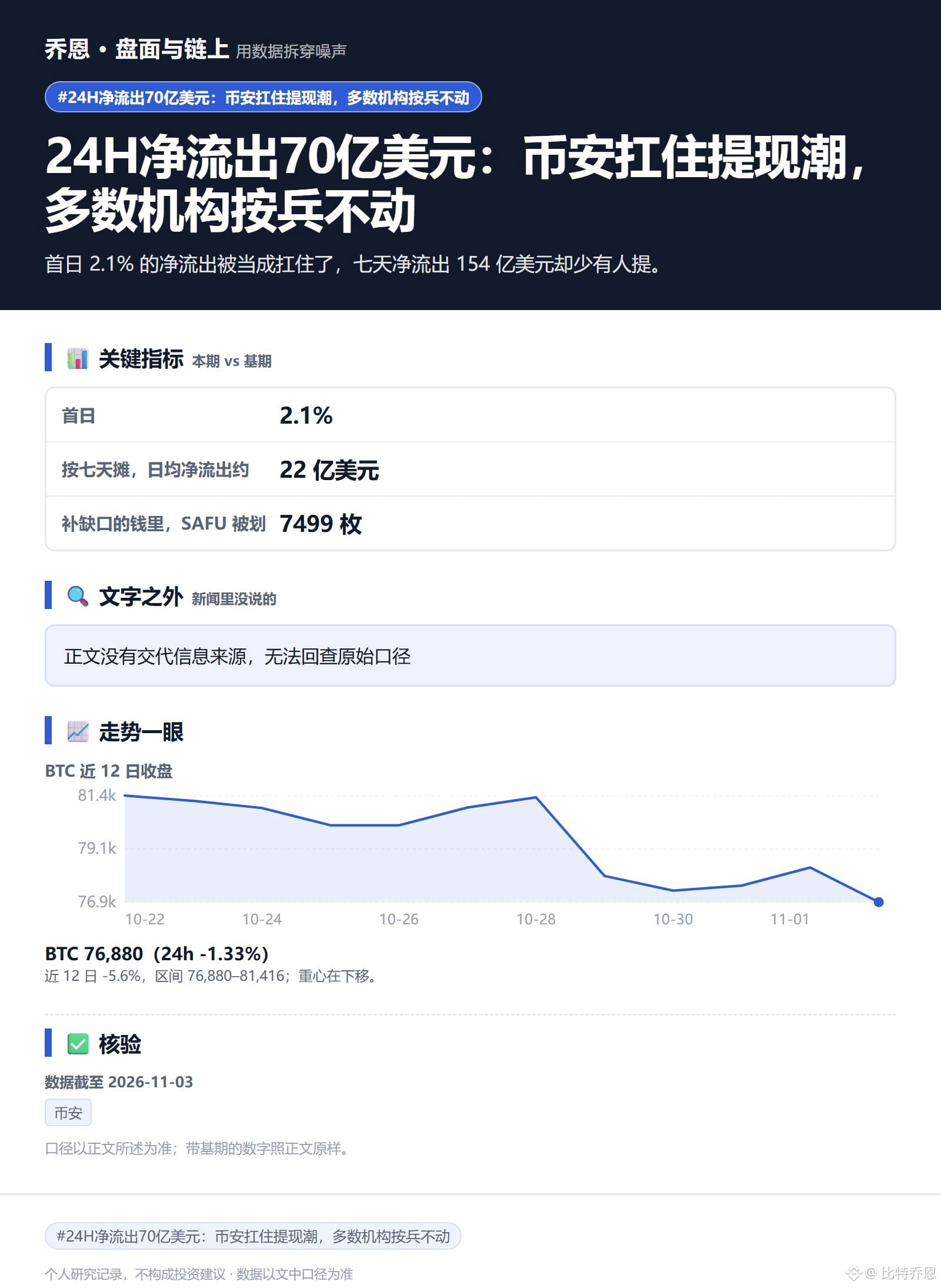
A 2.1% net outflow on day one was taken as a sign that Binance had held up, but the seven-day net outflow of $15.4 billion has rarely been mentioned.
The 2.1% figure covers just 9 hours and 15 networks. Spread over seven days, the average daily net outflow was about $2.2 billion, while Binance still had $124.4 billion in assets. Institutions aren’t adding to their positions: SQS Trading plans to cut by another third the roughly quarter of its portfolio held on Binance, while the other firms say they’re staying put. To cover the shortfall, 7,499 BTC were taken from SAFU—half the assets at that address—and Yi He promised to replenish about $1 billion afterward. Haseeb Qureshi of Dragonfly compared this with the FTX episode and said the market was much calmer—a calm market means no bank run, not that nobody is reducing their positions.
If net outflows fall back to the first day’s level of $3.64 billion over the coming week, and SAFU is replenished by about $1 billion, this assessment no longer holds.
#Binance October 31 proof of reserves snapshot zero-knowledge proof generated