
🚀 【Major News】SpaceX Plans to Acquire Boost Mobile! Starlink Accelerates the Buildout of a “Space-to-Ground” Hybrid Network, Taking on U.S. Telecom Giants
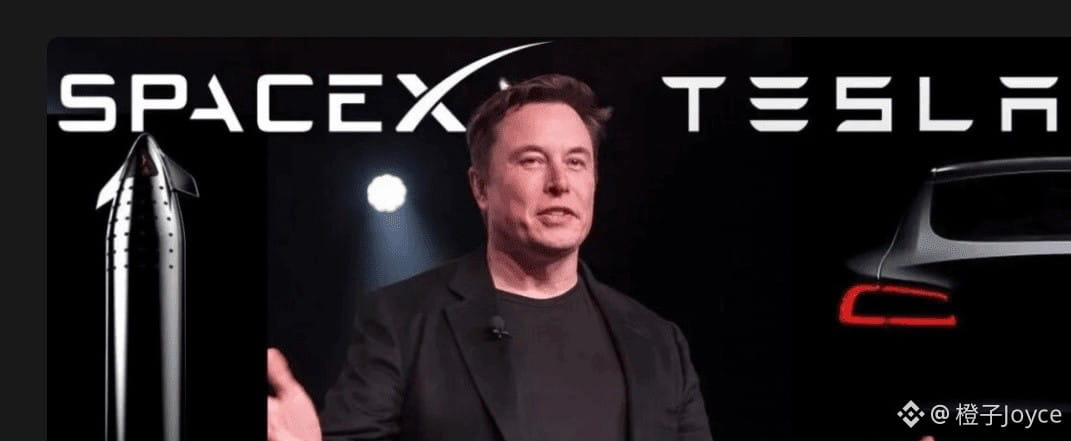
Elon Musk’s SpaceX ($SPCX) is in talks with EchoStar ($ECHO) about acquiring its wireless service brand Boost Mobile or gaining access to its network.
If the deal goes through, SpaceX would gain direct access to Boost’s 7.38 million wireless subscribers and established distribution channels, significantly shortening the time needed to build its own network. Following the news, SpaceX shares rose more than 4% intraday and EchoStar gained nearly 2%, while shares of the three major U.S. traditional carriers—AT&T ($T), Verizon ($VZ), and T-Mobile ($TMUS)—all came under pressure.
Core strategy: a “one-two punch” of spectrum, satellites, and ground stations
SpaceX isn’t just building a satellite communications business. Its ultimate goal is to create a hybrid “satellite + ground” mobile network and challenge the three telecom giants in a market with annual revenues of $600 billion:
* Prime spectrum assets: SpaceX recently spent $8 billion to acquire 800 MHz of low-band spectrum, which has strong signal penetration. Combined with the 65 MHz of nationwide spectrum it previously purchased from EchoStar, its spectrum holdings are highly complementary.
* Second-generation Starlink satellites: The FCC has approved deployment of the second-generation Starlink Mobile constellation, with up to 15,000 satellites. Launches are expected to begin in 2027, with commercial service in 2028; the company says performance is expected to improve 100-fold.
* Ground station and terminal rollout: SpaceX is in talks to secure at least 80,000 ground station sites across the U.S. Elon Musk has also proposed adding small radios to residential and commercial Starlink terminals, turning them into cell sites that provide coverage to mobile phones.
Potential challenges and hurdles
* Transfer of network leasing agreements: Boost Mobile currently leases network capacity from AT&T and T-Mobile. Transferring those contracts to SpaceX would require approval from its competitors, making the restructuring process uncertain.
* High operating costs: Building a nationwide network requires substantial CapEx, including subscriber subsidies, ground station construction, and customer service, posing a major test of operational execution.
As Starlink Mobile gradually completes the four pieces of the puzzle—spectrum, satellites, ground infrastructure, and distribution—commercial spaceflight is evolving from a “tool for filling coverage gaps” into a “direct competitor.” The boundaries between low-Earth-orbit satellites and concepts such as RWA/DePIN (decentralized physical infrastructure) are also converging rapidly!
$SPCX.US