

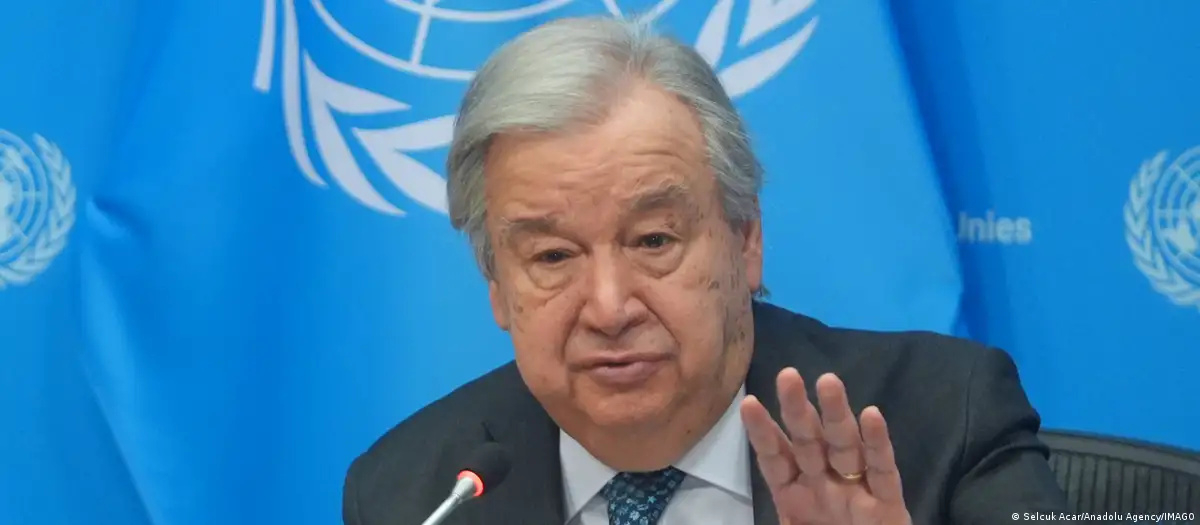
The UN peacekeeping mission in Western Sahara (MINURSO), which has been in place for 35 years, will come to an end because the UN Security Council failed to extend its mandate. UN Secretary-General António Guterres announced this on October 31, Reuters reported on Monday, November 1.
Morocco, which considers Western Sahara an integral part of its territory, welcomed the decision. Meanwhile, representatives of the military-political organization POLISARIO Front (the Popular Front for the Liberation of Saguia el-Hamra and Río de Oro), which is supported by Algeria, expressed concern.
Morocco has maintained de facto control over most of this region for decades. Meanwhile, the UN lists Western Sahara as a Non-Self-Governing Territory (whose people have not achieved full self-government). Among the countries that have officially recognized Morocco’s sovereignty over it are the United States, Israel, and Colombia.
Some EU states, including Spain and Germany, support the idea of autonomy for Western Sahara within Morocco.
End of the UN peacekeeping mission in Western Sahara
The end of the UN peacekeeping mission comes a year after the UN Security Council adopted a US-drafted resolution recognizing Rabat’s plan to grant the territory autonomy under Moroccan sovereignty as the “most realistic” solution to the conflict, Reuters reports. Russia abstained in the vote at the time, allowing the resolution to pass.
This year, a vote was held on a US resolution reaffirming the UN’s commitment to the Moroccan plan and reducing the size of the peacekeeping force. Russia opposed the document and vetoed it.
The UN Security Council subsequently also failed to adopt an alternative Russian resolution proposing to extend the peacekeeping mission until October 31, 2027. As a result, the mission’s mandate was not extended and expired on October 31 of this year.
History of the conflict over Western Sahara
During the colonial period in Africa, the territory of present-day Western Sahara belonged to Spain. On November 6, 1975, Morocco organized the so-called “Green March” to force Madrid to hand the disputed territory over to Rabat. At the appeal of King Hassan II, 350,000 unarmed Moroccans, including women and children, entered Western Sahara. On November 18, Spain withdrew its administration from the territory and signed the Madrid Accords, after which Morocco and Mauritania divided the territory between them.
Mauritania later withdrew its troops from Western Sahara and renounced its territorial claims to it. Moroccans did not view the “Green March” as the seizure of someone else’s territory, considering their country’s postcolonial borders unjust. That is why Rabat described the annexation of Western Sahara as an act of restoring Morocco’s territorial integrity.
This move, however, met resistance from the POLISARIO Front, a politico-military organization (the Popular Front for the Liberation of Saguia el-Hamra and Río de Oro), and the Sahrawi Arab Democratic Republic (SADR) it proclaimed. SADR representatives call themselves the indigenous Sahrawi people and demand independence. An armed conflict broke out between Morocco and the POLISARIO Front, continuing until the UN established a fragile ceasefire in 1991. Since then, the UN peacekeeping mission MINURSO has operated in the region.
The UN advocates holding a referendum on self-determination in Western Sahara. However, it has yet to take place because of disputes over issues such as who is entitled to participate. The conflict over Western Sahara flared up again in November 2020, when Morocco sent troops there to suppress protests. In response, the POLISARIO Front, which the UN has recognized as the legitimate representative of the people of Western Sahara since 1979, announced the end of the existing ceasefire.
#ArmedConflictsAroundTheWorldDoNotSubside , #WorldPoliticsNews