

MARVELL × LUMENTUM $MRVL $LITE

The 23.9% premium is an illusion. The real bill comes due in 2028.
November 2, 2026 | U.S. market hours
On November 2, Marvell announced an all-stock acquisition of Lumentum. Each Lumentum share will be exchanged for 4.5 Marvell shares, implying an enterprise value of $115 billion, or $1,132 per share—a 23.9% premium over the October 28 closing price. This is the largest global M&A deal of 2026 and the biggest bet Marvell has made since its founding: it is issuing shares equivalent to 60% of its own market capitalization to buy a company that makes lasers for optical modules.
On the day the deal was announced, both companies fell. Marvell dropped 5.8%, and Lumentum fell 10.5%. At the same time, the Dow rose 1.04% and the Nasdaq rose 1.08%.
The broader market is rising, while both buyer and seller are falling. If a deal is bad news for both sides, it tells us at least one thing: the market doesn’t think the price is right.
Let’s lay out the numbers.
I. $1,132 is worthless on paper
First, let’s clarify the technical detail that’s easiest to overlook: this is an all-stock deal. The exchange ratio is fixed at 1 to 4.5, with no cash consideration, no price collar, and no repricing mechanism.
The oft-cited “$1,132 per share” is simply 4.5 times Marvell’s October 28 closing price of $251.56. It’s just a snapshot frozen on the announcement reference date—that’s all.
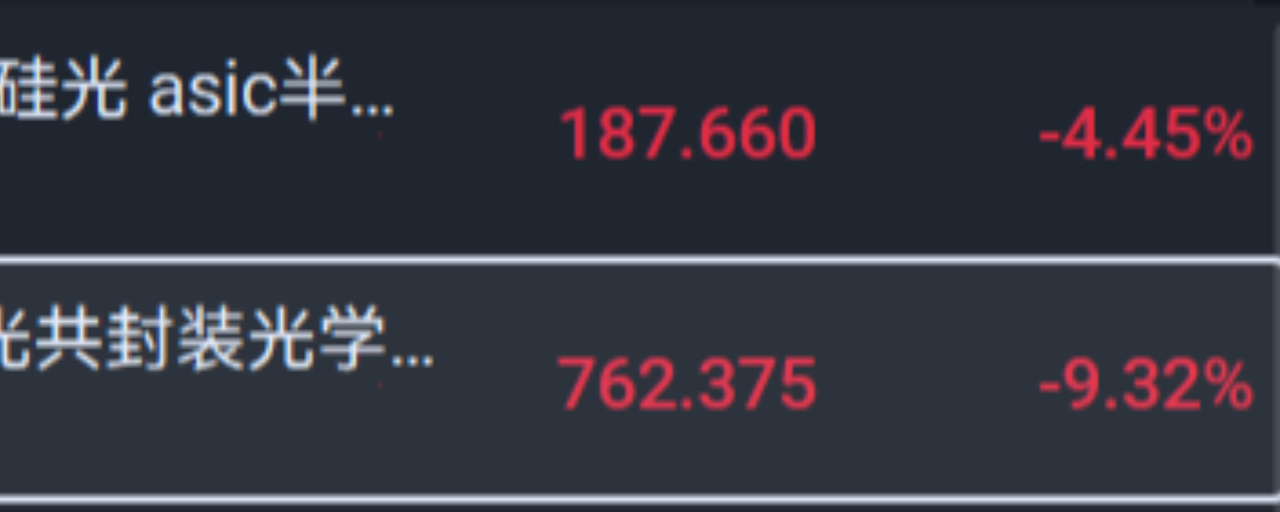
At the time of writing, Marvell was trading at $185.02, making 4.5 shares worth just $832.59. In the three trading days between the rumor becoming public and the deal being formally signed, “$1,132” evaporated by 26%.
Headline consideration
$1,132
Fixed at 10/28 price
Actual stock-swap value
$832.6
4.5 × $185.02
Lumentum’s current price
$752.4
-10.51%
Lumentum shareholders won’t receive $1,132 in 2028. They’ll receive 4.5 shares of Marvell. Whatever happens to Marvell’s share price, their consideration will rise or fall accordingly. In this deal, Lumentum shareholders bear all of Marvell’s share-price risk without a cent of protection.
From the day the deal was signed, Lumentum stopped being an optical components stock. It became 4.5 shares of Marvell, minus a regulatory discount.
II. The market just rejected the denominator behind this premium
Look at the timeline, and the “23.9% premium” looks even less convincing.
The denominator for the premium is Lumentum’s October 28 closing price of $913.6. At the time of writing, it was $752.4. In other words, despite receiving a bid touted as carrying a “23.9% premium,” Lumentum shareholders are now sitting on a value 17.7% below where it stood before the news leaked.
Over the same period, Marvell fell from $251.6 to $185, a decline of 26.4%.
Both companies have each lost about a third of their value over the past 20 trading days. Not because of this deal, but because the entire AI hardware sector was repriced in October: Nvidia’s CPO expansion list announced at GTC Berlin included no mainland Chinese companies; quarterly filings from leading funds showed they were reducing their optical module holdings; margin debt was above the 90th historical percentile; and Morgan Stanley cut its forecast for cloud providers’ AI capex growth from about 100% in 2026 to 60% in 2027, then 14% in 2028.
In a sentence: Marvell is using a stock that has already fallen 26% in a sector that has already been cut in half to buy an asset that has already fallen 18%, then telling the other side, “I’m giving you a 24% premium.”
The premium is real. It’s just based on a price the market has already rejected.
III. What is the market pricing in with a 9.6% spread?
Lumentum’s current price is $752.4, the stock-swap value is $832.6, and the spread is 9.6%. That 9.6% is the market’s price for whether the deal can actually close 15 to 19 months from now. That’s less than 6 percentage points annualized.
For a $115 billion semiconductor deal requiring approvals in multiple jurisdictions, including the U.S., China, and the EU, that spread isn’t wide. The market is currently implying a higher probability of approval than many people in the comments seem to think.
The real question has never been “Will it get approved?” It’s “What will the world look like when it does?”
IV. Marvell isn’t buying lasers
This is the point I most want to make in this article.
The market generally interprets this deal as “Marvell adding laser capacity.” That’s wrong. Marvell has never lacked laser suppliers; it has strong relationships with several laser companies, and Lumentum was already one of its suppliers. Cignal AI founder Andrew Schmitt put it bluntly: the deal is fundamentally about vertical integration and co-design, not getting more capacity.
So what exactly is it buying?
It’s buying insurance for its core business.
Marvell’s most profitable asset is the DSP in optical transceivers. In a 1.6T module, the DSP accounts for 30% to 40% of the bill of materials, and Broadcom and Marvell are essentially the only two major suppliers globally. This is the foundation of Marvell’s entire data center story.
And CPO is hollowing out that foundation. CPO moves the optical engine next to the switch chip or compute chip, shortening the distance electrical signals travel and reducing power consumption. The trade-off: in many architectures, the DSP is no longer needed.
Gareth Owen of Counterpoint put it clearly in an October report: as data center networks move toward CPO, demand for Marvell’s DSPs could weaken, while lasers remain indispensable regardless of which technology path prevails.
So this $115 billion acquisition is essentially an insurance policy: in exchange for one-third of its equity, Marvell is transforming itself from a “DSP supplier that CPO might make obsolete” into a supplier of “lasers + optical engines + optical switching” needed under any architecture.
Recognizing that its core product could be wiped out by an architectural shift, then spending $115 billion to hedge against that risk—that’s clear-eyed, and it’s expensive. Clear-eyed and expensive are not mutually exclusive.
V. The math: 18x sales, 0.9% synergies
Lumentum’s guidance for its second fiscal quarter is $1.575 billion to $1.625 billion, with a midpoint of $1.6 billion, or $6.4 billion annualized. The equity consideration is $102.5 billion, or 16x annualized sales; the enterprise value is $115 billion, or 18x.
That number alone isn’t outrageous. Lumentum’s first-quarter revenue was $1.263 billion, up 136.5% year over year; its non-GAAP gross margin was 53.2%, and operating margin was 42.3%. Its second-quarter guidance came in 8% above consensus. An 18x sales multiple isn’t obviously expensive for a company growing 136% with a 42% operating margin.
But two things need to be considered at the same time.
First, that 18x multiple is based on annualizing revenue at a cyclical peak. Lumentum’s own comments: next year, supply of some products will meet only about 30% of demand; other products will still face a roughly 30% shortfall in 2028; and some capacity is already sold out through early 2029. Shortages push up prices and gross margins—that’s part of what’s behind the current 53% gross margin, and it isn’t a permanent feature.
Second, the synergy math. $1 billion in annual cost synergies equals 16% of Lumentum’s revenue, which sounds substantial; but it’s only 0.9% of the $115 billion enterprise value.
EV / annualized revenue
18x
Equity value / annualized revenue
16x
Synergies / EV
0.9%
Headline price / forward EPS
47x
What does that 0.9% tell us? That almost all the value of this deal comes from the strategic “1+1>2” narrative, not cost savings. Savings explain only 1% of it.
As for “accretive to non-GAAP EPS in the first year after closing”—that’s in fiscal 2028, and it’s non-GAAP, excluding amortization of intangible assets and stock-based compensation. The S-4 will spell out how much goodwill and intangible assets will be amortized against the $102.5 billion equity consideration. Historically, stock-for-stock acquisitions of this size have typically carried GAAP dilution for five to seven years.
VI. The ugliest part: your customers are your rivals
Who does Marvell sell its DSPs to? Optical module makers. Innolight, Eoptolink, TFC, Accelink, Coherent, and Fabrinet are all its customers.
What does Lumentum do? It also makes optical modules, as well as optical circuit switches (OCS).
After the merger, Marvell will sell chips to these module makers while competing with them in the module business. What do you think Innolight will make of that?
According to LightCounting, seven of the world’s top ten optical module makers are in China, with a combined market share of more than 60%. Innolight alone has a 21% share, ranking first globally. Lumentum’s CEO has said that Chinese manufacturers supply about 70% of the U.S. market’s optical modules.
Counterpoint’s view is that some module makers will turn to Broadcom or Credo to reduce their reliance on Marvell.
This risk is more tangible than regulatory risk. Regulation can delay the deal by two years at most; customer losses are irreversible. On the call, Marvell said, “We plan to maintain our existing go-to-market model, delivering industry-leading components and systems while supporting the broader ecosystem.” Translation: “I promise not to take your business—please keep buying my DSPs.”
Promises like that don’t have a great track record in semiconductor history.
VII. The curse of the first half of 2028
Closing window: the first half of 2028. The scheduled closing date is November 2027, with an extension to August 2028 if regulatory approval hasn’t been obtained.
Breakup fees: Marvell pays $5.8 billion if it breaches the agreement, Lumentum pays $2.9 billion if it breaches, and Marvell pays $3.2 billion if the deal fails for regulatory reasons.
$5.8 billion versus $3.2 billion. The structure speaks for itself: Lumentum wants insurance that “you won’t walk away,” while Marvell wants a cap so that “even if regulators kill the deal, I only pay $3.2 billion.” Neither side thinks this deal is guaranteed to close.
And the first half of 2028 falls right in the year Morgan Stanley predicts that cloud providers’ AI capex growth will slow to 14%.
You’re paying a 2027 growth valuation for an asset you’ll receive in 2028, with closing scheduled for the year growth slows to 14%. That doesn’t mean the deal is necessarily wrong; it means the deal has very little tolerance for timing risk—any pause in AI capex would simultaneously hit Marvell’s share price (and thus the stock-swap value), Lumentum’s orders (and thus its valuation support), and the incentive to approve the deal.
Three variables, tied to the same rope.
VIII. Why is Hurlston willing to sell?
On the call, Lumentum CEO Michael Hurlston said the board had evaluated all options, including continuing to operate independently and “the possibility of being acquired.”
What cards does he hold? First-quarter revenue was up 136% year over year; second-quarter guidance was 8% above consensus; the company had secured a second major NPO/CPO order, with purchase commitments exceeding $5 billion; visibility into OCS demand had improved significantly, with potential for a business worth billions of dollars annually; and some capacity was sold out through early 2029. The company’s stock has more than doubled this year.
There are only three explanations for selling at this point.
First, he thinks the optical components cycle will peak in 2027 or 2028. Sold-out capacity doesn’t mean profits will last forever. By mid-2028, Lumentum’s newly acquired U.S. indium phosphide wafer fab will start ramping up, and capacity expansions across the industry will come online. A shortage could turn into a glut overnight. Swapping a cyclical asset for shares in another growth company at the top of the cycle is a textbook move.
Second, he can’t afford the expansion. Indium phosphide is capital-intensive, and building new capacity takes years. Lumentum earns $460 million in quarterly non-GAAP net income, or less than $2 billion a year—not enough to comfortably fund expansion across its CPO light sources, EML, and OCS businesses at the same time.
Third, he genuinely believes the combined platform will be worth more. Lumentum shareholders will own 33% of the new company, and he’ll join Marvell’s board along with two other directors—not an exit, but a switch to a different vehicle.
All three explanations could be true at once. But for the buyer, the first two aren’t good news: one says “the seller thinks this is the top,” and the other says “this business requires ongoing heavy capex.” On the call, Marvell emphasized the third explanation.
IX. Who benefits, who gets hurt
Broadcom (AVGO): A short-term beneficiary of the narrative—the rival is spending $115 billion, taking on integration risk, and dealing with customer losses. But don’t overstate it. Broadcom is already the only company with compute chips, switch chips, and its own line of laser products. This deal lets Marvell catch up; it doesn’t put it ahead. And Broadcom’s CPO switches are further along.
Coherent (COHR): Once Lumentum is acquired, Coherent will be the only remaining large, independent optical components platform. That brings a scarcity premium, but also makes it “the next acquisition target.” Nvidia just invested $2 billion in it in March.
Chinese optical module makers (Innolight, Eoptolink, TFC, Accelink): No immediate impact—the deal won’t close until 2028, and not a single order for next year will disappear. In the medium term, upstream concentration will increase: DSPs mainly come from Broadcom and Marvell, while lasers mainly come from Lumentum and Coherent. Now one company from each of those two groups will be under the same roof, and their bargaining power will gradually weaken. But there’s another side: to pass China’s merger review, Marvell will likely have to make long-term commitments to fair supply, non-discrimination, and no tying. That could provide a buffer for the domestic industry chain.
Credo (CRDO): A direct beneficiary of DSP substitution. If module makers need a second supplier besides Marvell, it’ll be the first name that comes to mind.
Nvidia (NVDA): The most nuanced player. In March, it invested $2 billion each in Marvell, Lumentum, and Coherent, intending to diversify its suppliers and lock in capacity early. Now two have become one, leaving it with one fewer supplier. Whether Nvidia is pleased is a genuine question.
X. My take
Strategically, this deal makes sense. The bottleneck is shifting downstream, light is moving into chips, DSPs risk being hollowed out by CPO, and laser and indium phosphide capacity are hard constraints. Marvell is using equity to buy a ticket, and it’s heading in the right direction. Matt Murphy’s M&A record also deserves some respect: in 2021, Marvell bought Inphi for $10 billion, and by the company’s own account, that business is on track to be ten times its acquisition-date size this year.
On price, this deal is expensive. It’s buying a cyclical hardware asset at 18x sales, synergies account for just 0.9% of the consideration, GAAP dilution will last five to seven years, and it comes with customer-loss and integration risks. Paying with a stock that has already fallen 26% means Lumentum shareholders also bear Marvell’s share-price risk—and their consideration has already fallen from $1,132 to $832.
On timing, this deal is at its worst. It’s set to close in the first half of 2028, exactly the year AI capex growth drops from 60% to 14%. You announce in the best year and close in the worst.
The direction is right, the price is high, and the timing is wrong.
Keep an eye on three things going forward—they’re more useful than scrolling the news.
First, the breakdown of synergies in the S-4. How much of the $1 billion comes from procurement savings, and how much from layoffs and R&D integration? The former is reversible; the latter can damage the business.
Second, Lumentum’s actual deliveries versus guidance. If capacity can still meet only 30% of demand in 2027, the 18x sales multiple has support. If deliveries beat expectations, lead times shorten, and prices start to soften, that’ll be the first sign the shortage has peaked.
Third, whether Marvell’s DSP customers are leaving. Watch Broadcom and Credo’s design wins in 1.6T and 3.2T, and watch for changes to the supplier lists at Innolight and Eoptolink. We don’t have to wait until 2028 to judge this; the first signs will show up in the first half of next year.
One last thought. The most expensive thing in the world isn’t a premium; it’s using stock to buy light in a year when everyone is scrambling for it.
Risk disclosure: The data in this article comes from company announcements, financial reports, earnings-call transcripts, and public reporting (including LightCounting, TrendForce, Counterpoint, Cignal AI, and Morgan Stanley). Market prices are intraday quotes as of 10:17 a.m. ET on November 2 and may change at any time. This article is not investment advice. The deal has not closed and remains subject to multiple uncertainties, including shareholder votes, regulatory approvals in several countries, integration execution, and customer losses. Individual stocks are highly volatile.